Kishore Amati
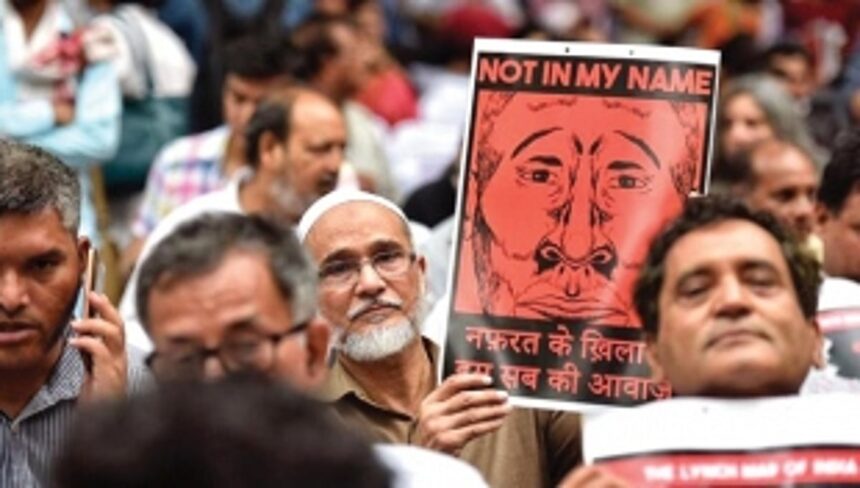
When Gurgaon-based filmmaker Saba Dewan
took to Facebook to call out for the outpouring of public conscience, little
did she know that a simple social media post will have an avalanche effect and
mobilise a large section of the society across India. Originally planned to be
a protest to be held only at Jantar Mantar in the heart of New Delhi, the idea
attracted a great deal of response online, enough to be replicated across
several cities. Dewan in her FB post had written: “Shouldn’t there be protests
against the lynchings especially after the murder yesterday in Delhi NCR by a
mob of a 16-year-old boy? If not now then when? Why wait for political
formations to organise a demonstration? Why can’t all of us as citizens
repulsed by the violence get together in protest at the earliest next week at
Jantar Mantar under the banner – Not in my Name.”

The 2012 Nirbhaya incident remains to be
one of the best examples of the masses erupting and taking to the streets to
protest against injustice, after being triggered by an incident that was fanned
by social media. The mass protests that went on for many days not only made the
concerned authorities expedite the medical and judicial process but also made
the entire world sit up and take note. The #NotInMyName protest, albeit far
smaller in size and scale, can somewhat be termed a worthy successor in this
regard. Shaun Gomes, Digital Marketing and PR professional, says, “Society is
mostly divided into two types of people. On one hand we have people who reduce
social media platforms to mediums of time wastage, and on the other, we have
those who truly realise the potential of this effective medium. It is all about
the way content is put out in the public domain. If the content clicks with the
people, then the results that social media can get you can be overwhelming.”
At a time when a large number of people use
social media as a decoy, a veil that they can hide behind before making
targeted remarks and expressing opinions restricted to the virtual world only,
protests like #NotInMyName prove to be pleasant exceptions. Pratik Gurunath, a
school teacher and an avid social media buff, says, “Social media is said to be
a tool meant to connect us with the world. But ironic as it may sound, when one
posts or expresses on social media platforms, there is no person-to-person
connect. In the case of #NotInMyName protests, it was the underlying issue that
connected with a large number of people across the nation, thereby nudging them
to follow up their virtual expressions with actions in the real world.”