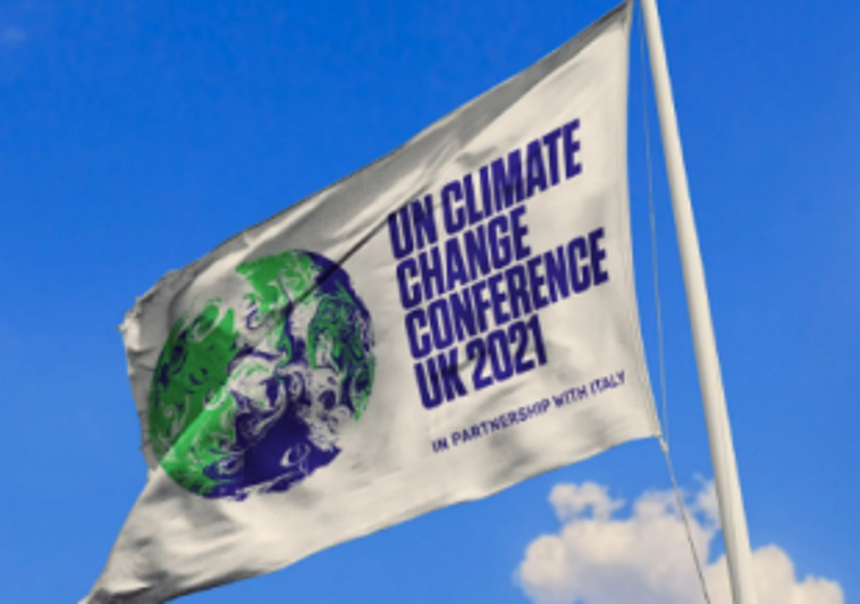
As Goa experienced unexpected thunder, lightning and sharp showers on Sunday evening, much to the surprise of many, curtains were drawn on the COP26 in Glasgow, about 7877 kilometres North West of Goa where the world was discussing on climate change. For nearly three decades the United Nations has been expending its resources to bring together almost every country on the planet for global climate summits, called COPs. This year it was the 26th annual summit, giving it the name COP26, with United Kingdom as its President.
Before the COP26 the UK worked with every nation to reach an agreement on how to tackle climate change. World leaders did arrive in Scotland, alongside tens of thousands of negotiators, government representatives, businesses and citizens for twelve days of talks. Not only is it a huge task cutting across around 200 different countries, their languages and their background and their internal governance situation, but it was also not just yet another international summit. Yes, it was important and it was time for the global community to resolve, come together to protect the planet Earth. On the final day of talks at COP26 world leaders were urged to take drastic and ambitious action to cut greenhouse gas emissions. Several pledges were been undertaken throughout the Summit, including deals to phase out fossil fuel like coal, cut methane emissions and end deforestation. But activists have accused government ministers and corporations of so-called green-washing and claimed that the agreements to come out of COP26 so far are not enough to address the climate emergency.

In this global conference India, along with other developing nations, had repeatedly called for richer and developed nations to take increased responsibility in mitigating the climate crisis, while assisting developing nations towards their goals. In earlier objections to a section on climate change mitigation to a previous draft, Bolivia’s chief negotiator Diego Pacheco, on behalf of his country and 21 other allied nations, which include India and China, accused the developed countries of attempting to shift responsibility to the rest of the world and imposing new rules. This was a major move as the developed nations play an upper hand by accusing the under developed nations of destroying the ecosystems which has already been done by the developed nations before.
At the end of this global meet the agreement, which is not legally binding, was amended at the eleventh hour after interventions from India and China, both among the world’s biggest burners of coal. This led to a change in language about fossil fuels; the pact now refers to the “phase down” of coal, rather than the “phase out” of coal, as originally proposed. Many countries criticised the change on fossil fuels promoted by India, even as Union Environment Minister Bhupender Yadav asked the Glasgow Climate Summit how one could expect developing nations to make promises about “phasing out” coal and fossil fuel subsidies when they have still to deal with their development agendas and poverty eradication. Earlier, India had made an important intervention to express its disappointment over the draft text of the agreement. If it would have been passed without amendment, the entire coal industry in India, including China would have gone defunct, which means that no use of coal and thermal power in which India till date, heavily depends on. There are fears that a more drastic rise in temperatures will disproportionately affect vulnerable populations such as the world’s small island nations which are already being inundated by rising sea levels.
During this important debate while a majority of the countries insisted that the agreement was important, even though a small step in keeping alive the hopes of achieving the target of 1.5 degree Celsius as temperature goal, observers and civil society groups saw it as a missed opportunity to enhance global climate action. After two weeks of hard negotiations with governments squabbling over provisions on phasing out coal, cutting greenhouse gas emissions and providing money to the poor world, the annual climate change summit came to an end on Saturday night with the adoption of a weaker-than-expected agreement called the Glasgow Climate Pact. Earlier, these COP meetings have also delivered two treaty-like international agreements, the Kyoto Protocol in 1997 and the Paris Agreement in 2015, which form the global architecture for actions to be taken to tackle climate change. While the Kyoto Protocol expired last year, the Paris Agreement is now the active instrument to fight climate change. The main task for COP26 was to finalise the rules and procedures for implementation of the Paris Agreement. Most of these rules had been finalised by 2018, but a few provisions. The one relating to creation of new carbon markets still remains unresolved.
Obviously protection of our planet is important and should be taken as the highest priority so that the coming generations feel the change in climate in a “normal way” as defined by our forefathers and are not taken aback by the present generation decisions and lackadaisical and selfish attitudes towards growth in the name destruction.