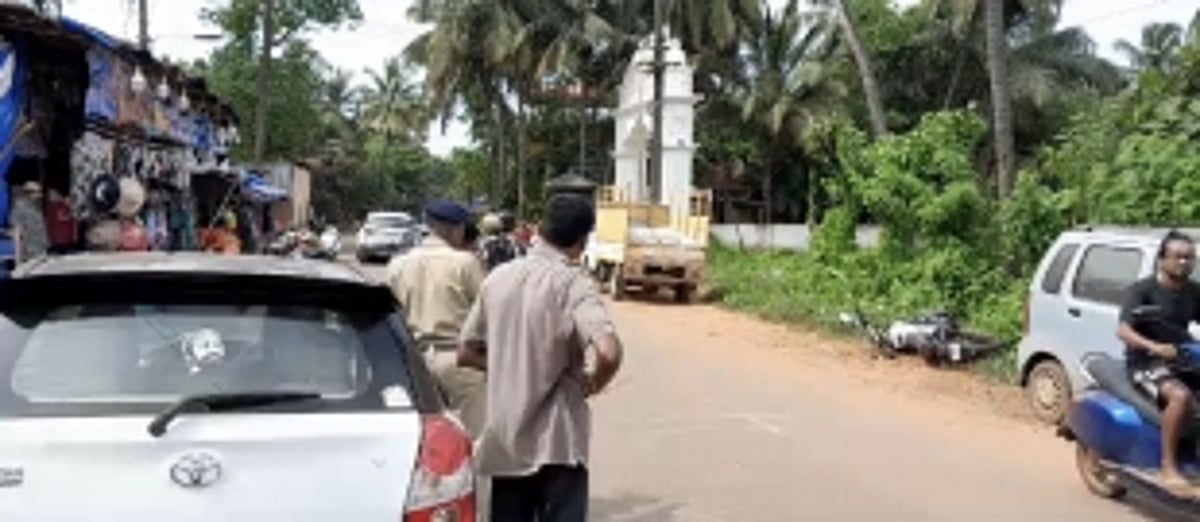
On October 30, protesting members of the Maratha community set fire to the house of Prakash Solanke, MLA of the Nationalist Congress Party (Ajit Pawar faction), at Majalgaon tehsil in Beed district of Marathwada. The provocation was said to be an audio clip in which Solanke is allegedly heard criticising Maratha leader Manoj Jarange-Patil, who is on a fast on the issue of reservation for Marathas.
Anger and frustration are running high among the Maratha youth over the reservation issue. According to local media reports, within a span of three days until October 30, seven youth from Jalana, Beed, Osmanabad, Aurangabad, Latur and Hingoli died by suicide in connection with the protest.

The Marathas are a group of castes comprising peasants and landowners among others constituting nearly 33 per cent of State’s population. The Marathas have been demanding reservation in government jobs and educational institutions for a long time. The first protest was held 42 years ago by Mathadi Labour Union leader Annasaheb Patil in Mumbai. Since 1981, Maratha reservation has become an integral part of politics in the state and a cause for mass protests. In the past six decades, Maharashtra, which has always been politically dominated by Marathas, failed to find a lasting solution to this vexed problem.
In 2014, the Congress-NCP coalition (1999 to 2014) was dislodged and the BJP-Shiv Sena coalition came to power under Devendra Fadnavis. Barely two years later in August 2016, the Kopardi rape and killing of a 15-year-old girl rocked the state. The unrest within Marathas culminated into well-planned and orchestrated protests under the Maratha Kranti Morcha and Sakal Maratha Samaj across the state.
The protests, which turned violent in 2017-18, saw the Fadnavis government taking concrete measures to resolve the vexed issue. In November 2018, based on the findings of the Backward Class Commission headed by M G Gaikwad, the government gave its nod for reservation to Marathas under a special provision — Socially and Educationally Backward Class Act. The reservation gave BJP a political edge over the then rival Congress-NCP.
In May 2021, a five-judge Constitution bench of the Supreme Court headed by Justice Ashok Bhushan struck down the provisions of Maharashtra law providing reservation to the Maratha community, which took the total quota in the state above the 50 per cent ceiling set by the court in its 1992 Indra Sawhney (Mandal) judgment.
In November 2022, after the SC upheld the 10 per cent quota for the Economically Weaker Sections, the state government said that until the issue of Maratha reservation is resolved, economically weaker members of the community can benefit from the EWS quota.
In April this year, after the SC turned down its review plea, the State government said it will file a curative petition. The government had also said that a new dedicated panel will be formed for a detailed survey of the ‘backwardness’ of the community. However, the State government has not filed a curative petition in the SC as yet.
Demand for reservation by Marathas is not the first of its kind. Such demands are being continuously raised by multiple castes across the nation. This includes demand by Gujjars in Rajasthan, Jats in Haryana, Patidars in Gujarat and Kapus in Andhra Pradesh. The reservation has increased from a minority share to 50% and has even crossed 50% in some States.
While reservation is necessary to ensure that the deprived sections of the society progress, it should not turn into a political gimmick and create further divide in the already fragmented society. The problem here is, reservation announcements take centre stage during election season, but on ground implementation is poor and the desired uplifting of the socio-economically weaker sections is not bearing the desired fruits.
Government should ensure that the social welfare schemes that it announces with much fanfare, should actually percolate to the beneficiaries. Schemes for extending help in the form of scholarships to students, minimum support price for the farmers, etc, should be implemented properly. There should be a monitoring mechanism for the same. Only then all sections of the society will be at par with each other.