STEVE CORREA
The controversial “Kamasutra Tales and Christmas Celebration” was ordered to cease all bookings immediately. Officials stated they also advised the organisers to refund everyone who had already paid, warning that an FIR would be lodged if they failed to do so. The event provoked strong public opposition, prompting authorities to intervene and cancel it. They added that strict action would be taken if the organisers disobeyed the orders.
There was a time when Goa felt like heaven had quietly settled along the Konkan coast. A place where mornings awoke softly—with mist rising off the paddy fields, fishing boats returning to harbour, and church bells drifting gently through coconut groves. Life unfolded unhurriedly, the way bread rises: patiently, naturally, in its own time.
As a child, crossing the Mandovi or Zuari on the old ferries felt like entering a story. The river glistened like brushed silver, fishermen sang Konkani songs, and the world on both banks felt close, knitted together with warmth. Villagers sat on balcaos exchanging tales, aunties bargained good-naturedly over fish, and evenings welcomed the hush of fireflies blinking across open fields. Susegad was not laziness—it was a philosophy, a gentle reminder that life is to be enjoyed, not hurried.
Old Goa was a gentle charm—sea-breeze mornings, star-lit nights, red earth that clung to your slippers, poie fresh from the bakery, toddy tapped at dawn, and a landscape held together by rivers, mangroves, paddy fields, and kindness. It felt whole. It felt enough.
But no paradise remains untouched forever.
Today’s Goa is a restless reflection of itself—caught between memory and ambition, beauty and burden. The transformation did not happen overnight; it arrived in waves, each one louder than the last.
Mining, once an economic blessing, has left deep scars. Hills have been stripped, rust-red dust settles on leaves, water tables are polluted, and landscapes are gouged beyond recognition. Rivers that were once sources of life now carry run-off, silt, and the burden of development that was overlooked. Many villages downstream have changed forever—their fields lie barren, and their wells have become murky.
Added to this is the rapid fever for development. Wetlands are filled in, hill slopes are carved out, farmlands are sold to the highest bidder, heritage homes quietly replaced by homestays, resorts, or second homes for urban India’s wealthy. Roads are widened, but trees are felled; beaches are beautified, but dunes are destroyed; bridges are constructed, but river ecosystems are disturbed. In the noise of progress, nature’s gentle negotiations are drowned.
Goa was once a fragile equilibrium of land and sea, community and craft, ecology and economy. That balance now feels the strain.
But perhaps the greatest shift came with tourism. Tourists have always been part of Goa’s charm—backpackers in the ’70s, families in the ’90s, honeymooners, pilgrims, heritage-seekers. They moved gently, engaged with the culture, blended into village life, and appreciated the simple beauty of the place.
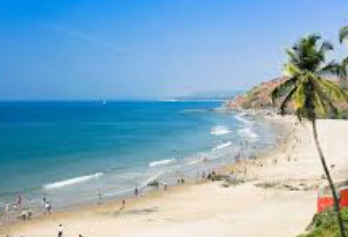
But today’s influx has a different tone. It is louder, more chaotic, and often reckless. Beaches once adorned with shells are now strewn with plastic bottles. The sea breeze now carries more rubbish than treasure. Party tourism, cheap thrills, and “what happens in Goa stays in Goa” bravado have changed the cultural rhythm. Drunken brawls replace village football matches, traffic congestion dominates bicycle trails, rave parties drown out the night birds, and fragile coastal ecosystems suffer from overcrowding, littering, and outright neglect.
Tourism indeed creates jobs—hotels, taxis, restaurants, weddings, and corporate conferences. It supports many families, bolsters the hospitality sector, and maintains livelihoods. However, unchecked tourism gradually erodes the very magic that originally attracts visitors.
Local Goans feel the shifts profoundly. Many feel pushed to the margins, with heritage displaced by homestays, villages overshadowed by real estate greed, and traditions gradually traded for commercial gains. The Goa of their childhood now seems borrowed—a memory wrapped in nostalgia.
So, where does one go from here? Do we mourn the Goa that once was? Or do we mould the Goa that still can be? There is hope—genuine, rooted hope—not the naive optimism of postcards but the steadfast hope of people who still love this land fiercely. Hope resides in recognising that development need not oppose beauty. Hope resides in a fresh imagination—one that balances ecology, economy, and empathy.
Goa can still become a model for sustainable coastal living—if it chooses courage over convenience. Mining must be strictly regulated, with degraded land rehabilitated and health prioritised over profit. Tourism should move from quantity to quality, focusing on eco-tourism, heritage experiences, and low-impact travel. Local communities must have a voice in policy decisions, providing real grounding for development. Rivers such as the Mandovi, Zuari, Sal, and Chapora must be protected as living ecosystems, not exploited waterways. Urban growth must respect the carrying capacity—no construction where the land can no longer breathe.
Because behind all the noise and chaos, Goa’s heartbeat endures. It beats in the morning prayers of fishermen, in the aroma of jackfruit steamed in leaves, in the ancient banyans shading village squares, and in the distant hum of a tiatr troupe rehearsing. It lives in the rivers that still remember their stories and in the hills that await healing. The Goa of yesterday might not return exactly as it was— but a wiser, humbler, and more sustainable Goa is entirely possible.
A Goa where children still run barefoot across open fields, where the stars still claim the night sky, where tourists come not to consume but to cherish, where development is considerate, not reckless, and where the susegad spirit is not a relic but a way of living in harmony.
Paradise is not lost yet. It is calling for stewardship, courage, and love.
And like the tide that recedes only to return,
Goa too can rediscover itself—if we cherish it gently, wisely, and together.

(Steve Correa is a Leadership Coach and OD Consultant, who has had over three decades of corporate experience. He is author of, The Indian Boss at Work: Thinking Global Acting Indian.)