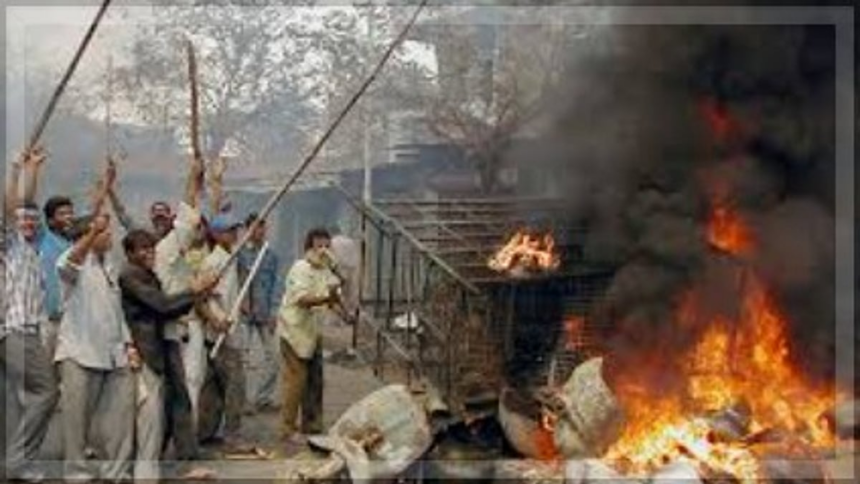
Prime Minister Narendra Modi stated that there have been deliberate attempts to portray the 2002 riots as the most significant in Gujarat’s history. He emphasized that the state has experienced a longstanding history of violence “long before I was involved.” Furthermore, he highlighted that while riots occurred almost annually in Gujarat, there has been a notable absence of communal violence since 2002.
Upon examining the data prior to 2002, it becomes evident that Gujarat experienced a series of frequent riots, with curfews being regularly enforced in various locations. Communal violence often erupted over minor disputes, such as kite flying competitions or even minor bicycle accidents, he stated.

PM Modi, who served as the Chief Minister of Gujarat during that period, remarked that his political adversaries at the national level attempted to fabricate a misleading narrative to penalize him, despite the courts having exonerated him multiple times. “During that time, our political rivals were in power, and understandably, they aimed to ensure that all accusations against us were upheld. They sought to see us face consequences. Nevertheless, despite their persistent efforts, the judiciary thoroughly examined the circumstances on two occasions and ultimately declared us entirely innocent,” he explained.
Reflecting on the Godhra train burning incident that triggered the 2002 riots, PM Modi characterized it as an “extremely volatile” era, occurring amidst other significant terrorist attacks both in India and globally.
The event was a tragedy of unfathomable scale, with individuals being burned alive. One can only imagine the heightened tension and volatility of the situation, especially in light of incidents such as the Kandahar hijacking, the attack on Parliament, and the events of September 11. This violence erupted merely three days after his election to the Gujarat Assembly, he noted.