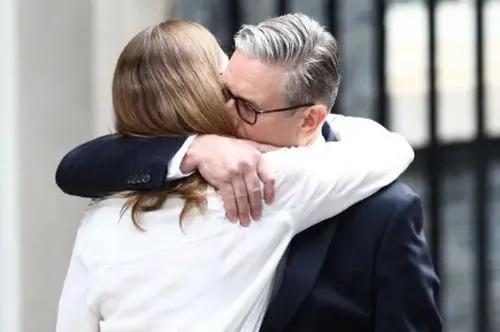
Keir Starmer’s resignation as British Prime Minister marks the latest chapter in a decade of political instability that began with the Brexit referendum in 2016. His departure means the United Kingdom is set to have its seventh prime minister in just 10 years.
Here is a timeline of the major events that shaped Britain’s turbulent political journey:

➡️ June 2016 – Brexit referendum shocks Britain
The United Kingdom votes 52%-48% to leave the European Union, triggering one of the biggest political upheavals in modern British history. Prime Minister David Cameron resigns after campaigning to remain in the bloc.
⬇️
➡️ June 2017 – Theresa May’s election gamble fails
Seeking a stronger mandate for Brexit negotiations, Theresa May calls a snap election. Instead, the Conservatives lose their parliamentary majority and are forced into an alliance with Northern Ireland’s Democratic Unionist Party.
⬇️
➡️ May 2019 – May resigns amid Brexit deadlock
Unable to secure parliamentary backing for her Brexit deal, May steps down. Boris Johnson, one of the leading figures of the Leave campaign, takes over.
⬇️
➡️ December 2019 – Johnson wins big
Johnson leads the Conservatives to a landslide election victory with his “Get Brexit Done” campaign, securing a strong mandate.
⬇️
➡️ January 2020 – Brexit becomes reality
Britain officially leaves the European Union, becoming the first nation to withdraw from the bloc.
⬇️
➡️ July 2022 – Johnson forced out
A series of scandals and ministerial resignations eventually bring down Johnson’s government.
⬇️
➡️ September 2022 – Liz Truss’s 44-day premiership
Truss becomes prime minister but resigns after her controversial mini-budget sparks financial turmoil and market panic.
⬇️
➡️ October 2022 – Rishi Sunak takes charge
Sunak inherits a fractured government and pledges economic stability while seeking to repair relations with the EU.
⬇️
➡️ July 2024 – Labour returns to power
Keir Starmer leads Labour to a landslide victory, ending 14 years of Conservative rule and promising to end the political chaos.
⬇️
➡️ 2025–2026 – Mounting pressure on Starmer
A welfare rebellion, controversies surrounding key appointments, declining poll numbers, ministerial resignations and Labour’s poor local election results weaken Starmer’s authority. At the same time, Nigel Farage’s Reform UK rises rapidly in popularity.
⬇️
➡️ June 2026 – Starmer resigns
After growing unrest within Labour and renewed questions over his leadership, Starmer announces his resignation. Greater Manchester Mayor Andy Burnham’s political resurgence further intensifies speculation about Labour’s future leadership.
🔚 Result: Britain now prepares for yet another leadership transition, extending a remarkable decade that has seen seven prime ministers, Brexit, multiple elections and continuous political upheaval.