In one of the most dramatic developments in India’s decades-long Maoist insurgency, two senior Maoist Central Committee members Rupesh alias T Vasudev Rao and Sonu alias Bhupati — have surrendered, sending shockwaves through the organisation and triggering internal mistrust among its ranks. Security forces have hailed the move as the biggest breakthrough in Bastar in years, while the Maoist Central Committee has branded both leaders as “traitors.”
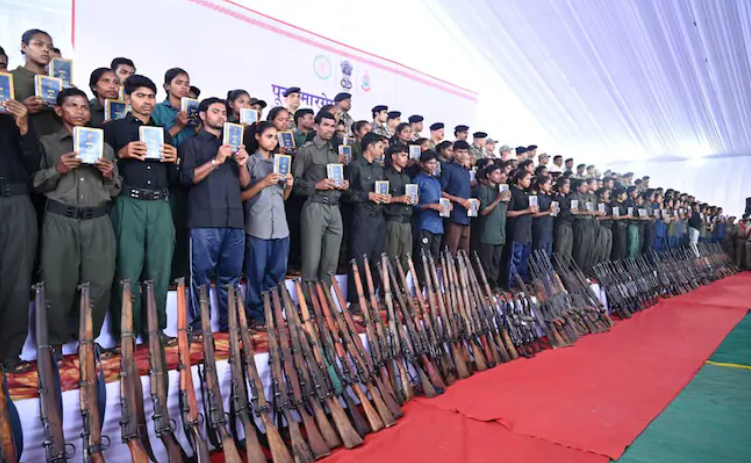
Rupesh, who carried a bounty of ₹1 crore, surrendered in Bastar on October 17, accompanied by hundreds of cadres. Around the same time, Bhupati and 60 of his men laid down arms in Maharashtra. In Jagdalpur, a staggering 210 Maoists surrendered before police, handing over 153 weapons in what officials described as a “historic shift in the Red Corridor.” Three buses filled with Maoist cadres arrived at the district police headquarters under heavy security to formalize their surrender.

The Maoist leadership reacted sharply to the defections. Abhay, spokesperson for the organisation’s Central Committee, issued a scathing pamphlet condemning Rupesh and Bhupati as “traitors who betrayed the revolution.” The note accused Rupesh of secretly maintaining contact with government officials and police officers for several months prior to his surrender.
However, the controversy deepened when Rupesh released a video message within 48 hours, claiming his surrender was not an act of betrayal but part of a peace initiative allegedly conceived by late Maoist general secretary Basavaraju, who was killed in an encounter earlier this year.
“This was not just my decision,” Rupesh stated in the video. “Basavaraju himself wanted to end the armed struggle and explore peace talks with the government. He had even written to the leadership about this before he was killed. We wanted to save our people and our party. There was no other way.”
Officials believe the mass surrender could mark a turning point in the Maoist conflict, weakening the insurgency’s core leadership and opening new possibilities for dialogue in the violence-hit Bastar region.
(This story is published from a syndicated feed)