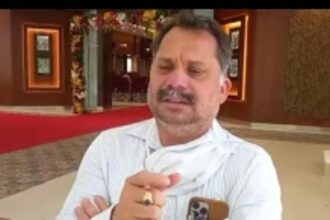
On Monday, in Goa, the
Union Minister of Road Transport & Highways, Nitin Gadkari mentioned how
Elon Musk’s new hyperloop technology, (the fastest way to travel on earth) will
cut down the surface travel time between Delhi and Mumbai to just two hours.
Here passengers will
travel, sitting in pods that travel at airline speeds through presurmise tubes.
He asked the Goa Chief Minister to prepare a transport plan based on
electricity and along similar lines which the Centre would approve.

One wonders, if such
futuristic plans should be our priority. While it is fantastic to dream of the
future, what Goa needs is simple down-to-earth connectivity between its
far-flung villages to its taluka headquarters for basic necessities.
A state which does not
have a basic taxi system and erratic bus system can wait to bring in Elon Musk
technology
Good technology is always
welcome, but it must be need-based. And this need should be identified by
looking at the basic needs of the most disconnected people. As we make bridges
and flyovers and look at constructing malls and restaurants on top of the new
Zuari bridge, there are villages in Goa that literally remain cut off from the
rest of Goa and the world. Will an Elon Musk technology-driven high-speed pod
that cuts travel from Panjim to Margao make any difference to the school-going
child from Verlem village in Netravali which is joined to the rest of the
village through one mud road through dense forests? When the road is
motorable and not cut off during the monsoons, villagers need to walk 9 kms to
reach a spot from where they can make mobile calls (people don’t even bother to
check if their landline is working) and 33 kms to withdraw cash. There are many
such villages like Verlem, Tudav, and Saljini across Goa.
Roads, bridges and
highways can be called “development”: only when Goa’s village roads, small
bridges, and culverts serve the common man
It is a complete irony
that on the day Nitin Gadkari inaugurated the beautifully constructed “missing
link” road from the Verna IDC to Loutolim, was also the deadline for the Chief
Minister to make all roads in Goa pothole-free. As the day broke, opposition
parties and social media activists went on an overdrive posting pictures and
videos of roads which were more pockmarked than the moon’s crater.
Nitin Gadkari as Union Minister
in charge of road transport, highways is expected to talk of futuristic
technologies and massive construction projects. But it is the Chief Minister
who should keep the focus completely on those who need very simple and basic
development like repaired culverts, fields without debris, and roads which
connect remote village hamlets to a primary school, or a health center.
Malls and restaurants on
the Zuari? Fine but is that Goa’s priority?
What has been labeled as
one of the grand engineering masterpieces, the new Zuari bridge will have over
the top, plans like malls and restaurants. But while focusing on this,
shouldn’t a parallel focus or at least a gaze be turned towards small
businesses, the corner shops that need patronage and support. Getting small
businesses back on track clearly must be a bigger priority.
Replacing natural beauty
with man-made ones cannot be a recipe for Goa’s tourism
Massive construction is
destroying fields and farms. Debris is blocking the natural water outlets
leading to crops rotting. Construction of bridges and flyovers and mega
projects done proportionately without affecting the environment is acceptable
only if absolutely needed. But if construction becomes an exercise for filling
up coffers, the purpose of good construction gets defeated and the tragic
fallout of natural environment like streams, water bodies and village life
getting buried under the debris of destruction gets felt immediately. Waterways are getting
privatised not quite for hinterland tourism but to facilitate coal-laden barges
from the MPT. Our inland waterways do not have fish as the “big fish” mainly
from Karnataka and Kerala have stunned and pulled out all fish through LED
lights.
Therefore the “big
development” decisions have to be weighed and seen if this type of development
is changing the basic nature of Goa. From a green, coastal, and hinterland
economy based on natural resources, Goa is turning into a construction-driven
economy where the biggest beneficiary is an outsider contractor.
What is needed is a
change or at least a balancing of approach where local development needs are
given equal if not greater priority in the decision-making process. Here’s an
example:
When there’s corruption
in road construction, how will Goa have good stable roads?
The government can cry
out and say that they don’t have the funds to allocate to the PWD which in turn
pays road contractors. But then it should stop corruption in the department and
stop the kickbacks which escalate the cost of projects by 60 to even 100%. It
is a deadly cycle where the contractors allegedly have to pay the powers that
be their kickback in advance and then wait for years to get their original
payment and then try and make a small profit. What becomes a casualty in this
process is the quality of roads. Contactors naturally use sub-standard material
in low quantities.
Flyovers and malls will
happen but never at the cost of Goa’s skyline and the way Goa was
People come to Goa
because of her natural charm, its slower pace of life, and its closeness to
nature. When there is a well-planned system that is seeking to change all
that and make Goa into a massive urban construction hub (and not an
infrastructure hub), then the charm of Goa will go down. If that happens who
will come to shop in a mall on the new Zuari bridge and have meals in a
restaurant there, high above the water? In the attempt to look
big, let us not forget the big ideas of looking inwards, and towards the home
of the real common man.