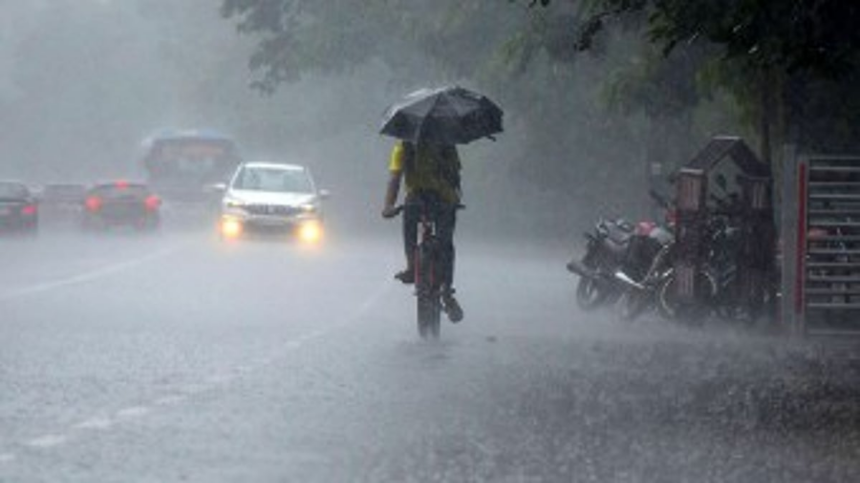
Nearly half of India experienced extreme rainfall during the 2025 monsoon, with 45% of the country’s landmass affected and over 1,500 lives lost, according to a recent analysis by climate watchdog Climate Trends. Experts now attribute the intense monsoon patterns primarily to climate change rather than El Nino or La Nina cycles.
The India Meteorological Department (IMD) reported that the southwest monsoon concluded at 108% of the long-period average (LPA), marking an excess season dominated by concentrated downpours. This resulted in 2,277 flood and heavy rainfall incidents, 59 river breaches across nine major basins, and 1,528 fatalities, making it the third-highest flood occurrence since 2020.

Northwest India recorded its wettest season since 2001, with Rajasthan seeing 60–70% above-normal rainfall and Ladakh registering an unprecedented 342% surplus. In contrast, East and Northeast India experienced a 20% deficit, particularly affecting Assam, Arunachal Pradesh, and Bihar. Central India, including Madhya Pradesh, Maharashtra, and Gujarat, reported mostly normal to excess rainfall, with Gujarat seeing a 25% rise.
Meteorologists attribute the surge in extreme rainfall to warming oceans, altered wind patterns, and increased atmospheric moisture. Mahesh Palawat, VP of Meteorology and Climate Change at Skymet Weather, noted, “The Arabian Sea is much warmer now, providing massive water vapour that fuels torrential rains.”
The monsoon also saw an unusual expansion of Western Disturbances—traditionally winter systems—into summer months, intensifying rainfall over the Himalayas and northern plains, said AP Dimri, Director of the Indian Institute of Geomagnetism.
The Himalayan region faces heightened risks as it warms nearly three times faster than the global average, accelerating glacier retreat and increasing flash flood threats. Dr Argha Banerjee, Glaciologist at IISER Pune, explained, “Rapid snowmelt raises stream levels, making rivers more responsive to heavy rains.”
Studies indicate that warming across the Middle East contributes to nearly 46% of extreme rainfall in Northwest India and Pakistan. Regional trends also show increased rainfall over eastern Rajasthan, Gujarat, Telangana, Andhra Pradesh, and North Karnataka, while UP, Bihar, and Northeast India have seen declines due to aerosol pollution and shifting climate patterns.
Former IMD Director General KJ Ramesh noted, “Rainfall patterns are changing rapidly, and adaptation strategies are crucial. India’s changing monsoon regime now poses major challenges for water management, agriculture, and disaster response.”
With the 2025 monsoon being the second consecutive year of above-normal rainfall, experts stress the urgent need for climate adaptation, as extreme weather events are expected to persist.