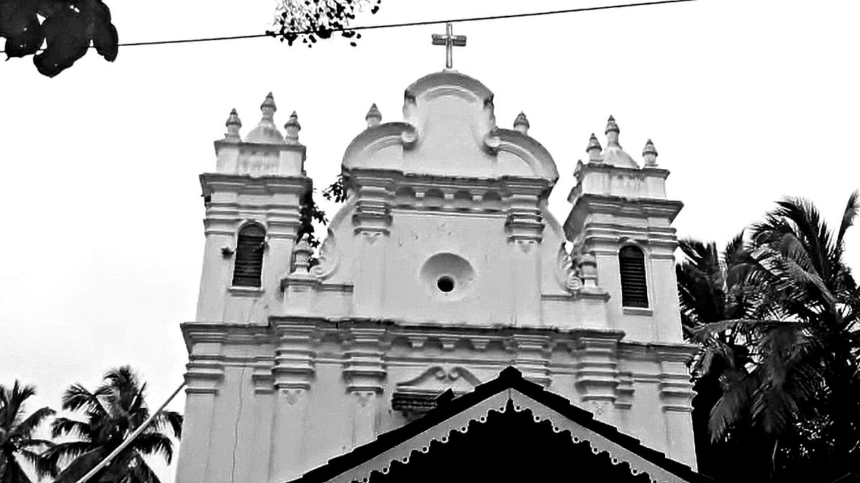
St. Joaquim was the ever-chaste husband of St. Anne, the mother of our Blessed Virgin. Tradition teaches that while Joaquim was away from home, an angel of God appeared to him in a vision. This angel promised that he and Saint Anne would bear a child who would be blessed through the ages. Upon waking from this vision, St. Joachim rushed home to share his excitement with his beloved wife. She was there to greet him, only to reveal the same good tidings as she was promised in another visitation from God’s messenger. Images of Saint Joaquim are often identified by the presence of his associated symbols. A book or scroll represents linen makers, a shepherd’s staff for the Christian word, and a basket of doves represents peace. He is almost always dressed in green, which is the color for hope.
Both, portraits and narrative images usually represent St. Joaquim as a man in later middle age, with a forked beard, usually gray, that reaches to about the breastbone. He often carries a staff, referencing his journey into the mountains. In some images there will also be a lamb or sheep, referring either to his rejected offering or to the flocks he took into the mountains. Doves also figure sometimes in Joaquim’s images. One might imagine that they are the sacrifice that the priests rejected in the Temple. But in images of that episode his offering is a lamb. In Leviticus doves are what a person may offer in the Temple if he is too poor to offer the required beast, whereas both the written tradition and the images have it that Joaquim was well off. It may be that the doves refer to the offering the couple make when they take Mary as a little baby, to the Temple for the ‘purification’, though again the problem is that they were wealthy enough that their offering should be one dove and one lamb, not two doves. In Goa the devotion the Saint Joaquim is not as huge. Statues of him are very rare as independent standing images. However, occasionally one may see ensembles composed of the saint shown standing besides his wife St. Anne, accompanying his daughter Mary.

From time immemorial the Greeks have celebrated the Feast of St. Joaquim on the day following Our Lady’s Nativity. The Maronites kept it on the day after the Presentation in November, and the Armenians on the Tuesday after the Octave of the Assumption of the Mother of God. The Latin Church at first did not keep his Feast. Later on, it was admitted and celebrated sometimes on the day after the Octave of Our Lady’s Nativity, September 16, sometimes on the day following the Immaculate Conception, December 9. Thus, both East and West agreed in associating St. Joaquim with his illustrious Daughter when they wished to do him honor.
About the year 1510, Pope Julius II placed the Feast of the grandfather of the Messias upon the Roman Calendar with the rank of double major; and remembering that family, in which the ties of nature and of grace were in such perfect harmony, he fixed the solemnity on March 20, the day after that of his Son-in-law, St. Joseph. The life of the glorious Patriarch resembled those of the first fathers of the Hebrew people; and it seemed as though he were destined to imitate their wanderings also, by continually changing his place upon the liturgical cycle.
Hardly 50 years after the Pontificate of Julius II the critical spirit of the day (the Protestant revolution) cast doubts upon the history of St. Joaquim, and his name was erased from the Roman breviary. Pope Gregory XV, however, re-established his Feast in 1622, and the Church has since continued to celebrate it. Devotion to Our Lady’s Father continuing to increase very much, the Holy See was petitioned to make his Feast a holyday of obligation, as it had already made that of his Spouse, St. Anne. In order to satisfy the devotion of the people without increasing the number of days of obligation, Pope Clement XII in 1738 transferred the Feast of St. Joaquim to the Sunday after the Assumption of his daughter, the Blessed Virgin Mary, and restored to it the rank of double major.
On August 1, 1879, the Sovereign Pontiff Leo XIII, who received the name of Joachim in Baptism, raised both the Feast of his glorious Patron and that of St. Anne to the rank of double of the second class.