Dolcy D’Cruz
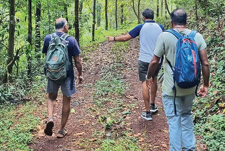
SAFETY GAPS IN TREKKING PRACTICE Durgadas Parab, a Goa-based eco-tourism guide speaks about the dos and don’ts of trekking and shares his observations on trekking practices in other regions. “He says that in places like Uttarakhand, trekking has become highly commercialised. “There, treks are often sold in packages and groups are formed just a day before the trek. People stay together for four to five days and then return. Many of them don’t even know each other, and there is very little bonding or briefing.” He contrasted this with practices in Goa. “Here, even for a one-day trek, we ensure proper introductions and briefings. We check everything in advance—the campsite, cooking arrangements, safety measures. Even small things like whether participants are carrying basic essentials like biscuits are considered,” he adds. Durgadas also highlights operational challenges during treks in remote areas. “In many places, there is no mobile network. In such cases, the phone battery gets drained quickly while searching for signal. That becomes a serious concern during emergencies,” he says. He further pointed out that some commercial operators shift responsibility unfairly. “Organisers often take signatures saying they are not responsible, and that’s it,” he notes. In contrast, he said his team follows strict safety protocols, including deploying at least two guides per group—one leading from the front and another at the rear. “The rear guide usually has more responsibility, often a senior guide, because the group cannot move forward until the last participant arrives,” he explains. He concluded by stressing the importance of preparation and awareness. “You cannot go completely unprepared into such areas.”. A TRAUMATIC EXPERIENCE AT CHORLA GHAT Now 21, one of the group of seven schoolgirls who lost their way, speaks anonymously about her experience in the forest at Chorla Ghat in 2017. This was their first trek, so they weren’t familiar with the terrain or what to expect. “It was scary and confusing. We had carried all our belongings, but when we went to see a waterfall during the trek, we left everything behind. When we tried to head back, we couldn’t figure out the path and ended up going the wrong way. It was already afternoon when we realised we were lost, and by the time we were still trying to find our way, it had turned dark. It was raining, which made it even harder to see anything clearly. We didn’t encounter any animals, though we did notice snake holes. It was meant to be just an afternoon trek, we had planned to return before sundown. It was very traumatic at that moment, and I didn’t really like the attention that came afterward. But it was also a learning experience. Most of us had never gone trekking before, and we realised how important it is to have a proper guide and be fully prepared.”

A RESCUE MISSION THROUGH THE NIGHT Paresh Porob, now an Assistant Conservator of Forests (ACF), recalls the rescue operation from 2017 in the Chorla Ghat forest, when he was serving as a Range Forest Officer (RFO). A couple whose daughter was part of the group had stayed back on the road with snacks and refreshments. The girls were supposed to return by lunchtime, but when they didn’t, the parents realised something was wrong and alerted authorities. “We were informed around 10:30 pm. The Indian Navy had conducted an aerial search using helicopters, but due to thick fog, they couldn’t spot anything on the ground. That’s when our team was deployed. A team of 11 members began the search operation, which lasted from 10:30 pm to 2:30 am, when the girls were finally located. We were concerned because the area had steep slopes leading into a gorge,” he explains. Trekkers must also consider the distance and ensure that the route can be completed within a day. If the plan involves staying overnight, then adequate arrangements for accommodation and safety must be in place. “In some areas, especially during the monsoon, streams can become dangerous due to flash floods. Trekkers need to be aware of such risks and plan accordingly. They should also know how to map out their trail and navigate safely,” informs Paresh
A WARNING FOR ADVENTURERS Well-known environmentalist and historian, Rajendra Kerkar has been actively involved in wildlife conservation and forest protection, particularly in the Mhadei region, which is one of Goa’s most ecologically sensitive areas. According to him, the ideal time for trekking in Goa is between November and January. Rajendra points out trekkers get lost because people rely on second-hand information, “Most of the time, trekkers enter forests based on videos or photos shared by friends or colleagues, without proper knowledge of the terrain. Trekkers should always take local guides along. This not only ensures their safety but also supports the local community.” Timing is equally important. “When entering the forest, they should plan to begin their return journey by at least 3 pm. This gives them enough time to exit safely. Many people wait until sunset, and that’s when they run into trouble and cannot be traced. Nowadays, trekkers must be prepared to face challenges from animals like sloth bears. This is their breeding season, and they tend to be more aggressive. Most human-animal conflicts occur during this time,” he explains.
FOLLOW THE RULES FOR A SAFE TREK Anyone wishing to visit a forest area must approach the concerned range office. Officials then guide visitors on designated entry points and ensure that all required documentation is completed before access is granted. Authorities note that such incidents are more common during holidays, long weekends, and festive periods, when people are more likely to venture into forests on their own. In anticipation, the department increases staff presence and plans operations accordingly to manage higher footfall and ensure safety. Naveen Kumar, Conservator of Forest (Wildlife & Eco-tourism), explains the legalities of trekking into protected forest areas, “Entry into protected forest areas for activities such as trekking or tourism is strictly regulated and carried out under the supervision of the Forest Department. The Government of Goa has already notified prescribed entry fees, and the respective range officer serves as the administrative authority overseeing these activities. In addition, trained nature guides are available to support such visits. The Goa Forest Development Corporation (GFDC) has been roped in by the government to facilitate eco-tourism activities in selected locations. During both peak and monsoon seasons, GFDC manages certain areas, including some waterfalls, in collaboration with the Forest Department. Visits to these locations are conducted under the supervision of authorised guides to ensure safety.” He further adds, “In case of emergencies, such as visitors going missing, established protocols, including evacuation procedures, are in place. Designated routes are clearly marked, and teams are deployed in notified areas. However, if visitors deviate from these marked paths, there is a higher risk of them getting lost. When entry is made through proper channels, authorities maintain a headcount of visitors entering and exiting, allowing for effective monitoring. This ensures that any discrepancies can be quickly identified and addressed. In contrast, illegal entry makes it difficult to track individuals, and authorities often only become aware of such situations after being contacted by family members or acquaintances.” Speaking about the violation of rules, he informs, “Illegal entry into protected areas is a punishable offence under the Wildlife Protection Act. Warning boards are prominently displayed across Goa, clearly indicating restricted zones. Despite this, instances of unauthorised entry still occur, and those found violating the rules are subject to legal action.”