SHASHWAT GUPTA RAY

PANJIM: Teaching human anatomy in medical colleges faces severe hurdles due to a chronic lack of donated bodies and the overpowering stench of chemical preservatives like formaldehyde.
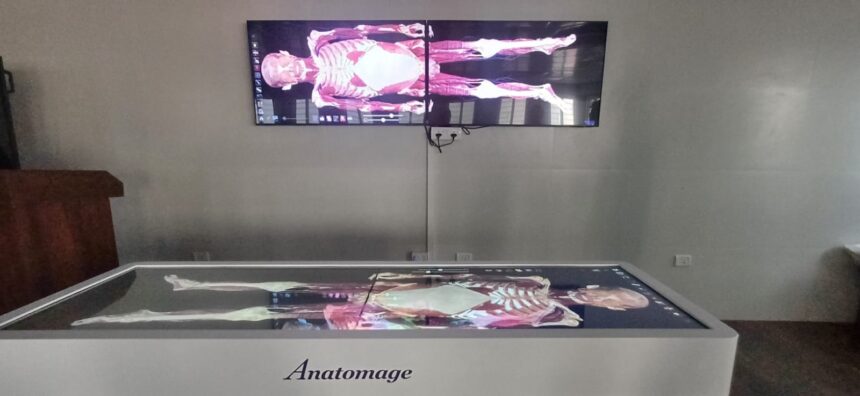
To overcome this challenge, Goa Medical College and Hospital has acquired the Anatomage Table, a life-size, touch-screen virtual dissection and 3D anatomy visualisation platform.
Featuring digitised human cadavers and high-resolution medical imaging data, it allows students and healthcare professionals to interactively explore anatomy, physiology, and pathology without chemical exposure or physical tissue damage.
“GMC is strengthening its medical education infrastructure with the introduction of the Anatomage Table, an advanced three-dimensional virtual anatomy and digital dissection platform designed to enhance the teaching and learning of human anatomy,” Nodal Officer of IT and E-governance at GMC, Dr Dhaval Faterpenkar told O Heraldo.
The Anatomage Table provides students and faculty with an interactive, life-size digital representation of human anatomy, enabling detailed exploration of anatomical structures through virtual dissection. The technology allows users to visualise the human body in multiple planes and examine structures layer-by-layer, providing an immersive learning experience.
“The facility is expected to significantly complement conventional anatomy teaching, including cadaveric dissection, by enabling students to repeatedly explore complex anatomical structures and better understand their three-dimensional relationships,” Dr Faterpenkar said.
The technology has wide applications across undergraduate and postgraduate medical education and can also support teaching in clinical disciplines such as Surgery, Radiology, Orthopaedics, Neurosurgery, ENT and other specialties. It can facilitate correlation between anatomy and clinical imaging, including CT and MRI-based anatomical visualisation.
“The Anatomage Table will also provide faculty with an innovative platform for demonstrations, case-based teaching, interactive learning and academic presentations. It is expected to promote a more engaging and technology-driven approach to medical education at GMC,” he said.
Dr Faterpenkar said that the initiative reflects GMC’s continued efforts towards modernising medical education, strengthening academic infrastructure and incorporating advanced digital technologies into healthcare education and training.
The facility will benefit undergraduate medical students, postgraduate students, faculty members and other healthcare professionals, further strengthening GMC’s role as a leading centre for medical education and training in the State.
“GMC continues to adopt innovative educational technologies to provide students with contemporary learning opportunities while maintaining the importance of traditional, hands-on medical education,” he added.