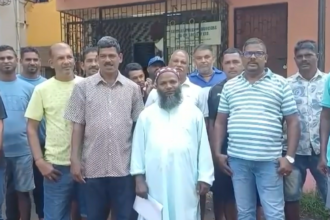
In a significant policy move, the Goa government has instructed the Forest Department to identify isolated hamlets and human habitations located within protected areas—such as wildlife sanctuaries and national parks—that lack basic civic amenities. The aim is to facilitate their voluntary relocation to revenue land where essential infrastructure like electricity, water, and road access can be provided.
The decision was discussed during a recent meeting of the Goa State Board of Wildlife (SBWL), chaired by Chief Minister Pramod Sawant. Both Sawant and Forest Minister Vishwajit Rane stressed that any relocation must be voluntary and contingent on the residents surrendering their rights or claims within these ecologically sensitive zones.

According to the meeting minutes, the Chief Minister emphasized that the Forest and Revenue Departments should jointly work to identify such communities and provide them with viable resettlement options. Forest Minister Rane echoed the sentiment, adding that relocation efforts should prioritize isolated communities in remote corners of sanctuaries that lack basic services.
The discussion arose while reviewing a proposal by the Electricity Department seeking forest clearance to lay 5.7 km of underground power cables to serve unconnected wads in Keri, located within the Cotigao Wildlife Sanctuary. The project would require 0.342 hectares of forest land.
To minimize environmental impact, the Chief Minister directed that all underground cabling be placed within a utility duct alongside existing roads, allowing future installations without repeated excavation.
The government’s approach reflects a balance between conservation and improving the quality of life for residents living in ecologically sensitive but infrastructure-deprived zones.