SHASHWAT GUPTA RAY

PANJIM: Childhood and adolescent obesity is fast emerging as a serious public health emergency in Goa, with medical experts warning that the State may be laying the foundation for a future epidemic of chronic diseases, premature deaths, and mounting pressure on its healthcare system.
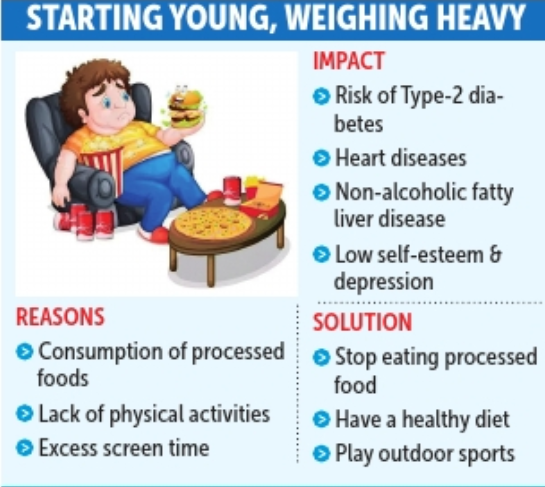
Recent data and expert assessments indicate that unhealthy lifestyles, poor dietary habits, and declining physical activity among children are accelerating a dangerous shift toward early-onset non-communicable diseases (NCDs).
Dr Preethi Pereira, paediatrician at Manipal Hospital, said that 7.4% of children between 10 and 13 years are overweight, while the figure is 3.4% for those below five years.
“It is rising due to a sedentary lifestyle, the consumption of processed foods, and unhealthy eating habits. There is a risk of Type 2 diabetes, hypertension, non-alcoholic fatty liver disease, and low self-esteem. This can lead to conditions such as cancer, sleep apnea, and cardiovascular disease in adulthood,” Dr Pereira said.
Dr Anup Netravalkar, Senior Programme Coordinator, Child Development Group, Sangath, said that the prevalence of childhood obesity and overweight in India is estimated at 8.4% and 12.4%, respectively.
“The State of Goa, known for its westernised culture, harbours many of the variables favourable for the development of lifestyle diseases. Non-communicable diseases account for 70.4% of the disease burden, with ischaemic heart disease, diabetes, chronic obstructive pulmonary disease (COPD), and stroke ranking among the top contributors to Disability-Adjusted Life Years (DALYs),” Dr Netravalkar said.
Goa reports a diabetes prevalence of 26.4%, the highest among all Indian states, along with a significantly higher diabetes-related mortality rate than the national average. Additionally, the prevalence of obesity (44.4%) and hypertension (45.8%) in Goa exceeds the national averages of 28.6% and 35.5%, respectively.
“Most of these diseases have their roots in early childhood. The prevalence of NCDs could be significantly reduced by adopting a healthy lifestyle early in life. Habits formed during the early years of life significantly influence long-term behaviours and health outcomes. Intervening early can prevent risk factors such as poor nutrition, physical inactivity, and exposure to stress from becoming ingrained,” he said.
Dr Amit Dias, Assistant Professor, Department of Preventive and Social Medicine, Goa Medical College and Co-Principal Investigator of the ICMR-INDIAB Study—which reported one of the highest prevalences of diabetes in India (24.6%) in Goa—said that obesity, through its strong link with insulin resistance, is a key driver of the rising burden of Type 2 diabetes worldwide.
“Obesity in childhood frequently persists into adulthood, increasing the lifetime risk of cardiovascular disease and other non-communicable diseases, thereby placing a growing burden on health systems,” Dr Dias said.
He said that NFHS-5 data indicate the prevalence of overweight among adolescents (10–19 years) is around 14.4%, representing a several-fold increase and highlighting a rapid shift in lifestyle and dietary patterns. At the same time, Goa has shown some positive trends, with a decline in overweight among children under five years from 3.7% to 2.8%, making it a relatively better-performing state compared to others in India.
Dr Dias added that school-based interventions have been a key focus, including restricting or removing vending machines, limiting the sale of junk food on school premises, promoting healthier mid-day meals, and encouraging regular physical activity through structured programmes.