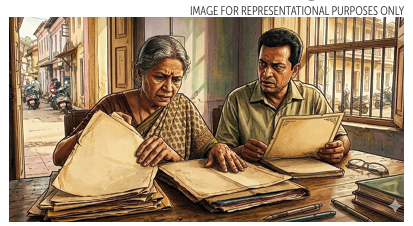
The NAKSHA ex ercise in Margao and Cun colim is finding that map ping properties may be the easier part, with the more difficult task emerging when property holders are asked to establish the documen tary trail behind properties that have often remained in families for generations. The survey has enabled the authorities to map properties and structures in the two municipal areas, but information relating to rights over the properties is still being gathered and scrutinised. A number of property holders have yet to come forward, while some who participated have been unable to furnish the title and other supporting docu ments required for prepara tion of draft Urban Property Cards. The problem is particu larly acute with old and ancestral properties, where ownership may have passed through several generations and records may be scat tered, incomplete or simply unavailable. In such cases, the physical identification of a property does not necessarily provide the docu mentary evidence needed to establish the rights at tached to it. The difficulty had been flagged even before the verification exercise began.
Citizens for Democracy had urged the government not to rush NAKSHA and to explain the exercise and its implica tions clearly to property holders. Its convenor Elvis Gomes had pointed out that many long-standing residents, par ticularly in Cuncolim, may not possess complete historical property documents and questioned what such residents would be expected to produce. The organisation had also raised concerns about the pos sibility of confusion and anxiety among holders of ances tral properties if they were unable to establish their claims through the documents being sought. The concerns are now relevant as officials continue scrutinising the material submitted by property holders.

The response has consequently become as much a question of documentation as participation. Even where residents are willing to cooperate, the absence of a com plete title trail can leave applications without the material required for the preparation of Urban Property Cards. Of ficials have indicated that they still have to scrutinise the documents submitted by property owners before the draft cards can be prepared. The department has extended the document-submission exercise until August 31, giving property holders more time to appear before the Survey and Land Records authorities and produce the required papers. The documents include the NAKSHA notice, title documents, identification papers and a passport-size photograph. The information collected will eventually form the ba sis for draft Urban Property Cards, which are to be placed in the public domain for objections and suggestions. This makes the verification stage important, since the record being prepared will have to reflect not merely the physical existence of a property but the information available about the rights attached to it. The exercise is also being conducted under the shadow of a legal challenge. A division bench of the Bombay High Court at Goa, comprising Justices Valmiki Menezes and Amit Jamsandekar, is hearing a PIL challenging the NAK SHA notices.
The court has directed that the outcome of the survey will be subject to its verdict and has also dealt with the validity of the earlier notices issued to residents in Panjim, Margao and Cuncolim. The government has sub sequently issued fresh notices as the document-collection exercise continues. NAKSHA is a pilot being implemented in more than one urban area of Goa, including Panjim, Margao and Cuncolim. However, the property histories and documentary records in each area are different, making the experience of the ex ercise a local one even within the wider State programme. For Margao and Cuncolim, the coming days will there fore show whether the extended window can bring more property holders into the process and, more importantly, whether those coming forward can provide enough docu mentary material for the authorities to turn the mapped properties into reliable draft Urban Property Cards.