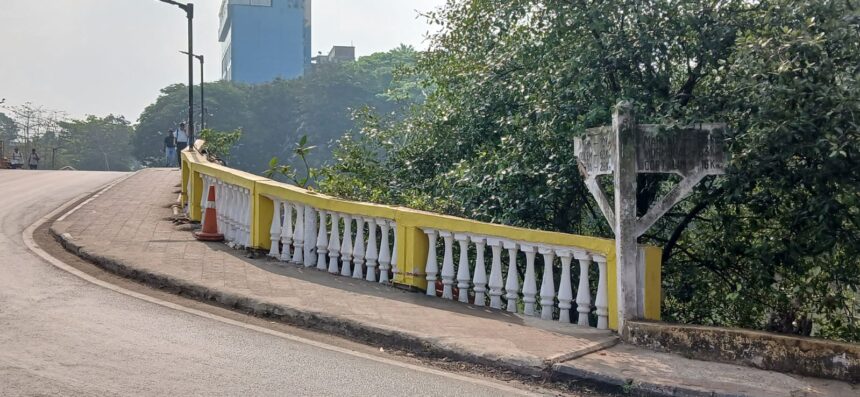
On the right side of the western end of the old Patto Bridge in Panjim stands a neglected vintage signpost that reflects a unique architectural and historical legacy.
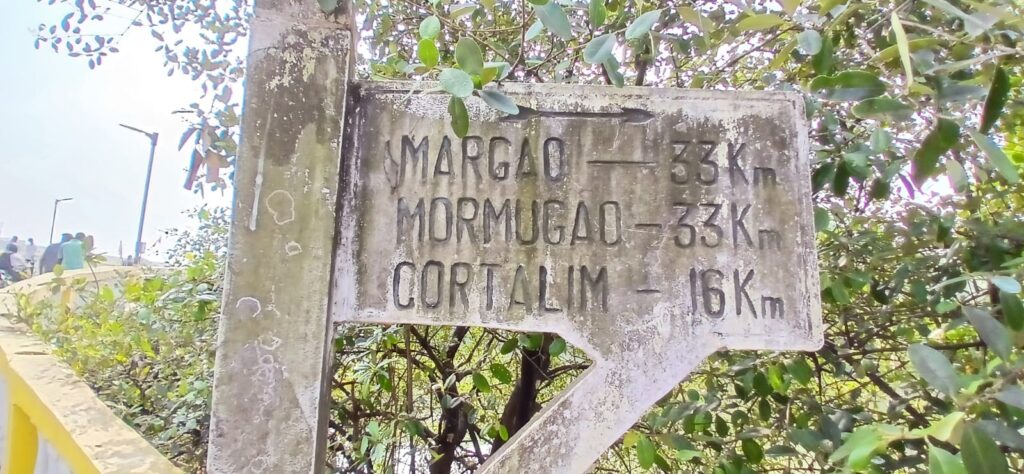
The signpost is a cement structure consisting of a rectangular column with two rectangular directional panels placed at right angles. Each panel is supported by a projecting arm extending from the column, giving the structure a balanced and distinctive appearance. The panels feature engravings of three place names each, indicating directions to various locations, along with their appropriate distances from Patto.

Close observation of the engravings reveals that the place names originally carried traditional Portuguese accents, reflecting Goa’s colonial past under Portuguese India. Over time, however, the engraved spellings have been highlighted with black paint, which has obscured the original Portuguese accents and altered the historical authenticity of the inscriptions.
Historic Signpost Falls into Neglect Despite Cultural Significance
Despite its cultural and historical value, the signpost has remained neglected for many years. The structure shows visible signs of deterioration, and a corner portion of one of the panels has already broken off. What was once a prominent roadside marker now stands weathered and largely ignored.
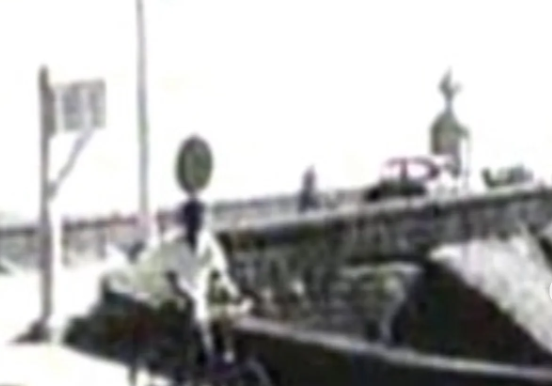
Interestingly, the signpost can be seen standing prominently in a clip from the 1963 Konkani film Amchem Noxib, offering a glimpse of how it appeared during an earlier era when it formed an integral part of the city’s streetscape.
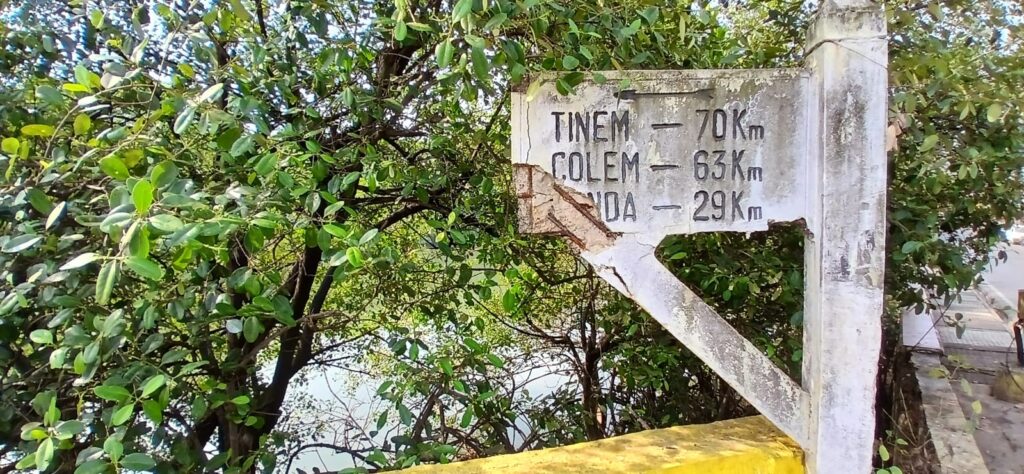
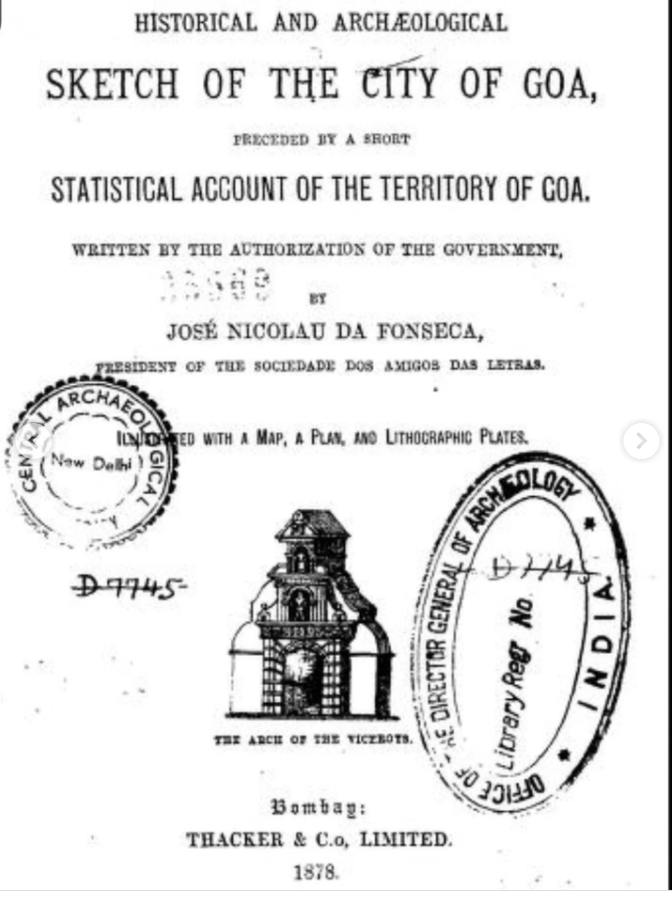
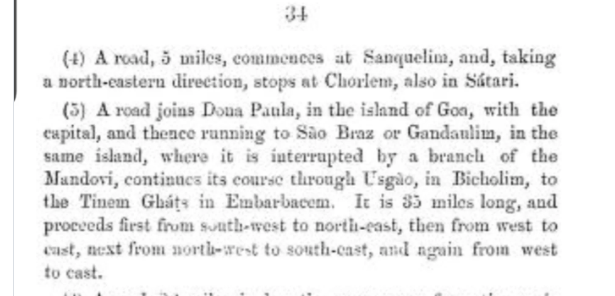
One of the panels also mentions the place “Tinem,” a name unfamiliar to many today. A reference to this location appears on page 34 of the book Historical and Archilogical Sketch of the City of Goa, 1878, highlighting its presence in historical records.
This modest yet historically significant structure is a silent reminder of Panjim’s layered past. Heritage enthusiasts believe that such relics of urban history deserve urgent attention, restoration, and protection so that they can continue to narrate the story of the city to future generations. Preserving this architectural fragment would not only safeguard a piece of Goa’s heritage but also reinforce the importance of protecting smaller, often overlooked elements of the region’s cultural landscape.