Myola joanes

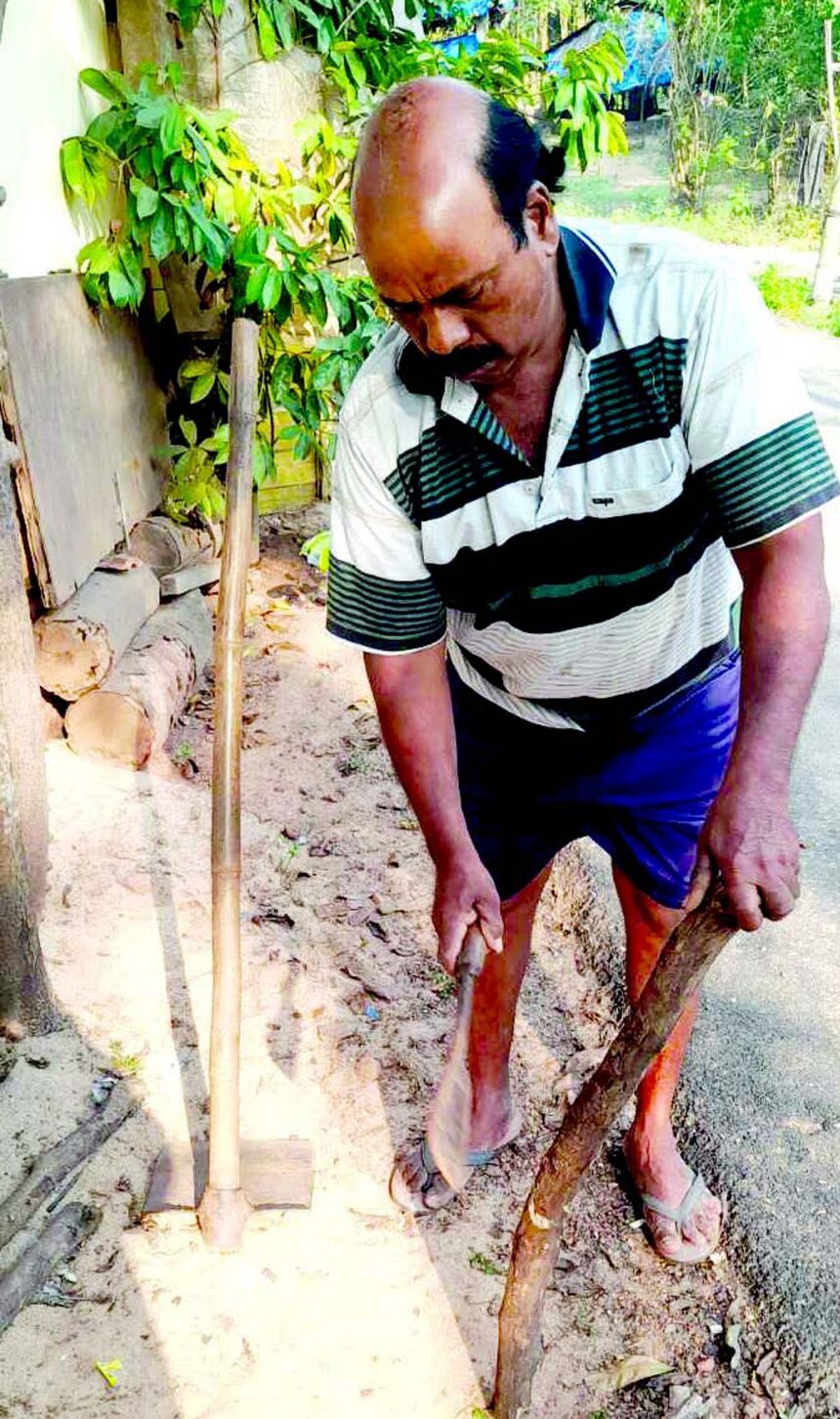
BENAULIM: Custodio’s day begins at 8.50 am sharp, as he whistles his way through the village, greeting everyone he meets. At 63, his repertoire includes everything from mending huts and fences to clearing backyards, transplanting crops, and even digging irrigation channels. Summers
find him chopping firewood and patching thatched roofs, while the rains bring planting and weeding duties. And during the festive season? “Hanging up lights and decor, deep cleaning houses, painting grills, and cleaning up the backyard—these are extremely busy days,” he says with a hearty laugh.
For weddings, he’s the person to call to craft the traditional ‘roshi,’ a makeshift kitchen of woven coconut leaves, complete with hand-crafted mud stoves for preparing ‘roce,’ with freshly squeezed coconut milk. Not one to dawdle over a job for more than a day, Custodio works quickly and efficiently, so he can keep his commitment to a different neighbour the next day.
Custodio started working at 15, leaving school to help his mother in the fields. “I’ve been doing it for so long that now it’s what keeps me going,” he says. A fall from a tree years ago left him unable to climb or clean wells. “I had a rod embedded in my shoulder, so I can’t climb trees anymore. My sons, who live abroad, keep asking me to stop working, but the doctor told me to stay active. My clients have been very understanding and helpful. They tell me to leave out any task I can’t manage.”
Despite the challenges that come with his age, Custodio remains devoted to his work. His daily schedule is tightly packed, with regular clients across the village keeping him busy from morning till evening. “I ask what needs to be done the day they call to fix the date. Sometimes people need something extra done; I even mop the floors if someone asks me to,” he laughs.
Angela Fernandes, a long-time client from Mazilvaddo, recalls, “Once, I wasn’t even home. I had informed him in advance and forgotten about it, but on the said date, he showed up. From experience, he knows what to do and where everything goes without me even telling him. From uprooting the weeds to burning dry grass and placing the fresh grass around the coconut trees for manure, my yard was spic and span when I returned. He is very invested in his job and does it wholeheartedly.”
Having spent over 30 years in this service, Custodio takes pride in his back-breaking work. “It doesn’t feel like work anymore. Since I’ve been doing it since childhood, it’s now a skill that automatically comes to me. The villagers are nice and trust me completely. There are no local handymen you can rely on, these days,”
he reflects.
He worries about the sustainability of his profession and how younger generations perceive it. “These odd jobs seem small but are needed; otherwise, everything gets thrown off balance. Today’s generation doesn’t understand that it’s a very sustainable job. This work supports families – I have educated all four kids doing odd jobs. There’s nothing shameful about it. Hiring a local handyman isn’t just about getting a job done—it’s also about building stronger ties within your community,” he says.
Why manual weed removal still reigns supreme
When it comes to weed and grass removal after the
rains, many customers still favour the time-tested
traditional methods over modern alternatives like
lawnmowers or weedicides
Weedicides: While effective, weedicides leach chemicals into the soil and pose a risk to the quality of food crops or paddy grown in the fields, he says. Removing weeds by hand ensures the fruits and vegetables remain free from chemical contamination, preserving both taste and safety
Machines: Mechanical weed removers may save time, but they only cut the weeds at the surface. By comparison, removing weeds by hand or with a spade ensures the roots are eliminated, which slows regrowth and keeps the fields cleaner for longer.
8For many, tradition isn’t just about nostalgia—it’s about quality and sustainability