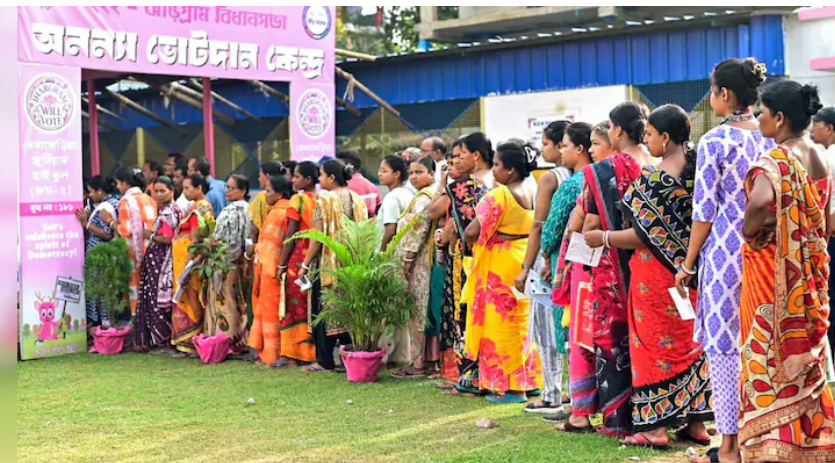
The Special Intensive Revision (SIR) of electoral rolls emerged as one of the most politically contentious issues during the 2026 West Bengal Assembly elections. Months ahead of polling, the exercise sparked sharp protests from the Trinamool Congress and several opposition parties, which alleged that the revision drive was intended to disenfranchise minorities, migrants and economically weaker sections of society.
The controversy triggered statewide demonstrations, while the Election Commission faced sustained criticism from opposition leaders who claimed that lakhs of genuine voters were being removed from the electoral rolls.

However, post-election data released by the Election Commission presents a more nuanced picture of the exercise and its eventual impact on the election outcome.
According to the data, while the SIR process did result in large-scale deletions of “ineligible” electors, it also saw substantial additions of eligible voters before the nomination deadline. The figures further indicate that many constituencies reporting the highest number of deletions eventually voted in favour of the same parties that had most strongly opposed the revision process.
Highest Deletions Reported in Malda-Murshidabad Belt
Election Commission data shows that the largest number of deletions during the SIR exercise occurred in constituencies located in the Malda and Murshidabad region.
Sujapur recorded the highest deletions, with nearly 1.50 lakh electors removed from the rolls. It was followed by Raghunathganj with 1.30 lakh deletions, Samserganj with 1.25 lakh, Ratua with 1.23 lakh and Suti with 1.20 lakh deletions.
These constituencies became the focal point of the political controversy surrounding the SIR exercise, with opposition parties repeatedly alleging that minority-dominated areas were being selectively targeted under the revision drive.
Despite these allegations, the post-poll electoral trends indicate that the large-scale deletions did not significantly alter the political outcome in these seats, raising questions over the extent to which the SIR exercise influenced voter behaviour or electoral results.
The Election Commission has maintained that the revision process was conducted to remove duplicate, shifted, deceased and otherwise ineligible voters from the rolls, while ensuring that all eligible citizens were included before the elections.
(This story is published from a syndicated feed)