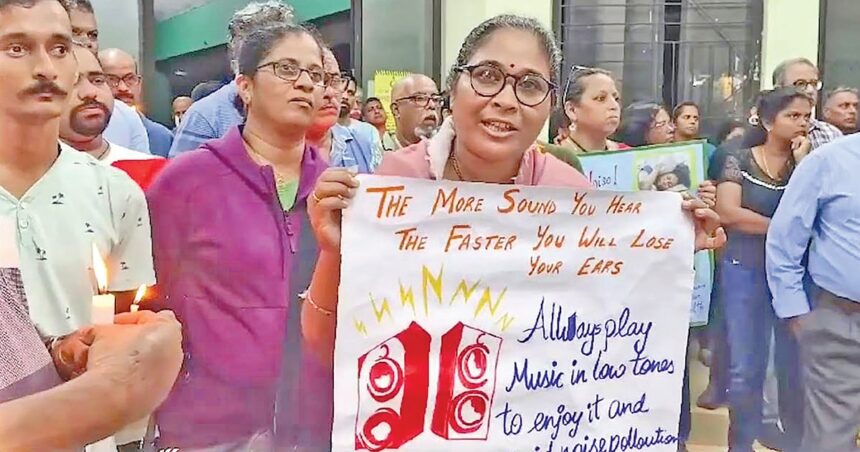
Dr Inacio Fernandes, a campaigner against sound pollution, was assaulted by a group of villagers in the presence of police at an Anjuna Gram Sabha meeting on November 24.
This is nothing less than a slap on the face of democracy and an attempt to stifle the voices of dissent that dared to rise against a system bowing to the whims of dictatorial forces. It’s a blow to the very foundation of Fundamental Rights enshrined in the Indian Constitution.

This is the grim portrait of our society today, a society shackled by a corrupt system that silently watches as democracy is strangled in broad daylight. Thousands of citizens, pleading for the right to live with dignity, for the bare minimum of basic rights, have stood their ground, facing oppression without fear of the consequences.
And among these relentless struggles, one battle stands out—the fight waged by the residents of Vagator and Anjuna. For over a year, they’ve been raising their voices against an unrelenting menace: noise pollution.
Night after night, the blaring music from hotels, nightclubs, and trance parties has stolen their peace, disrupting their lives.
In 2024, amid the many movements that etched their mark on the conscience of this nation, the fight against noise pollution emerged as a beacon of collective resilience — a reminder that even in the darkest hours, the voice of the people will not be silenced.”
For years, the citizens of Vagator and Anjuna have demanded firm action against the blight of noise pollution. But their pleas have fallen on deaf ears. The system, rife with corruption under the guise of ‘tourism development,’ has shielded those who flout the law. People’s representatives, entangled in this web of corruption, have worked not to amplify the voices of their constituents, but to suppress them.
Protests were crushed, movements ignored, and frustrations mounted. Left with no other choice, the people turned to the judiciary for redress. Yet, even as court orders were quietly buried beneath bureaucratic apathy, the fight raged on. The citizens refused to be silenced, continuing their battle against this blatant violation through every democratic avenue available.
In the year 2024, the struggle against noise pollution became a defining feature of life in Anjuna and Vagator. While these protests have persisted for years, they captured the state’s attention most prominently in the critical months between September and December 2024. It was during this time that the courage and determination of the people stood in stark contrast to the indifference of the system meant to serve them.
O Heraldo has always stood tall as the unwavering voice of the common man, fearlessly playing the role of a vigilant watchdog. With a mission to question the system and challenge injustice, we took up the cause of the residents of Vagator and Anjuna, demanding answers from government agencies and accountability from those in power.
In the spirit of justice and democracy, Herald TV shone a spotlight on these protests, amplifying the voices of citizens determined to fight for their rights.
Through programs like Point-Counter Point, we delved deep into the issue of noise pollution. We brought together the victims, the brave petitioners battling in court, and selfless, honest retired officers who once served within the very system. These in-depth discussions offered a platform to unravel the complexities of the problem and bring clarity to the public.
The severity of this noise pollution crisis is perhaps best understood through the personal experiences of Jenny Crasto, resident of Vagator and a leading figure in this movement. Her tireless efforts and unwavering resolve from the very beginning exemplify the community’s fight to reclaim peace and dignity in their lives.
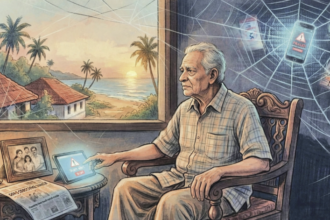
Jenny said, “The loud music disrupts our sleep. My son, who suffers from autism and seizures, is especially vulnerable. This isn’t just noise—it’s a health crisis. Jenny’s story is one of many. Families are grappling with sleepless nights and stress-related illnesses, while the authorities turn a deaf ear.”
Retired SP Bossuet Silva offered insights into the systemic failure to address this issue. During his tenure as Sub-divisional Police Officer in Mapusa over a decade ago, there were regular checks on noise pollution.
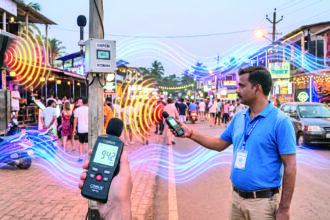
“We conducted inspections, used decibel meters, and booked violators,” he said. However, he noted a decline in enforcement in recent years, which he attributes to possible political interference and a lack of accountability,” Silva said.
The current police response has often been criticized as lacklustre, with complaints either redirected or dismissed.
As Silva pointed out, “Reports are often filed stating ‘nothing found’ during inspections, even when violations are blatant.” This raises questions about whether the police are under political pressure or simply turning a blind eye.
Chirilo De Souza, who spearheaded a Public Interest Litigation (PIL) against noise pollution in 2012, recounted his own battles.
“Back then, we were a small group of affected families fighting for relief. While we did succeed in shutting down a few clubs, it felt like an uphill battle against a powerful nexus,” he shared.
Today, the situation has escalated, with noise levels and illegal parties proliferating. “It’s not just local clubs anymore. Outsiders with connections in Delhi and Mumbai have joined forces with local operators, bulldozing their way through regulations,” Chirilo lamented.
Activist Mayur Shetgaonkar highlighted how the government’s own systems are designed to fail. “Noise monitoring stations are deliberately placed in areas where violations are unlikely to occur,” he explained.
He also described a “passing the buck” game between the Goa State Pollution Control Board (GSPCB), the police, and the Deputy Collector’s office. “The GSPCB says it’s the Deputy Collector’s responsibility, while the Deputy Collector claims they lack the necessary equipment. Meanwhile, violators continue their activities unabated,” he said.
Trajano De Melo, a seasoned political analyst, pointed out that noise pollution is only the tip of the iceberg.
“Behind this noise is a powerful drug cartel,” he alleged. “These parties are not just about music; they’re hubs for drug trafficking. The system’s complicity from granting licenses without dues to turning a blind eye to illegal activities indicates deep-rooted corruption.”
The unrelenting noise from nightclubs in Anjuna-Vagator, trance parties stretching till dawn, and the deafening music blaring from open-air restaurants have pushed many residents to the brink.
Some have been forced to abandon their homes and seek refuge elsewhere. For those unable to leave — families with elderly members or individuals struggling with illness —there is no escape. They endure this torment in silence, trapped by a system that has failed them.
Repeated complaints have fallen on deaf ears. On one side, a corrupt government system turns a blind eye to establishments openly flouting the law. On the other, the very representatives elected to serve these residents remain disturbingly silent, betraying the trust placed in them. Left with no choice, the affected locals turned to the High Court for justice.
In 2024, the High Court heard numerous petitions against noise pollution, though many remain unresolved. During these hearings, the court repeatedly criticized the government for its inaction.
The latest blow came during a hearing on December 9, 2024, when the court issued scathing remarks about the inefficiency of government agencies in curbing illegal activities. The court went so far as to propose forming a new committee to address the issue, underscoring its distrust of the existing machinery.
“We may have to appoint a committee if enforcement is not done,” warned Justice M S Karnik during the proceedings of the Contempt Petition 12, 2023 of sound pollution. During this hearing, petitioners also argued in the court the affidavit filed by GSPCB in the High Court wasn’t shared with them.
“It is shocking that the GSPCB has not given me copies of their affidavit submitted to Court during the last hearing and nor have I been given the documents presented to the court today,” said petitioner Desmond Alvares.
“The police have lodged an FIR against a unit that is not even heard of making noise in Anjuna. They seem to be going after the small fry to mislead the court and the GSPCB is trying to use delaying tactics by issuing notices when it is evident that all units are flouting rules,” alleged Alvares.
“That the police decided to book Sangria Tapas and Music instead of Hill Top, against whom I have made numerous complaints, shows the ‘seriousness’ of the government,” said Desmond D’Souza, resident of Vagator.
When Justice Karnik asked the GSPCB advocate whether Hill Top and Salud were impeded, the advocate replied: “Salud has been sealed.”
This is not just a legal reprimand. It’s a glaring indictment of government agencies that have failed to act and are now scrambling to shift blame. Instead of being ashamed by the court’s harsh words, these agencies appear more focused on passing the buck, leaving residents to bear the burden of their inaction.
The fight against noise pollution in Goa is not just about sound; it’s a battle for justice, public health, and the preservation of a peaceful way of life. While the road ahead is fraught with challenges, the determination of Goa’s residents and activists is unwavering. Together, they strive to ensure that Goa’s future is one of harmony and respect for the rule of law.
As the final days of 2024 slip away and the dawn of 2025 approaches, the villagers of Vagator and Anjuna hold onto a fragile hope—a hope that the new year might finally bring them the peace and justice they have fought so hard to achieve. For years, they’ve stood resolute, demanding their basic rights and a reprieve from the relentless noise that has shattered their lives.
Their fight has been long, their prayers unwavering, and their determination unyielding. And as we step into a new chapter, one thing remains certain: O Heraldo will continue to stand by these citizens, amplifying their voices and championing their cause. In the year ahead, we reaffirm our