The safety of visitors at the beaches has become a quite a debatable issue considering that several lifeguards affiliated to Drishti Marine resorted to a strike following differences with its agency and the government.
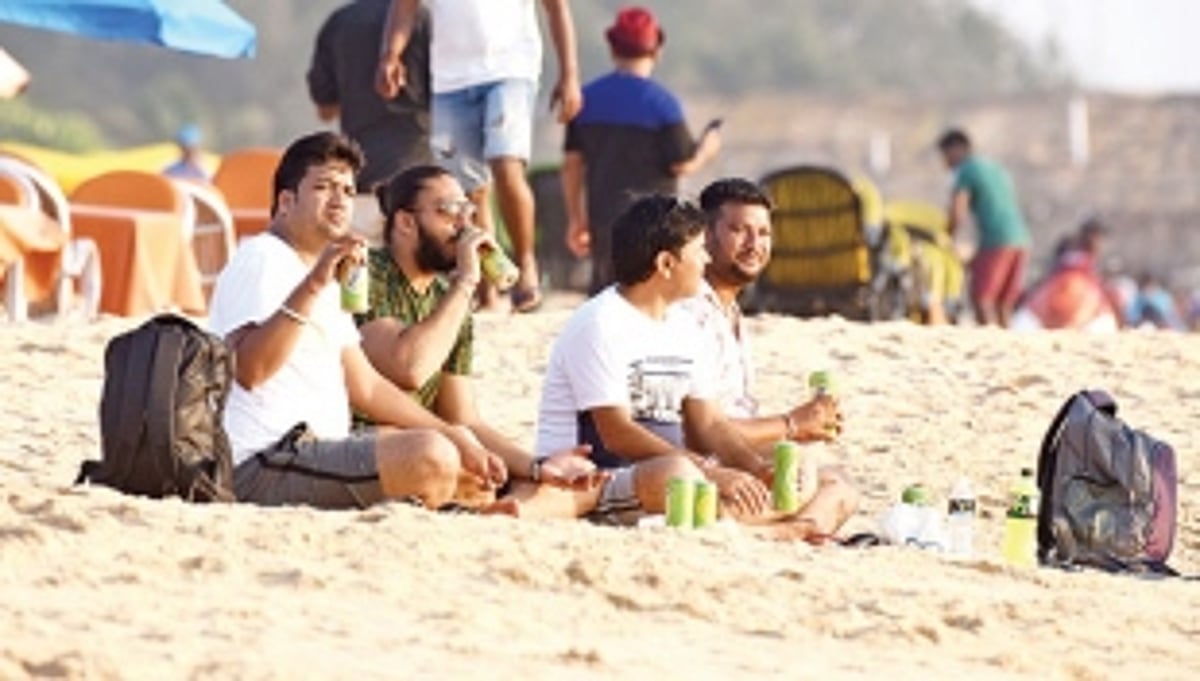
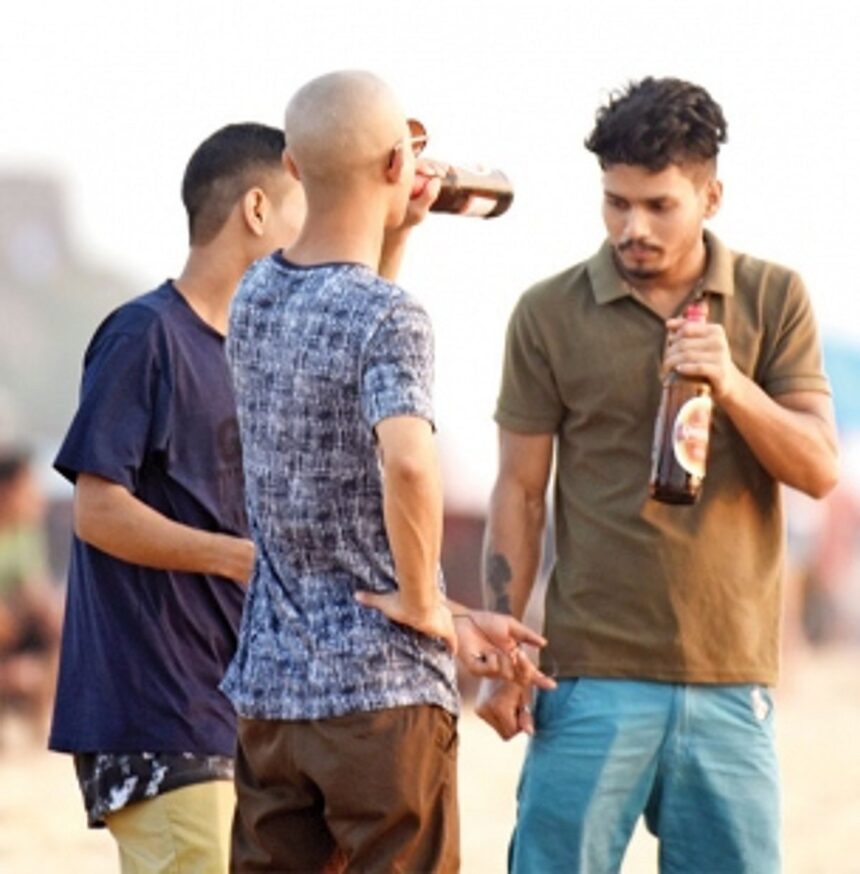
Along with this, came a surge in the incidents of drowning but the reason was not just the shortage of lifeguards but continuing nuisance by people who defy warnings to enter the water during dangerous moments as well as drinking on the beach. The agency that has been providing lifeguard services for over a decade has pointed out that the beachgoers barely respect lifeguards’ advice and warnings, which leads to unfortunate incidents on many occasions.
Drishti has claimed that the primary reason for the unfortunate spate of drownings in November was the cyclonic weather that induced erosion and rip currents. Since July 2019, an unprecedented monsoon kicked in and sea conditions had been very unstable with two cyclones crossing close by the coast.
“Strong undercurrents and massive swells are affecting the entire coastline of Goa. We are witnessing very strong rip currents across beaches even in November. The pull has been made worse by the fact that the coast is seeing very high levels of sand erosion due to loss of tree-line, over development and climate change. This creates shifting gradients and unsteady beaches. All in all, the sea has been unusually rough compared to other years in the same period. Weather has become warmer and the beach looks inviting but the undercurrents and swells in the water have proved fatally dangerous,” CEO Drishti Ravi Shankar said in an interview with Herald.
To add to the woes of the lifeguards, Drishti conceded, despite stern efforts to warn beachgoers to stay away from the waters, people continue to ignore the warnings. “Lifeguarding in India is a rarely seen service and their authority is not respected by beachgoers. People don’t pay heed to the lifeguards’ requests to stay away from the water as the dangers of pulls and currents are not correctly understood. The effort and time taken to convince a single person or group to come back out of the water can put another life at risk,” he stated.
The agency explained that as per the international standard of beach safety, red warning flags with signage in multiple languages on the beach are erected and jeeps equipped with loudspeakers for verbal warnings are announced in Hindi, Marathi, Russian and English; yet people continue to put their lives at risk by entering unsafe areas.
Citing an instance, the agency revealed that in one case last month, a group of six was asked to come out of the water by the lifeguard but as he moved away they went back in and the result to this was that two of them paid with their life. Out of the five drownings that happened in the last one month, four have been victims of rip currents swimming in areas marked unsafe, and one a medical emergency wherein the victim died of cardiac arrest while swimming.
Going back to the time when with the increase in tourists inflow the case of drowning to witnessed an increase, contract lifeguards under Goa Tourism Development Corporation and trained by National Institute of Water Sports were deployed. Drishti states that the exercise didn’t work well as there was no equipment, logistics or management provided and about 400 cases of drowning occurred in 2007 alone. It was hereafter that in 2008 the then government decided to outsource the lifeguarding to a private agency and Drishti began operations in Goa from June 2008.
“The State saw a 99 per cent reduction in deaths due to drowning. Between 2008 and 2011, drownings stayed in single digits. By 2012, the equipment, which had been provided by the State government, had become redundant and the State found it difficult to replace without tender. Tendering over 70 items proved to be a task. Hence the government decided to change the model and make it into a comprehensive beach safety plan by which financing, providing, installing and maintaining and replacing all equipment was the responsibility of the agency – at their own cost. In this tender Drishti was once again the lowest bidder by 20 per cent,” it claimed adding that six years later over 4,500 lives have been saved.
However what’s unfortunate is that out of 11 drowning cases this year till date, eight occurred during the monsoon. The agency states that their lifeguards have rescued 435 persons of which 330 were during the monsoon period itself.
Drinking menace
Drishti has urged visitors who have consumed alcohol to stay away from the sea eve as alert lifeguards spot potential dangerous situations. Unfortunately, many visitors do not heed to the request.
“The lifeguards politely request visitors who are intoxicated not to venture into the waters. Some agree and some don’t. However the lifeguards are trained to tackle such sensitive situations on ground. Goa police has now taken a more proactive role in deterring intoxicated tourists from entering the waters. The India Reserve Battalion (IRB) personnel work each day to remove and also fine the errant visitors. The results are here to see with reduced casualties despite the adverse sea conditions,” Shankar said.
Protest
The protest by a section of lifeguards for close to two months has held their pledge of saving lives on the beaches to ransom. The protesting lifeguards’ demands to induct them as government employees is not acceptable by the government while its other demand on the release of pending salaries have been cleared by the agency.
As the strike began taking a toll on tourism, Drishti has begun training its new recruits even as it has issued a statement to re-induct the striking workers. But in what comes as a shocking revelation, Drishti claims that some protesting lifeguards have forced its other colleagues to continue with the strike.
“An emergency rescue service cannot hold the State of Goa hostage by compromising public safety at the start of a crucial tourist season. Yet disheartening is hearing from some of those who want to get back to work, being coerced not to. Reports of harassment and fear about showing up to work have been reported across north and south. Senior department heads have narrated accounts of phone calls in tears for not knowing how they will support their families, and that they have been heroes in their village with the work they do but they have been threatened with physical violence if they come back,” the spokesperson said.
Herald contacted Minister for Tourism Manohar Ajgaonkar who too expressed concern over the continued strike. “They are not listening. All their grievances have been addressed however we cannot take them as government servants,” he said. The minister also said that in order to maintain safety along the beaches, Drishti Marine has already begun training its new recruits despite which the government as well as Drishti is still open to re-induct the aggrieved lifeguards. Drishti has also claimed that no dues to lifeguards are outstanding.
Left with no choice owing to the ongoing strike, Drishti has been busy recruiting and training new lifeguards and the training programs are being conducted in several batches in Goa, Karwar and Mumbai. Seventy five new lifeguards are already on the beaches and twenty five more will be joining within a week. This is over and above the contingent from SRTA and Drishti Lifesaving Mumbai.
Deployment of IRB Personnel
On the instructions of the Chief Minister Pramod Sawant, a battalion of India Reserve Battalion personnel have been deployed at key beaches to arrest the consumption of alcohol on beaches. The police and lifeguards have been working in tandem with each other.
Drishti has identified 18 number of hot-spot areas along the coast which are potentially dangerous for swimming. These include the rocky areas of Anjuna, Vagator, Baga and Sinquerim area which are completely out of bounds. The riverside areas in Mobor and Morjim as well as the Baga creek are considered potentially unsafe areas. IRB personnel along with lifeguards have been deployed at these zones to prevent any untoward incident.