Adraft agricultural policy prepared a decade ago by a 40-member committee headed by Advocate Narendra Sawaikar in 2012, which stressed on some of the important aspects of the agricultural sector to give maximum benefit to the farmers, if approved and implemented at the earliest.
But, even after 10 years, the draft policy has not yet been submitted to the government for approval. Chairman of the earlier Committee for Agriculture Policy has resigned. The Committee has now been reconstituted to scrutinize the Draft Agriculture Policy.

After scrutiny, the Draft Agriculture Policy will be submitted to the Government for approval, states a reply given by Ravi Naik, Agriculture Minister in the recently concluded Assembly session.
The experts, who were part of the committee which prepared the draft, said that the area under food crops is static or slowly declining due to change of cropping pattern.
The farmers from upland areas are slowly switching over from food grain crops to more profitable horticultural crops like cashew, mango and coconut after creating irrigation facilities wherever possible.
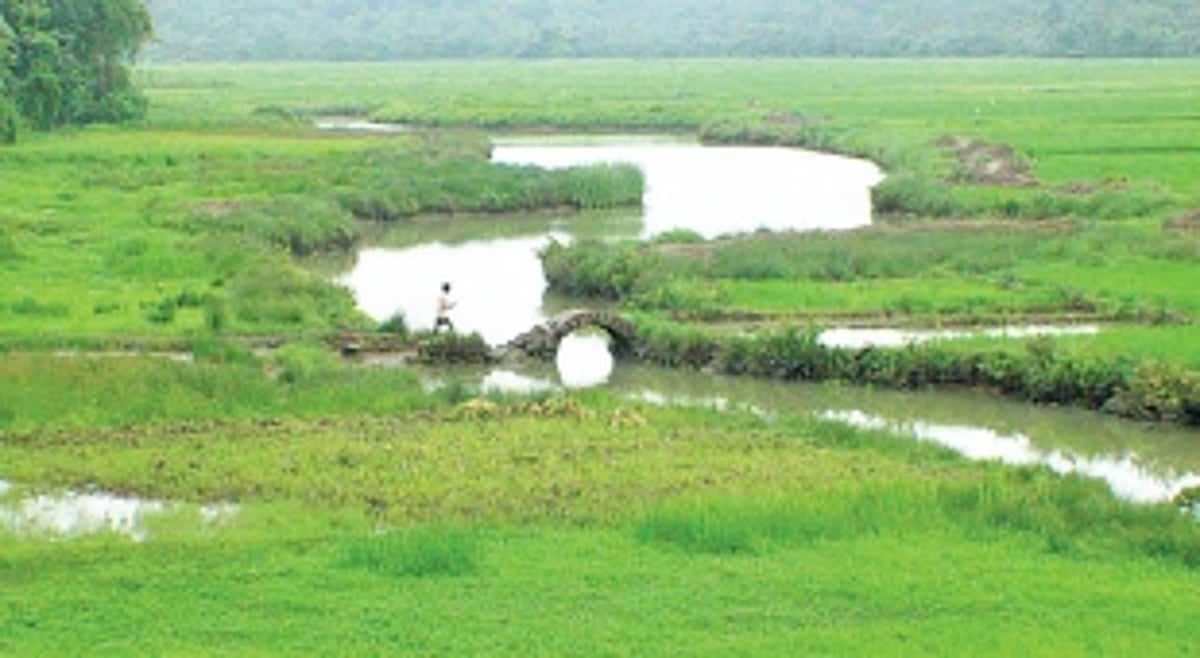
Agriculture sector is confronted with various limitations and is passing through a difficult phase. The process of development initiated by the government to facilitate industrialisation, housing and tourism has put tremendous pressure on agricultural land.
Tourism, which is viewed as the main source of foreign exchange for the State, has urbanised our rural areas, particularly in coastal talukas, giving rise to a tendency among farmers to keep their land fallow and pursue various activities other than agriculture.
It focussed on several important issues considering the hardships faced by the farmers in Goa.
Taking serious note of the draft policy, several farmers and experts in the field of agriculture want to implement the suggestions given by the committee at the earliest.
The draft agricultural policy not just focuses on lessening the hardships of the farmers by opening the doors of ample opportunities, aiming towards maximum growth in the farming sector.
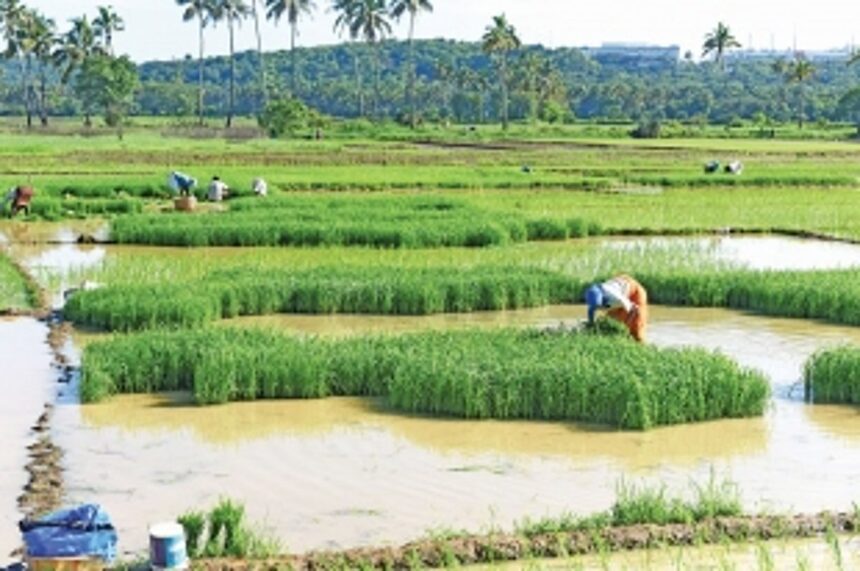
The Policy also focussed on several farmers who believe that their children should not toil in the muddy paddy fields, rather choose a different profession.
Adequate scope exists for diversification of agriculture that would not only make it a commercially viable activity but also generate additional employment opportunities and provide raw materials for growing agro processing industries and improving foreign exchange earnings through exports.
The draft also pointed out that the cultivated area and area available in the State for cultivation has limitations. The State’s efforts therefore need to be targeted towards improvement of productivity from the existing area and bring in the available area for cultivation. Due to higher standard of living and alternative sources for employment, availability of labour is also difficult.
The available labour is therefore required to be utilized with higher productivity. Another issue that needs to be tackled is the security of the farmer in case of fall in prices of agricultural crops.
Important issues covered in the draft include Agriculture Education, Extension and Research, Infrastructure Development, Cropping Pattern, Input management, Horticulture in Goa, Agricultural Credit, Land Reforms, Youth in Agriculture, Khazan Lands, besides aspects related to seeds and soil.
“There is an imminent need to identify the important areas for agriculture development and provide an impetus by concentrating all our efforts towards combating the adversities and returning back to agriculture. This will make the State economy more vibrant,” said Adv Narendra Sawaikar, the then Chairman of the committee constituted by the government to prepare the policy.
He said, “A comprehensive Agricultural Policy beneficial to the farmers with a vision to bring desired changes and self-sufficiency in food grains, vegetables, flowers and other agricultural products is our ultimate goal.”
Stating that an agricultural policy is need of the hour, Sawaikar said that the biggest issue in the farming sector is that there is no proper coordination among the departments and as a result, farmers are deprived of getting maximum benefits of the schemes.
“The draft was prepared in such a way that hardships faced by the farmers are minimized and they get maximum benefits,” said Sawaikar.
Stating that agriculture in Goa has a huge scope, Varad Samant, a young farmer, urged the government to take up the issue of implementing the Draft Agricultural Policy.
“There are several aspects related to agriculture and we are hoping that this policy covers all,” he added.
Praising the efforts of the Horticulture department, he said that since 2022, he along with few other farmers witnessed a very positive approach and dedicated service from the department.
Agnelo Furtado, agriculturalist and President of Chinchinim Agricultural Club, is of the opinion that the paperwork and bureaucratic red-tape has to be reduced drastically, for which agricultural policy is a must.
“Policy needs to focus on issues such as the procurement price for paddy which has recently increased marginally from Rs 10 to Rs 22. This is too little too late. The support price has to be regularly reviewed and upgraded,” he said.
According to him, agricultural policy needs to focus on the reasons why there is a decline in agriculture.
“While the Agriculture department claims that it gives 90 percent subsidy on community fencing, however, 18 percent GST is charged and the effective subsidy works out to 72 percent. The GST comprises 9 percent central GST and 9 percent state. At least the state can waive off their GST component to ease the burden,” said Furtado.
Agricultural policy also needs to see that disbursement of subsidy has to be fast and efficient.
The message is loud and clear. Goa needs an agriculture policy immediately to conserve the fast declining sector, which is the lifeline of Goans. Best way possible perhaps is to implement the Draft Agriculture Policy, which is ready. It just needs the political intervention for its implementation, which is long overdue.