The Pradhan Mantri Khanij Kshetra Kalyan Yojana empowers India’s mining districts to levy a charge on mining operations to create a fund for development of surrounding areas. The fund in Bhilwara has over Rs 400 crore so far.
Bhilwara, Rajasthan: Like much of Mewar in Rajasthan, Bhilwara has rich reserves of prized granite and base metals such as iron, zinc and lead. Mining companies such as Hindustan Zinc and Jindal Saw have invested hundreds of crores in the region, yet Bhilwara remains underdeveloped on most socioeconomic indicators.
There is water shortage and contamination throughout the district. Roads are non-existent or potholded. The rates of child marriage and female illiteracy are high. And at least 1,000 mine workers are afflicted with silicosis, an incurable disease caused by fine silica dust released from mineral mining operations.
This is the case with most mineral-rich areas across India, where mining has not only failed to benefit local residents but has degraded lands and rivers and destroyed traditional livelihoods. It is this anomaly that the Pradhan Mantri Khanij Kshetra Kalyan Yojana (PMKKKY) seeks to remedy by creating a corpus for local area development from a levy on all mining operations.
A great idea in theory
PMKKKY’s implementation so far has been less impressive. IndiaSpend’s investigation in Bhilwara shows a district administration treating the PMKKKY funds as an extension of existing government funding, displaying no better planning, targeting or urgency. Implementation is entirely top-down, so much so that villagers have not even heard of PMKKKY. Planning is piecemeal and short-sighted. Members of the legislative assembly (MLAs) have established too much control over the funds. And the mining department does not have enough staff or expertise to handle the task it has been entrusted with.
Bhilwara had collected an impressive Rs 400 crore by October 7, 2017–compare that with the district’s health budget of Rs 23 crore for the current year–yet the fund lies unutilised.
How a DMF works
District Mineral Foundations (DMF) are independent trusts set up by the government under a 2015 programme called the Pradhan Mantri Khanij Kshetra Kalyan Yojana (PMKKY, or Prime Minister’s Development Programme for Mining-Affected Regions).
The foundations manage a trust fund created from a levy on mining companies. Those mining major minerals (such as copper, tungsten and coal) must pay an amount equivalent to 30 per cent of the royalty of a mine leased before 2015 towards the fund; all mines leased after 2015 as well as those extracting minor minerals (such as marble and granite) must pay 10 per centof the royalty.
Top-down implementation
DMF’s success will depend on the extent to which it is able to democratise planning, decision-making and implementation, Chandra Bhushan, deputy director-general of the Delhi-based research and advocacy group Centre for Science and Environment (CSE), told IndiaSpend. CSE has been tracking DMFs across India and is helping some districts prepare a plan to better utilise the funds. “At the end of the day, this is not the government’s money… It’s people’s money and therefore people should have the right to decide where they want to spend this money,” he said.
Few villagers IndiaSpend interacted with knew of PMKKKY or the fund, making it unlikely they had been consulted or in any way involved in the decision-making.
In the village of Nayanagar, residents said their biggest problem is water shortage–borewells have to be dug deep yet go dry in the summer. When IndiaSpend told them about the fund, they said they would want a groundwater recharge project, perhaps one that would build a check-dam on Banas river that flows 30 km from the village.
The other problem in villages, according to officials from the public health engineering department of Jahazpur block, is excess fluoride in the water, which can cause stained and pitted teeth in children, and pain in the joints and even bone deformities.A reverse osmosis plant has also been proposed for the area, but it will not cover the village of Nayanagar as it does not receive piped water supply, Dheeraj Gurjar, a Congress MLA from Jahazpur, told IndiaSpend.
Clearly, villagers and officials are not on the same page, yet there is currently no plan to create awareness about the fund. Government officials and MLAs said word will spread as projects begin on the ground, but those projects would have been planned and executed entirely top-down.
Incomplete information
The grassroots experience so far has been disappointing. “Even if transparency is talked about as part of the law, it is difficult to find out things about the DMF,” Nikhil Dey of Mazdoor Kisan Shakti Sangathan (MKSS), a Rajasthan-based grassroots movement, told IndiaSpend.
For instance, the mining department is not making public the projects it is considering through the DMF. When asked, the department said only the list of approved projects would be made public.
Every district’s DMF is supposed to have a website detailing the money in its fund, minutes of every meeting, the current status of implementation of projects and so on. Bhilwara DMF’s website is still under construction.
As much as 85 per cent of Bhilwara is affected by mining and its undesirable fallouts, as IndiaSpend reported in the first part of this series. This includes villages on or near mining lands, areas lying in the path of wind or water flow from mines, as well as mining dispatch regions such as the paths of trucks ferrying minerals.
However, there is a lack of clarity on some issues, for instance, whether silicosis-affected mine workers who live in villages not considered mining-affected are eligible for benefits under the fund. For such people, the government “would need to conduct a ground survey for which there is currently no manpower”, said Baregama, the mining engineer.
Stakeholders disagree
Various stakeholders want a say in how the funds are used. Mining companies see it as their money and want to be involved in how it is spent (the law in Rajasthan says mine owners have to be represented on the governing council). Some of the largest payments come from Hindustan Zinc’s mine in Rampur Agucha in northern Bhilwara, and Jindal Saw’s mine near the village of Dedwas in southern Bhilwara.
The government sees it as its own fund. Activists say the money belongs to the people who have been impacted by mining.
Consequently, there is disagreement on the fund’s role. Activists feel the district would do better with some guidance on implementing the law as it is new and different from other government programmes. But government officials disagree. “Nothing new is being asked of them. We are not asking them to develop a rocket,” an official from the central government’s ministry of mines told IndiaSpend, asking not to be named. “It’s the same kind of projects in a more targeted way to one area. What training do you require to use these funds?”
If the programme does not succeed, it is not because “the scheme is bad. The scheme is not working because we have not prepared the institution to deliver”, Bhushan said.
Slow process
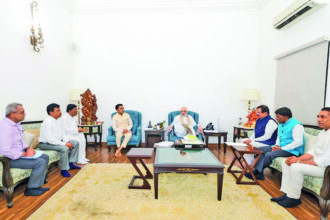
The first meeting of the Bhilwara DMF’s managing committee took place in October 2016, but things did not start moving until September 2017. “The meetings kept getting postponed. Sometimes because of administrative reasons. Sometime because key people, such as the speaker of the Rajasthan assembly who is also an MLA from Bhilwara, couldn’t attend,” said Kalu Lal Gurjar, a BJP MLA from the Mandal constituency in Bhilwara, and a member of the DMF’s governing council.
The state government approved the nomination of members (the law empowers the district to recommend nominated members and the state government to approve) to represent mine workers and mine-affected persons only in September 2017.
The speed at which this system is established, and the law implemented, is completely up to the district, a central government mines department official told IndiaSpend.
Lack of long-term planning
Of the proposals received, the mines department discarded 394 projects outright for not involving mining-affected areas and 574 for not coming under the scope of DMF work.
In all, 1,803 projects together costing about Rs 250-300 crore, were deemed viable and necessary and are now being scrutinised by the governing committee with help from the relevant government departments (education, health and public works). These pertain to projects to assist silicosis patients, create training centres for women, and build education and health infrastructure.
“People want to do projects that are tangible because locals can see it and credit them for it,” a Rajasthan state government official, who requested anonymity, told IndiaSpend, explaining that projects to improve learning, nutrition or health outcomes, often more meaningful, are not undertaken because they lack visibility.
Officials and MLAs involved with the fund, however, do not see the need for long-term planning. “The money is coming daily. We’ll spend now, and in another six months there will be more money,” Kalu Lal Gurjar, the Mandal MLA, said.
Less political interference needed
The law in Rajasthan makes all MLAs members of the DMF governing council. Not all states have this provision, and activists say it may allow politics to influence decision-making. State-level officials and civil society organisations, even as they emphasise the need to involve MLAs, suggest they should have limited power in project selection. “MLAs look at it as a source of income,” Dey of MKSS said. “The DMF shouldn’t become another MLA fund.”
More hands on deck
The mining department controls the fund and how it is used, even though they have no expertise in undertaking the works this fund is to be used for.
“This might slow down the process, and other people involved won’t take full responsibility. The mines department also wants control because they feel it’s their money in some way,” the state government official said. Further, the district requires permission from the state government for projects that cost more than Rs 1 crore (about $153,000) which could also slow the process down.
The mining department in Bhilwara does not have the manpower to manage the fund, and officials said they would request help from other government departments. The law in Rajasthan says the government can spend up to 5% of the DMF funds for administrative purposes. Streamlining some processes would speed up implementation. For instance, mining companies cannot transfer funds to the DMF digitally, and enabling this would speed things along and make it easier for companies to comply.
Some of these are certainly teething problems–the information asymmetry, the lack of clarity over who is eligible or not, the transition to an online payment system, and so on–which will get resolved in due time. It is the more entrenched systemic problems, such as political interference and lack of long-term planning, that are more worrisome and difficult to overcome.
IndiaSpend Solutions
Long-term planning: Analyse all existing programmes as well as sources of funding in the district before allocating PMKKKY money, Chandra Bhushan of the Centre for Science and Environment suggested. There should be thorough analysis of the major issues facing a district, and gram sabhas (village councils) must be part of all consultations. Targets, financial allocations and deadlines must be clearly defined.
Involvement of local people: Villagers, mine workers, panchayats, as well as local civil society organisations must be consulted to understand the needs of mining-affected areas. Decision-making should not be in the hands of political representatives and bureaucrats, and should prioritise those affected by mining, such as silicosis patients, Nikhil Dey of the Mazdoor Kisan Shakti Sangathan said.
Transparency: Implementation should be transparent–a website should track the monies collected, display a list of mining-affected villages and peoples, the projects proposed, and their status of implementation, as mandated under the central government guidelines for PMKKKY. There should be a mechanism for villagers to know about the projects undertaken in their area, activists say.
Monitoring: There should be independent third-party tracking, monitoring and evaluation of projects; a chartered accountant should audit financial records, as suggested under PMKKKY guidelines. Gram sabhas should be informed on a yearly basis about the works undertaken.
Involvement of mining companies: Mining companies should not be involved in deciding how the PMKKKY fund is used because they do not understand the developmental issues in the area, villagers that IndiaSpend spoke to in Bhilwara said. The money, though it comes from mining companies, should be seen as belonging to people impacted by mining, Bhushan of CSE said.
Guidance and training for district officials: The central or state government, or specially appointed agencies, should help district officials utilise the fund, Bhushan of CSE said.
Political influence: By generating awareness among residents, their participation can be enhanced. DMFs must guard against letting MLAs wrest control over PMKKKY projects and allocations, villagers and officials told IndiaSpend.
(This story is part of the Publish What You Pay (PWYP) Data Extractors programme. Shah, a writer with IndiaSpend, is a 2017 Data Extractor with PWYP, a group of civil society organisations working for an open and accountable mining sector. Ragini Bafna, an intern with IndiaSpend, contributed to this story.)