There was a short
stint with one-act plays followed by a tryst with tiatrs for
Dominic Carvalho along with amateurs from his village, before he took a plunge
onto the commercial stage with the professionals
Domingos
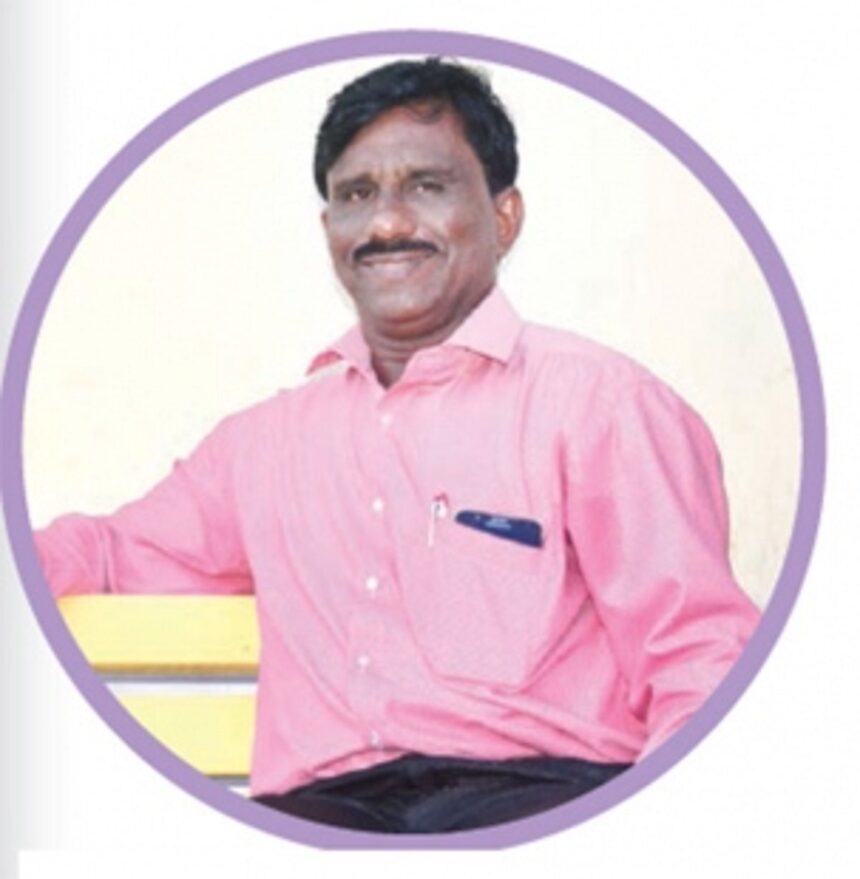
Francisco Joao Carvalho, popularly known as Dominic Carvalho on the tiatr
stage, was born on February 21, 1968, in the picturesque and serene village of
Calata, Majorda. His father, late Jose Mario Carvalho and his uncles Anthony
Caetan Carvalho, Inacio Carvalho, Agnelo Carvalho were actively involved in
tiatr-related activities.

“My
uncle A C Carvalho was a good composer,” revealed Carvalho, “and he was part of
the troupe in M Boyer’s first tiatr ‘Rinnkari’. He composed several ‘toast
songs’ which are now rendered for various occasions.” “During that period of
the Portuguese regime,” he shared, “it was ‘contra dans’ which were quite popular
during the Carnival festival, before folk plays (zomnivhele khell) took over.”
Carvalho
explained that ‘contra dans’ involved renditions by two, three singers, thus
slashing each other through songs and dance performances. “It was well accepted
by the viewers and would draw crowds wherever presented,” he said.
During
the three-day Carnival festival, Carvalho’s father along with late Andrew
Carvalho, father of noted comedienne Querobine Carvalho, and A C Carvalho would
come together and actively participate in ‘contra dans’. “Uncle, Inacio
Carvalho was noted for the composition of songs and would mostly render duets
with Querobine in tiatrs,” he added.
When
Carvalho’s uncle, Agnelo Carvalho penned a tiatr ‘Dhavem Bott’, at the tender
age of 9, Carvalho got an opportunity to showcase his theatrical skills in a
comedy role. “It was in the same tiatr Milagres Rodrigues, choir master of the
Majorda church, taught group song and dance” he noted.
While
schooling in St Aloysius H School, Majorda, Carvalho received training in group
songs from Seby de Nuvem, for school gatherings. He also had the opportunity to
act in one-act play ‘Chor Chor’ penned and staged by Anil Pai for the same
occasion.
After
completing matriculation in 1984, Carvalho started writing one-act plays and
won prizes on many occasions. His first one-act play ‘Hanvuch Fottovlom’ was
presented in Majorda and won the first prize, with its presentation in various
other places at a later stage. “Jaycees
in various villages like Majorda, Chinchinim, Cansaulim would organize one-act
play competition then and it was fun participating with various other village
troupes,” he said.
After
penning and staging one-act plays, Carvalho penned his first tiatr ‘Favo Zalo
Mhaka’ in 1984. He would pen two tiatrs on two different occasions, namely for
the feast of St Anthony at Calata, Majorda on February 15 and the Holy Cross
feast in May.
From
1984-93 Carvalho penned and staged 10 tiatrs and presented them in his village
with amateur artistes from his village, thus grooming them into future
tiatrists. In 1988, he joined the Sports Authority of Goa (SAG) and served
there as a swimming plant operator for 5 years.
Seeking
greener pastures, Carvalho flew to Saudi Arabia in 1993 and continued there as
an electrician for seven years. In 2000 he returned to his roots, with plans to
set up his own business.
During
his stay in Goa, Carvalho got involved in village tiatrs, rendering duos with
his uncle, Inacio Carvalho, and duets with his cousin, Querobine, who is now
based in Kuwait and noted for roles in tragedy and comedy. He also joined
Pascoal Rodrigues’ troupe in tiatrs ‘Avoichi Dekh’ and ‘Familik Visorlo’.
Involvement
in tiatrs by village directors helped Carvalho to make an entry in Piedade
Baretto’s two tiatrs, namely ‘Rompi’ and ‘Inam’, followed by late Seby
Fernandes’ two tiatrs ‘Ason Na’ and ‘Konnak Naka’ and one tiatr of Teotonio
D’Costa.
Carvalho
also acted in Deepak Sawant’s three tiatrs, namely ‘Vadoll’, ‘Kuveittkar Titiu’
and ‘Mhaka Nit Zai’. He has also rendered songs in late Remeth Fernandes’ two
tiatrs staged for chapel feast at Murda Grande, Majorda, followed by a tiatr
staged by Herculan Andrade, brother of comedian Cyril and a tiatr by late
Xavier Gomes.
At
the Kala Academy’s annual tiatr competition, Carvalho was part of troupes by
Agusto Ferrao and Rodney Severes. He has also acted in four musical plays
(songit khell) presented on All India Radio (AIR) by Jose Mario Pereira and
late Seby Fernandes.
In
2003 Carvalho emerged as a tiatr director with his tiatr ‘Tuzo Sangati Konn’
presented for the chapel feast of St Anthony. He roped in commercial singers
late M Boyer and Mini Mario, besides Anthony Crasto, now a noted actor on the
silver screen, and the village youth. The same production was staged in various
villages, with the commercial cast and supported by comedian Michael.
Thereafter,
it was no turning back for Carvalho, with one tiatr production annually. Tiatrs
from his pen include ‘Tem Ek Sopon’ (2004), ‘Tumkam Kitem Dium’ (2005), ‘To
Lipcho Na’ (2006), ‘Tum Amkam Naka’ (2007), ‘Ti Tuka Ravta’ (2008), ‘Tinch
Mhojim Sopnam’ (2009), ‘Tujea Ekach Utran’ (2010), ‘Tumchea Bhurgeanchi Tan’
(2012), ‘Amche Vattechem Jevonn’ (2013), ‘Na Xanti Na Bhorvanso’ (2016),
‘Amchea Panvlank Uzvadd’ (2018).
Carvalho
was one of the participants in the Socorro Piedade Fernandes Khell Tiatr
Festival in 2008 and the Antonio Morais Khell Tiatr Festival in 2009. Apart
from active involvement on the tiatr stage, he has served as panch and deputy
sarpanch of the Majorda-Utorda-Calata panchayat (2012-17).
Serving as an electrical contractor for the past 20
years since his return from Saudi Arabia, Carvalho is also the president of St
Rock’s Youth Club, Calata, Majorda. He is grateful to his uncles, Joao, Assis,
and late Francis Carvalho, who has been his backbone and constant support with
regards to the success of his tiatr productions.