In the summer of 2021, the images and visuals of tens of dozens of bodies floating in the River Ganga at the peak of the second wave of the COVID-19 pandemic in India, quite literally spoke thousands of words.
They described on one hand the helplessness of the families of the deceased who were forced to dump the bodies of their loved ones into the river and on the other, the lack of preparedness on the part of the civic as well as the State authorities.

In a landmark judgment in 1989, the Supreme Court of India recognised that the right to life, fair treatment and dignity, extends not only to a living person but also to the dead.
The National Human Rights Commission (NHRC) subsequently in May last year issued an advisory for upholding the dignity and protecting the rights of the dead, stating that the deceased person has the right to a decent and timely burial or cremation.
The NHRC further entrusted the State and local government bodies with the responsibility of maintenance of burial grounds and crematoriums. The commission stated that it must be ensured by the State and local governments that the condition of crematoriums, burial grounds, and electric crematoriums is properly maintained to keep them in effective working conditions.
However, the right for a dignified burial in Goa has been a long battle between the citizens who have their heart to the ground and the State government and civic authorities who have been pulled up by the High Court and the Goa Human Rights Commission (GHRC) time and again for their failure to execute directions of the constitutional bodies.
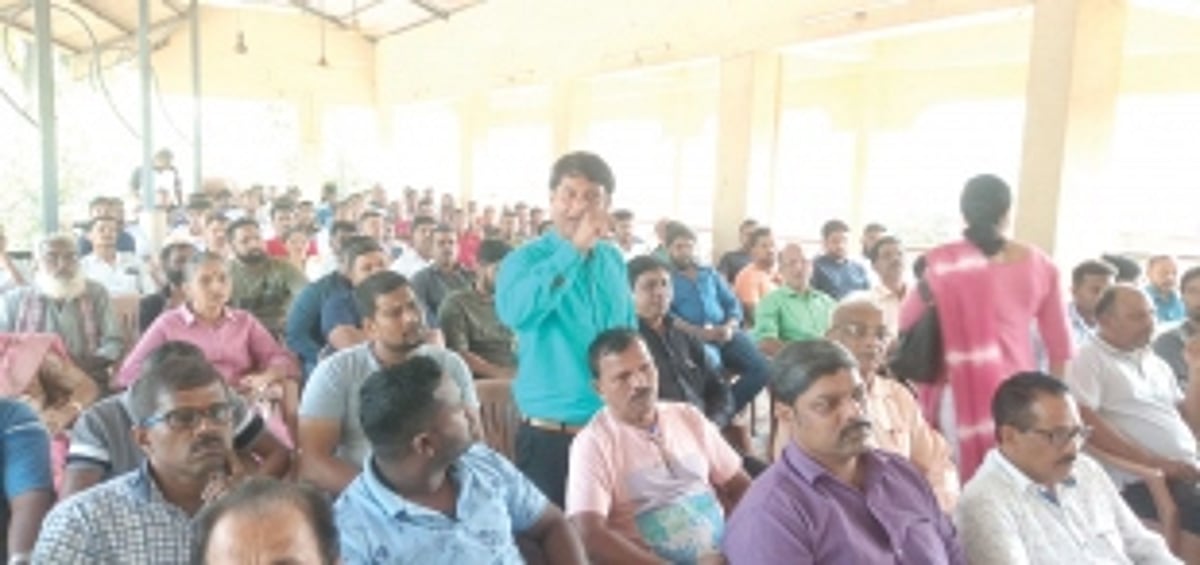
Even after nearly a quarter of the century has passed, the kabrastan problem in Margao is far from being resolved. When the Muslims in the commercial town realised that the existing burial ground was reaching its brim and their own efforts to setup a kabrastan around Margao received stiff opposition, through their MLA Digambar Kamat the Goa Legislative Assembly in July 1999 adopted a resolution to allocate Comunidade land or government land in and around Margao to solve the issue.
Further, in 2009 the Goa Law Commission had recommended that the State introduces in the Assembly the Goa Public Crematoria and Burial Places Bill. The Commission had stated that the burial and cremation spaces under the proposed Act would be accessible to people irrespective of their religious identity, caste, creed, sex, domicile or nationality.
Responding to a petition filed in May 2014, the GHRC in November 2017 issued directions to the Director of Municipal Administration and the Director of Panchayats to take urgent steps to ensure that the crematorium nd burial grounds are made available to all persons in the respective municipal and village panchayat areas so that the basic human rights of all the persons are protected.
Despite several directions from the judicial bodies, the State government and the local self-governing bodies have failed to uphold the rights of the deceased.
While the red-tapism can be held responsible for dereliction of duties, the role of the society in ensuring a space for the dead should also be questioned.
In case of Margao, despite the efforts of the government’s agencies and local bodies, it’s the people’s opposition that has over the last more than two decades resulted in delaying a burial ground for the Muslim population of Salcete. Knowing fully well, that a burial ground established by the municipality of the town will cater to not just a particular section of the society or community, the societal divide continues and has become a stumbling block in safeguarding the rights of the dead.
Recalling the visuals and the difficulties families faced in ensuring a decent final rite for their loved, one would be humane and humble in acknowledging that along with spaces for burial and cremation, the cost of the final journey burns out many a pockets. Families found it beyond their capacity to pay for the wood or the burial articles for the final rites during the COVID-19 pandemic.
It would be foolish to think that the final journeys can be planned and saved for by an individual during their life as ‘death doesn’t just look through the book of the old’.
Burial is not a matter of proprietorship of the deceased, rather a duty towards them and thus in death one should not have to be haunted by those alive just because the corpse demands disposal. Else as they say, “He who comes for the inheritance is often made to pay for the funeral.”
The State has a duty towards every citizen not just in life but also in death. It would be prudent and better late than never for the Goa Assembly to legislate the Goa Law Commission’s 2009 recommendation, the Goa Public Crematoria and Burial Places Bill.