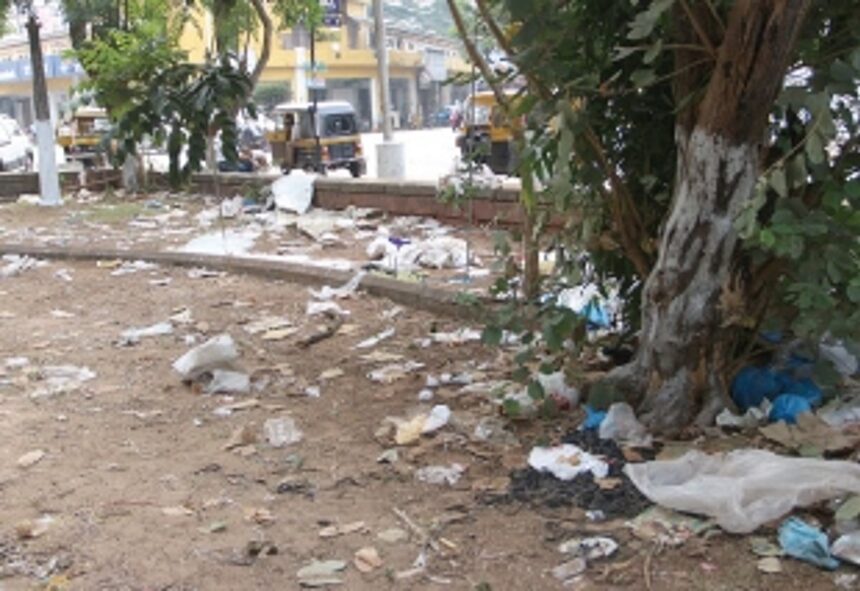
For Panjim, a smart city is, in reality, a smart joke. On the morning of December 11, the surroundings around the garden Garcia De Orta, appeared distressing. Panjim was neither a bombed city, nor was it ravaged by a cyclone or an earthquake, but the area was full of heaps of garbage, sewage, plastic packaging material, non-biodegradables, food wastes, pan spit and even faecal material wrapped in plastic bags.
From December 7 morning up to the evening of December 10, central Panjim was under siege. The residents, who actually pay taxes, were totally without the services of the CCP sanitary staff and I personally had to clean up the surroundings around my residence littered with trash strewn by the vendors, who preferred to deposit their wastes around the surrounding residential areas, and commercial offices, with an attempt to keep their shops, clean for their business, while throwing their garbage around the houses of the hapless citizens. The walls of the Excise Department office as well as the Custom Museum in Panjim; as I write, are full of garbage, food wastes and emanates severe stench and stink of urine with faeces deposited in plastic and heaped all around. There were no public toilets or mobile toilets. Women bathed, cooked, and eased themselves, under plastic cover and post midnight also under the cover of darkness.
As to how gas cylinders, stoves, and open cooking and serving was permitted is a million dollar question. The electricity wires and bulbs hung precariously. The only saving grace was that there was no accident, or fire during the five days of ordeal. That there could be an enteric epidemic to follow is a possibility as incidences of food poisoning, vomiting, stomach aches, dysentery were observed. The 30 food outlets and the vendors of traditional sweets were not checked by the Directorate of Food and Drugs Administration. Bhel puri, pav bhaji, ice cream, sweet drinks including sugar cane stalls were seen discharging waste waters and using polluted water from tankers for drinking and cleaning purposes. There was no basic sanitary disposal system in place. The stagnant water and food in the drainage system, would not only clog the pipelines but cause flooding during monsoons. As of now the stench of putrifying and fermented wastes ravages the atmosphere and the cause for respiratory and enteric diseases would be on a rise.
If the Directorate of Food and Drugs Administration would be made a scapegoat should incidences of food poisoning affect Panjim, the callousness of the medical health officer of the Urban Health Centre is deafening. I have written to FDA as well as Urban Health Centre to inspect and report about this menace on December 9 and 10. Another resident of Panjim went a step further and apprised the Judges of the High Court about the difficulties faced by senior citizens, motorists, children, tourists, businessmen and the people at large as the pavements were blocked and roads around the garden had five concentric circles of vendors, with just a meter of walking space for the general public. As a senior citizen, I could not venture out even to go to the pharmacy to fetch medicines as vendors were blocking the passage with goods and even sleeping in turn outside the pharmacy door. There were 850 stalls and still counting by the evening of December 10. On December 7, I had counted just 150. Each stall had at least four workers, besides the owner-vender who looked after the receipt of cash.
My research of the five days period was strenuous, and the output of data varied on the day-to-day basis as well on an hourly basis. Between 6.30pm to 11.30pm the crowd was maximum. There were about 25,000 visitors on December 8 and on December 10, the crowd swelled to above 50,000. On December 8, the public bargained and assessed the price and by December 10 the sale was brisk and the environment around the Garcia De Orta was suffocating, leaving a huge CO2 foot print on the environment.
On December 8, over 1600kg of waste was generated and on the morning of December 11 the waste around the garden and in front of Church Square was over 6000 kg. Between December 8 morning up to 11 morning there were rag pickers rummaging through the litter collecting plastic bottles, discarded clothes, shoes, utility items which were disposed of by vendors who did not want the waste to be carried back home. On the evening of December 10 there was yet another ugly sight – the sopo collection agents from Mapusa who was given the contract to collect rentals from the vendors, were seen walking majestically; arguing, threatening, and extorting money. There was no fixed rate charged. The gullible vendors paid huge fees and organized vendor mafia were able to stand up to the bouncers who dared to slap and shake up those who acted tough. Although officially fees were decided at Rs 60 to Rs 100 per square meter per day; it was a free for all or a free fall as charges were at the discretion of the sopo collector.
Those with 1 sq meter space were charged Rs 1000 and those having 6 sq meter ended paying 3600 and for the larger stalls the price varied from Rs 4600 to 8000 for three days.
Last year the charges on an average did not exceed Rs 2500 and the vendors were well spread across only three concentric circles. This year the number of vendors were seen squeezed into five concentric circle and merging into one another. There were vendors in cycles moving in pedestrian spaces.
What happened to Panjim over those five days was a nightmare. Sadly with 3500 vendors and supporting staff, living, cooking, eating, sleeping, urinating, defecating, strewing garbage, spitting (pan), blowing noses, bathing, washing clothes and utensils, Panjim appeared as if it was a ‘Refugee Camp’, with the 30 councilors, the Mayor and the Commissioner fiddling away, while Panjim was flooded with trash carpeted on city roads.
There was despair amongst the vendors too as they were not provided basic amenities and left high and dry by the city fathers, who they feel, had their share of this ‘under hand dealings’. The sopo collection was over Rs 21 lakh and what he gave the CCP coffers was a paltry sum of a lakh or two, and the residents undergoing severe social costs of this menacing misadventure.
CCP officials have benefited without taking up any duty, as the black money generated, due to the non issuance of receipts to vendors and also due to extortion would be shared from top to bottom.
The High court of Mumbai, Goa Bench had rightly stayed the exploitation of Municipality at Margao, but sadly failed to deliver justice to Panjimites though some resident had approached the court prior to December 8.
CCP has failed Panjim, FDA has ignored Panjim, Sales Tax Department has been callous in their approach, Health Department was found napping, Weights and Measures Department was found wanting, and Goa’s Attorney General was unable to fend for the interest of the common man. It is Panjim that is suffering.