Team Herald
MARGAO: The residents of Primeiro Vaddo, Velsao face the threat of being landlocked and exposed to flooding risks during monsoon with the Rail Vikas Nigam Limited (RVNL) going ahead with its “controversial” construction of a retaining wall along a traditional right of way in the village.

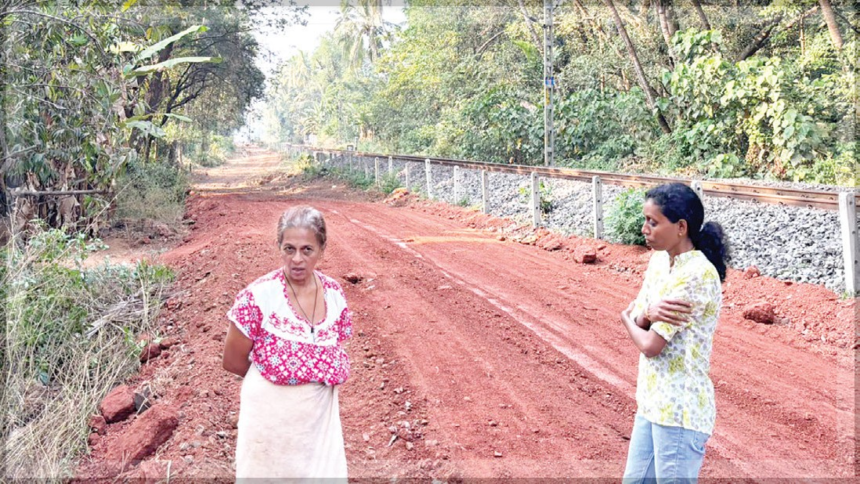
The dispute centers on an approximately 10-metre wide strip of land abutting the railway tracks and heritage houses.
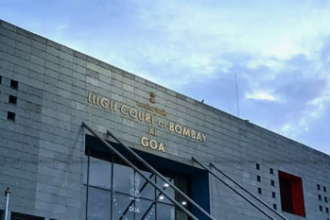
With limited options available, the locals indicated that their only hope now lies with the court and have vowed to continue their fight against the blocking of the right of way and have the Panchayat support as well.
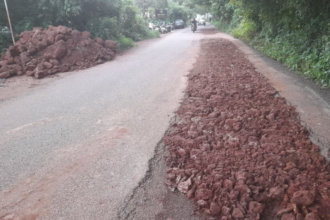
The ongoing construction work, which has involved dumping truckloads of mud to elevate the road to track level, has left residents helpless. The houses, which face the double tracking threat, are now at risk of being completely cut off from the access. Residents have managed to secure a temporary mud slope from their compounds to the traditional right of way, but the solution will become obsolete once the retaining wall is completed.
“We are shocked at what is happening,” said resident Celestina Fernandes, wife of Damiano Rodrigues.
“As it is, we face so many problems when these trains carrying coal pass by our houses. The walls of our house are affected badly and we can’t live properly inside. When the trains pass, there is so much vibration that our kitchen vessels fall onto the ground,” said Fernandes, a senior citizen, who has lived in the area since her marriage, expressing concern about the noise pollution.
She said, “The trains honk whenever they pass, and at night the noise is so loud my young grandchild wakes up in a fright. During the day when a train passes, it’s quite deafening. What will happen when the number of trains increases once the double tracking is done?”
The situation is particularly challenging for Fernandes’s husband, who is injured.
“This was our only way and we want it back. My husband has a leg injury and how will he walk out of the house now? No one is bothered about our plight,” she added.
The construction work has also raised serious concerns about flooding during monsoon.
According to the locals, last year’s damage to the drainage system, combined with the raised wall, has created a potentially dangerous situation. The age-old system where water used to flow out into the sea has been disrupted, raising fears of stagnation and house flooding.
“Are we expected to drown here? This is going to be even more difficult. We have seen videos of water entering people’s houses through the front door during monsoon. This year that will be our fate,” Fernandes lamented.
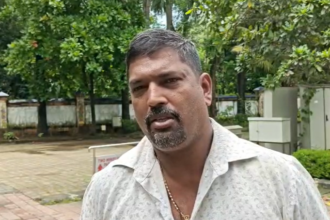
Explaining the technical aspects of the drainage issue, Orville Dourado Rodrigues, founder of Goencho Ekvott (GE), said, “The water during monsoon used to flow through the stormwater drain from South to North past the residence of Celestina Fernandes and to the main canal linked to other similar stormwater drains and empty into the Arabian Sea. There was a culvert below the existing tracks and concrete pipes, which were installed by the erstwhile South Central Railway, have since been demolished by RVNL.
“Despite complaints from the village panchayat to RVNL about this issue, no positive action has been forthcoming. According to Rodrigues, this will result in flooding of the land towards the east across the existing railway tracks. With limited options available, he indicated that their only hope now lies with the court.
The locals have vowed to continue their fight against the blocking of the right of way and have the support of the Velsao Village Panchayat as well.