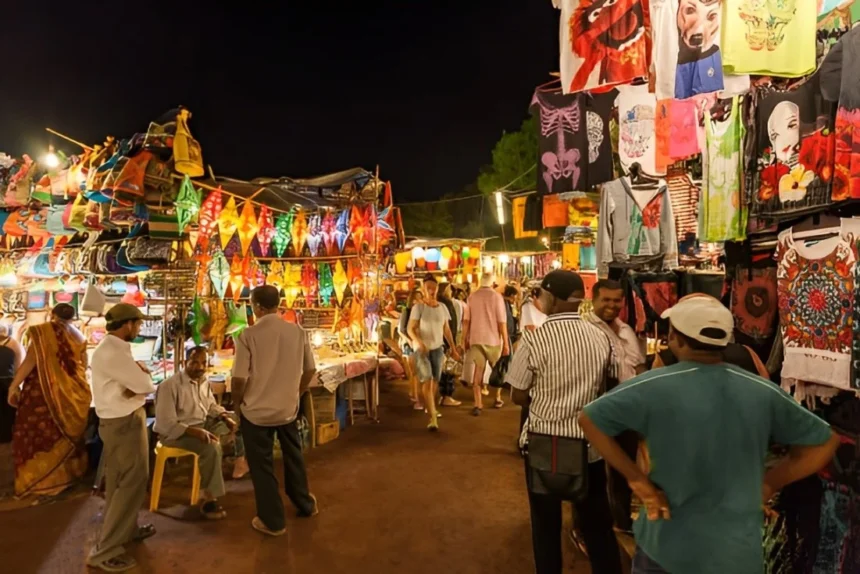
The festival of lights has once again infused Goa’s markets with colour, excitement, and cautious optimism, as traders and vendors across the State gear up for Diwali. Despite a slow Sunday start due to the Narkasur festivities, many stall owners remain upbeat, expecting a strong surge in sales over the coming days.
At Panjim’s bustling Diwali markets, the air is filled with the scent of incense, the glimmer of colourful lanterns, and the chatter of customers comparing decorations. From handmade kandeels and paper stars to clay lamps and matchboxes, stalls line the streets, continuing a decades-old tradition of festive trade that marks the start of the Diwali season in Goa.

For some, the business is a legacy passed through generations. Manisha Desai, a third-generation shopkeeper, proudly continues her family’s matchbox business. “It’s a good business,” she says with a smile, adjusting a display of decorative boxes, “but there isn’t much rush today. Because it’s Sunday, everyone sleeps late and relaxes. They go out in the evening for the Narkasur festivities. Tomorrow, it will be better.” She adds that her family has run this stall for decades — first her father, then her brother, and now the younger generation.
Ganesh Kote, who has been in the decorative star business for over 25 years, shares a similar sentiment. “It’s good this year,” he says. “Maybe 5% better than last time. People are more interested in design now. Traditional stars sell less. They want new patterns, new shapes. Everything is about design.” He explains that most of his products are made using paper and plastic, locally sourced to keep costs low and support Goan artisans.
For Girish Pinge, however, the Diwali season has been particularly rewarding. “This year, business has increased by almost 20–25% compared to last year,” he reports enthusiastically. “People are buying like crazy—decorations, stickers, umra patti, all of it. Budgets have gone up because prices are a bit cheaper now, and customers are happy. Everything we sell is made in India—nothing from China. People are avoiding Chinese products completely this year.” Pinge says this preference for Indian-made goods has boosted local sales and created a sense of pride among traders.
The festive market also features stalls selling flowers and symbolic décor. Poonam, who runs one such stall, says sales have been brisk. “Business is good this time. People are buying many flowers and anar-shaped decorations,” she says, referring to the bright pomegranate-shaped items often hung in Goan homes during Diwali.
Despite the relaxed pace of the weekend, traders expect sales to pick up sharply as Diwali draws nearer. Many note that customers tend to shop in the final two or three days before the festival, with families buying decorations, sweets, and diyas together.