KARSTEN MIRANDA
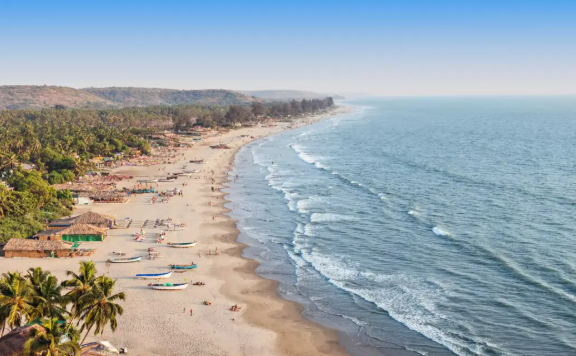
A coastal vulner ability study commissioned by the State government has renewed concern over Goa’s shrinking shoreline. Conducted by the Nether lands-based research insti tute Deltares using satellite imagery and field analysis, the study urges authorities to rely on natural protection instead of heavy engineering. The research maps stretch es of accelerated erosion and calls for a shift toward soft, nature-based measures that work with coastal processes instead of altering them. The study found visible signs of retreat along both districts, though erosion was more pronounced in the south. The beaches sin gled out for priority atten tion include Candolim, An juna, Morjim, Mandrem and Querim in North Goa, and Palolem, Majorda, Cavelos sim and Velsao in South Goa. The findings show that about 11 per cent of the South Goa coastline is affect ed by erosion compared to roughly six per cent in the north. Zones gaining sand were minimal—around one per cent in the south and two per cent in the north. While Goa’s rocky head lands have largely remained stable, its sandy stretches show alternating cycles of loss and replenishment. Deltares noted that coast al erosion in North Goa has been gradually rising since the 1990s, with sharper rates recorded after 2010. In the south, the process has proved more severe, par ticularly in low-lying areas. The agency recommended a mix of soft and hard in terventions but emphasised that structural measures should remain a last resort. Among the soft options pro posed are beach nourish ment, shore-face nourish ment and a “sand motor”—a large-scale replenishment designed to allow natural redistribution of sand along the shore. Hard defences such as seawalls, revetments and groynes were advised only for critical locations. The Dutch experts cau tioned that Goa’s erosion lev els are not yet extreme but warned that poorly planned coastal infrastructure could worsen the trend. The State, they said, should build on its natural strengths—dune systems, vegetation cover and sediment flow—rather than suppress them with concrete barriers. Goa can still manage its coastline through natural methods, if interference and construc tion near the high-tide line are kept in check. To advance these recom mendations, Deltares has been working closely with the government through technical workshops and coastal vulnerability map ping programmes. The collaboration has included knowledge exchanges be tween State government officials and Dutch special ists who have implemented similar nature-based shore line management projects abroad. The findings were reviewed by scientists from the National Centre for Sustainable Coastal Management (NCSCM), the National Institute of Ocean Technology (NIOT), the National Centre for Coastal Research (NCCR) and the Indian Space Research Or ganisation (ISRO), who con curred that while erosion is increasing, it has not yet reached irreversible levels. Experts collectively rec ommended that Goa prior itise soft interventions and restore natural coastal buff ers such as dunes and man groves. Long-term sustaina bility, they said, will depend on curbing construction near vulnerable stretch es and integrating erosion control into broader land use planning. The study’s conclusions are expected to guide the government’s next phase of coastal-man agement strategy, balancing the protection of tourism infrastructure with the preservation of the State’s natural shoreline character. The latest assessment builds upon earlier coast al-vulnerability mapping exercises involving Deltares and Chennai-based NCSCM, which had already flagged a steady reduction of beach width across Goa. Over the past decade, research has shown that nearly 27 per cent of the State’s coastline is now under severe ero sion—an increase from just over one-fifth a few years ago. The number of beach es classified as “persistent ly eroding” has risen to around 90, representing al most 50 kilometres of Goa’s 194-kilometre shoreline. The NCSCM data further indicate that in Pernem ta luka, erosion now affects be tween 41 and 46 per cent of the shoreline, amounting to around eight kilometres of its 18-kilometre coast. In Sal cete, 18 to 38 per cent of the 21-kilometre stretch is erod ing, while in Bardez, home to many popular beaches, between 19 and 25 per cent of the 22-kilometre shoreline is under threat. The propor tion of stable coastline has fallen sharply—from 30 per cent to 18 per cent in North Goa, and from 23 per cent to barely nine per cent in the south. Natural accretion remains limited, with only about six to seven per cent of the State’s total coastline showing any sand gain. Much of the degradation is concentrated in tour ism-heavy belts, where dune systems that once served as natural storm barriers have been flattened or encroached upon by unregulated devel opment. The conversion of dunes into parking spaces, shacks and pathways has eroded the natural sand re serves that once replenished beaches after the monsoon. As these protective buff ers disappear, the ability of beaches to recover naturally after storms is weakening. Scientists say these trends confirm that human pres sure, combined with rising sea levels and altered sedi ment flow, has disrupted the delicate balance that once maintained Goa’s beaches. Coastal researchers warn that without immediate in tervention, the State risks losing much of its natural protection against storm surges and flooding. They stress that the findings should serve as a blue print for Goa’s forthcoming Coastal Management Plan, which aims to consolidate scientific inputs into action able policy.