In the verdant heart of South Goa’s Margão, the late Mestre Maurelio Cotta, a revered master of sacred music, passionately described Motets, Goa’s own “classical” Lenten hymns as treasures that emerged around the mid-19th century. These profound sacred compositions filled the air during the Santos Passos (Holy Steps of Christ) and the solemn Sacred Triduum: Maundy Thursday, Good Friday, and Holy Saturday. Their haunting melodies stirred souls, evoking tears even from those who didn’t grasp the Latin lyrics. “The tune is such!” Mestre Cotta would exclaim, capturing their irresistible emotional pull.
Goa’s musical roots run deep, tracing back to the 16th century when parish schools sprouted at the Seminario de Santa Fé and later the Colégio de São Paulo (founded 1541). By 1545, these institutions taught reading notations and singing, exclusively in Latin, never Konkani. Parish school students mastered choral polyphony, performing serious classical works like those of Palestrina. Church Mestres, doubling as music teachers, composed elaborate Latin Masses, nurturing a tradition of harmonic excellence inherited from Portugal.

This heritage drew from Portugal’s 16th-century vocal music, centered on the Motet, a polyphonic, unaccompanied form born in 13th-century France, refined by 15th-century Flemish composers, and rooted in biblical or liturgical Latin texts for four to six voices. The word “Motet” stems from the French mot (word), evolving from medieval to Baroque eras, as noted by the late Fr. Nascimento, a devoted advocate of classical liturgical music. Iconic examples include Palestrina’s Vinea Mea and Mozart’s Ave Verum Corpus.
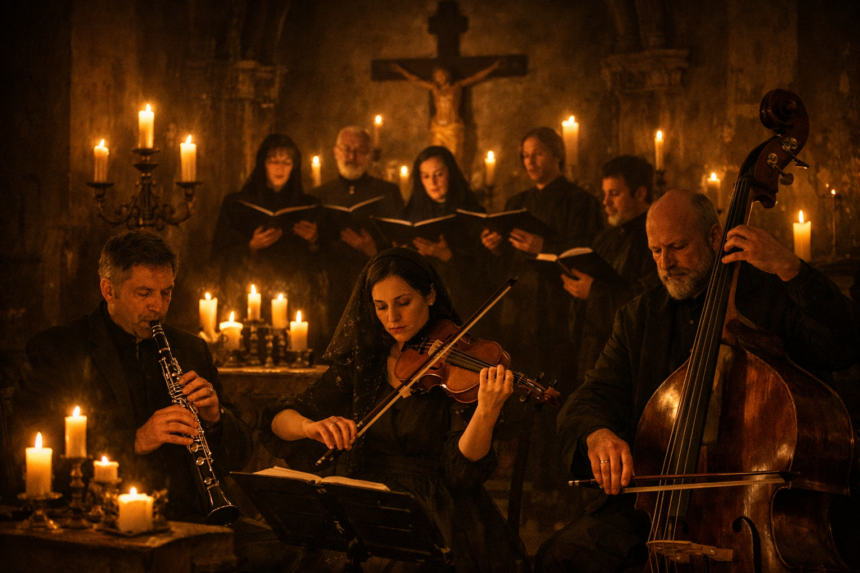
Goan Mestres infused the Motet with a unique flair: male voices opened with four-part harmony, followed by violin interludes, often joined by clarinet and double bass in many parishes. Before Vatican Council II (1962–65), no instruments were allowed during the Sacred Triduum until the Easter Vigil’s Gloria, yet the Vatican granted special permission for these Goan Motets, recognizing their singular beauty. Hours-long renditions graced the Tenebrae services (Liturgy of Darkness) on Maundy Thursday, Good Friday, and Holy Saturday, immersing congregations in penitential reverence.
While 18th-century Portugal saw Motets eclipsed by the dramatic, orchestral opera (an Italian invention from the 16th century), Goa witnessed a “compositional spurt” in the late 19th century. Motets and the traditional Mando flourished side by side, with Latin pieces like Filiae maestae Jerusalem and Nolite Flere dominating for about a century. Konkani Motets, such as Vell Mhozo Paulo, emerged in the 1950s or slightly earlier. Composers often remained unnamed, locally renowned figures whose identities faded into the tradition itself.
Post-Vatican II, many Lenten hymns shifted to Konkani for liturgical use in churches, and by the mid-1960s, original Latin Motets were translated. Yet nothing rivals the originals’ transcendent power, with their soul-stirring, repetitive tunes fostering deep congregational participation in repentance. Tragically, not all Goan parishes uphold this legacy today; some even discourage Motets citing “added expenditure.”
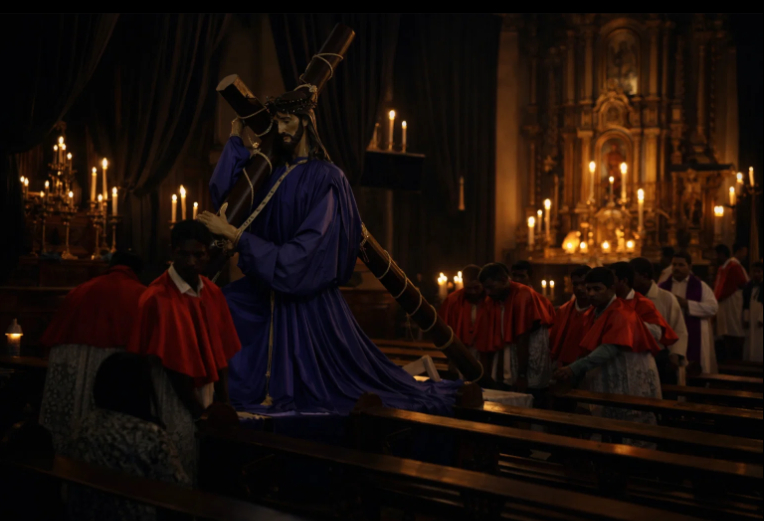
Hope glimmers anew. The Pilar Music Academy, under the Society of Pilar, presented “A Sound of Angels,” an evening dedicated to traditional Lenten motet singing, at Ravindra Bhavan, Margão, on March 2, 2026. The programme drew an appreciative audience and stood as a meaningful effort to revive Goa’s rich heritage of sacred Lenten music.
The event brought together ten choir groups from across the state, each rendering Lenten motets. Presented in soprano, alto, tenor and bass, and accompanied by classical instruments, the performances during the evening reflected harmony, discipline and deep reverence.
While the programme retained its prayerful and devotional character, it also included an element of encouragement. The three best-performing groups, Savourites of Loutolim led by Seby Fernandes, St Joseph’s Parish Choir of Dramapur led by Sebastiao Soares, and The Golden Voices Choir led by Selwyn J. C. Braganza were specially recognised for their excellence and dedication to preserving this cherished tradition. The remaining participating choirs were also honoured with certificates of appreciation and mementos.
Beyond its musical beauty, the programme highlighted the importance of sacred art in nurturing faith and sustaining Goa’s spiritual heritage, while inspiring younger generations to value and continue this treasured Lenten practice.