PRAVEENA SHARMA
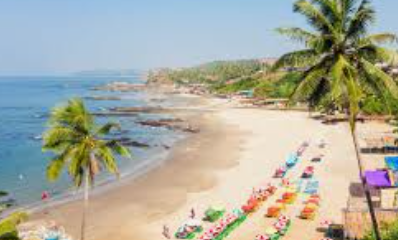
Goa’s image has been steadily shifting from a land of sun, sea and sand to one increasingly associated with drugs, sex trafficking, cheap alcohol and wild nightlife. The is sue surfaced in the State Assembly on Wednesday, with Opposition MLAs raising concerns over the alleged growth of sex traf ficking in the coastal State. Chief Minister Pramod Sawant acknowledged the presence of sex trafficking but sought to downplay the scale, saying the situa tion was “not as alarming as is being projected”.

A study by Anyay Rahit Zindagi (ARZ) titled Commercial Sexual Exploitation (CSE) in Goa – Situation and Interven tion (2019–2024) sheds light on how trafficking networks operate in the State and their links with operatives beyond its borders. The report notes that sex trafficking in India generated annual revenue of about $343 billion in 2019, a steep rise from $9.9 billion in 2014. With its thriving tourism industry, casinos and nightlife, Goa is seen as a potential destination for trafficking networks targeting both domestic and inter national clients. In a recent letter to Chief Minister Sawant seeking budg etary allocation to combat sex trafficking and rehabilitate victims, ARZ said its field engagement suggests that “the number of persons involved in commercial sexual activities has been increasing, with estimates suggesting figures rang ing between 13,000 and 14,000 individuals engaged in such activities, approximately 1 percent of the State’s population.” Ranjita Pai, chairperson of the Goa State Commission for Women, estimated that the underground operation was worth crores of rupees in the State. “It is a multi-crore business in Goa. It is not Goans who are doing it. We do not know where it comes from or how it hap pens. It is not our job to uncover how sex trafficking works in Goa. Our work is to create awareness and sensitise people so that incidents of sex trafficking reduce,” Pai said. “It is a very sensitive issue and we cannot speak about it openly,” said Nutan Verenkar, Superintendent of Police with the Anti-Human Trafficking Unit of Goa Police, declining to comment further on the matter. Activists say such reluctance to speak openly about the crime only emboldens trafficking networks. Arunendra Kumar Pandey of ARZ, a non-profit organi sation working against human trafficking and commercial sexual exploitation in Goa, said the scale of the problem was significant. “There is a strong network connecting dance clubs and bars in Nepal, West Bengal, Maharashtra, Delhi and Goa, where girls are rotated between these locations to engage in commercial sexual activities. The modus operandi is con sistent — identifying sex buyers in bars and clubs, soliciting girls and women, and engaging them in such activities,” the report states. Lorna Fernandes, convenor of the Goa Women’s Forum, described the growth of commercial sexual activities in Goa as “very serious” and warned that the situation could worsen. “Many male tourists look for sexual services such as spe cial massages or sexual encounters during holidays. Because of this demand, ‘escort call girl’ services have proliferated in Goa. A casual internet search provides enough evidence of this,” she said. The Chief Minister while addressing the as sembly claimed that escort websites are not linked to sex trafficking, but scams designed to cheat people. Fernandes however claimed that as demand rises, the number of young women and girls trafficked from across India and overseas is also increasing. “Over three decades ago, international organisations like UNICEF, ECPAT and International Labour Organisation had already warned that Goa was emerging as a sex tourism desti nation. They cautioned that increasing demand would lead to a corresponding rise in supply, as seen in tourist destinations across Latin America, Africa and Southeast Asia,” she said. Residents in some localities also claim that such activities are no longer confined to traditional red-light areas. One source told O Heraldo that complaints raised at Gram Sab has were either dismissed or redirected to other authorities. “Earlier such activities remained within red-light areas. Now they have spread to other localities, exposing residents to the dangers of sex trafficking,” the source said. Another resident alleged that some young college girls were being lured into escort services catering to wealthy cli ents visiting casinos. “I was told that some girls are being offered as much as Rs 1 lakh per night. Some of them come from stable fami lies and do it for extra money or expensive purchases like phones,” the source claimed.
Another local resident alleged that several establish ments hiring dancers lacked the necessary licences. Pandey said the State’s evolving tourism image had con tributed to the expansion of commercial sexual activities. “Goa is seen as a haven. Earlier such activities were con fined to commercial areas, but now they have spread to residential neighbourhoods. People once thought it was not their problem. Now that it is happening next door, they are protesting,” he said. Activists believe stronger coordination among law en forcement agencies is essential to curb the menace. Fernandes said there must be greater synergy among different wings of the Goa Police, including women’s po lice stations, the anti-narcotics cell, the crime branch and local police stations. “There needs to be more raids and rescues by the An ti-Human Trafficking Units. Awareness campaigns are equally important,” she said. Her organisation plans to focus on illegal dance bars and nightclubs during the 2026–27 civic election cycle, which it says often serve as hubs where trafficking victims are supplied to customers. Last year, ARZ rescued 28 women and girls from trafficking networks. At a recent seminar on anti-human trafficking organised by the National Com mission for Women and the Railway Protection Force of the Konkan Railway Protection Corporation Limited, offi cials stressed the need to intercept trafficking victims be fore they reach their destinations. Yash Mishra, Regional Security Commissioner of the RPF–KRCL, said technology was being used to compensate for manpower shortages. “We are using force-multiplier technologies and coordi nating with Konkan police in trafficking cases. Whenever we come across suspicious situations, we intervene and verify before taking action,” he said. Mishra, who was earlier posted in Mumbai, said Goa did not appear to have a single organised trafficking syndicate operating in the open. “There may be some undercover operations. Many traf fickers remain at large because it is difficult to predict where or when such crimes will occur. A large number of cases also go unreported,” he said.