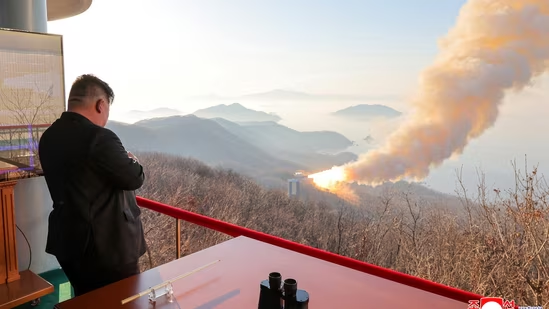
North Korean leader Kim Jong Un oversaw a critical ground ejection test of a high-thrust, solid-fuel engine designed for missiles capable of striking the US mainland, state media KCNA reported Sunday. The upgraded engine, using advanced carbon fiber composite materials, achieves a maximum thrust of 2,500 kilotons, up from 1,971 kilotons in a September test, marking a major boost to Pyongyang’s strategic arsenal.
Kim hailed the breakthrough as vital for elevating North Korea’s “strategic military muscle to the highest level,” aligning with the nation’s five-year military escalation plan. This includes enhancing “strategic strike means,” code for nuclear-armed intercontinental ballistic missiles (ICBMs) able to reach the continental United States. The solid-fuel technology complicates pre-launch detection, unlike older liquid-fuel models that require lengthy fueling.

The test follows Kim’s recent parliamentary speech, where he vowed to irreversibly solidify North Korea’s nuclear status and accused the US of “state terrorism and aggression,” likely referencing West Asia conflicts. Analysts link the power surge to efforts for multiple independently targetable reentry vehicles (MIRVs), enabling one missile to overwhelm US missile defenses.
Since high-stakes summits with US President Donald Trump collapsed in 2019, North Korea has ramped up ICBM tests, showcasing ranges to hit American soil. While experts debate reentry survivability challenges, Pyongyang’s persistent advancements signal no retreat. In February’s Workers’ Party congress, Kim signaled openness to Trump dialogue but rejected US demands for preemptive nuclear disarmament.
(This story has been published from a syndicated feed)