Close on the
heels of the clean-up drive at the St George’s island beach on May 6 ( Café May 9), came
two more back-to-back beach clean-up drives. This time citizen volunteers, led
by waste management expert Clinton Vaz from V-Recycle cleaned up the Monkey
beach near Vasco and the Grande island beach off the coast of Vasco on May 17th
and 18th respectively.
This time around, the
group collected a mind-boggling total of 153 bags of waste, weighing 2,650 kgs
from the two beaches which included 82 bags of beer and liquor glass bottles,
45 bags of plastic water bottles and 26 bags of non-recyclable waste.

This latest
initiative in Goa is part of an unprecedented, coordinated waste and brand
audits in key cities of India. Scheduled to take place between May 16 to May 30
in the cities of Delhi, Pune, Mumbai, Chennai, and Bengaluru along with various
cities in Goa, Kerala, and 12 Himalayan States, the audits seek to highlight
the role of corporations in the global plastic waste crisis, results of which
will be published on June 4 to coincide with the World Environment Day.
The Monkey Beach is a
secluded beach which is accessible by boats and by foot from a steep slope
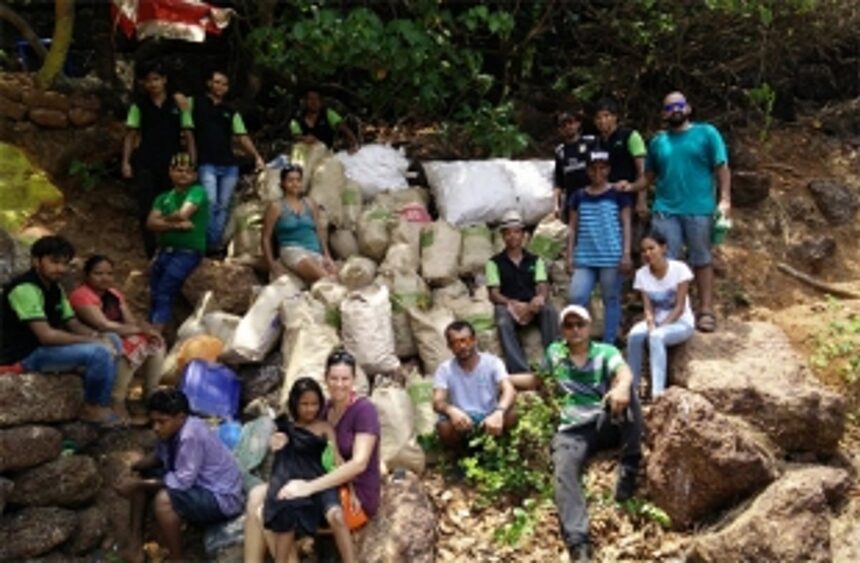
adjacent to the Vasco Landfill site at Sada. The 18-member citizen volunteer
team, led by V-Recycle trekked down the steep slope and was shocked to see the
accumulated waste on the small beach. Four hours of hard work under a merciless
sun resulted in the collection of 70 bags of waste ( 37 bags of beer and liquor
bottles, 19 bags of plastic bottles and 14 bags of non-recyclable waste).
Amrita Sunita Anand,
team member, Video Volunteers, the Anjuna based community monitoring
organisation, who was a volunteer at Monkey Beach said, “We found tons of waste
buried just between the rocks at one spot. At multiple sites we found burnt
waste. I collected some 70 used sanitary pads.” According to Amrita the
solution lay in collecting hefty deposits from the tourists before they boarded
the boats. “All glass bottles should be approximately counted and deposits of
INR 1,000 or more should be taken according to the quantity. The money can be
refunded if the waste is brought back.”
Amrita was appalled
to see the Vasco Landfill so close to the beach and the sea. “This is
disastrous planning. No landfill should be allowed around the beach. In fact,
we should do away with the culture of landfills,” she said.
The situation was no
different at the Grande island on Friday. The 25 volunteers who boarded a motor
boat for the island from the Baina beach were shocked to see the environmental
damage on the beach. Several hundred beer and liquor bottles, many broken, several
hundred plastic water bottles and assorted waste lay strewn on the picturesque
island beach.
After, yet another
four-hour, back breaking effort, the group collected 83 bags of waste (45 bags
of glass bottles, 26 bags of plastic bottles and 12 bags of non-recyclables).
Deepak Pathania,
Margao based inventor-designer who was one of the volunteers said, “I was
shocked to see that we collected 80 bags. It looked as if we could have easily
gathered hundreds more.”
According to
Pathania, the government must fix toll booths at all jetties where a refundable
deposit should be collected from tourists for every consumable product that
they take on board the boat.
Pathania was
confident this system would work. He said, “Indians are messy but thrifty more
than messy. Everyone will bring back their garbage. If they don’t then the boat
operators will bring it back to make the extra buck.”
Pathania
was even ready to design the toll both for the government. “I would like to
design the booth with small scale garbage compactors so that the garbage that
leaves from the booth is not only segregated but also compacted,” he said.