Govind S Poteker
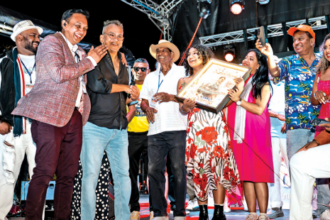
Come summer, it’s that time of the year when short distance away from the rare heritage arch bridge, the villagers gather in the precinct of the temple of Shree Nagesh Maharudra Panchayatan Devasthan at Curca for the annual Zagor, a vibrant multi-cultural dramatic act with songs, dance and drama in the evening. With the first group of performers entertaining the villagers last Saturday, today, May 16, at 11 pm, it is for the second group to bring this living heritage to life.

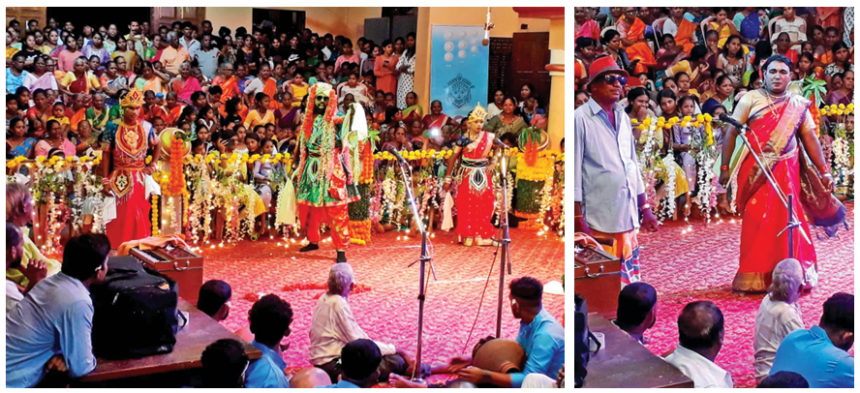
Last Saturday, people from all age groups assembled to witness the grand amusement show. Every space in the temple was occupied by the revelers. The night-long programme began a couple of hours before midnight. In most places, it is held at the village Maand (sacred place), where the main religious rituals are held. It is a night to listen to the beats of Ghumot, Tashe, Dhol and Kansalem, and that’s not all as more soothing Peti (Harmonium), Pakhawaj and Tabla adds to the musical repertoire to the entertainment. “The annual festival of Zagor is celebrated by the tribal Goan (Hindu Gauda) community in more than 20 villages, mostly in Tiswadi and Ponda taluka. It is important celebration in these communities who invoke the village deity by keeping night vigil for the well-being of villagers,” says Dr Pandurang Phaldesai, noted folklorist, who has done commendable research in cultural traditions amongst Goan tribal communities. His seminal work on evolution of Perni Zagor is well recognised. Chimbel, Cacra, Karmali, Nauxi, Odxel, Palem and Siridoa in Tiwadi taluka, and Bandora, Kutti, Kunkoliem, Muddi, Priol and Veling are few of the places in Ponda, this tribal festivity is still in vogue. Siolim Zagor is also known where Hindu Christian faith add to the communal harmony through this festival, Phaldesai notes. Similar to Shigmo, Zagor is basically a male affair, were performers are only male even if they enact a woman’s role. Some of the brilliantly coloured costume adorns portrayal of mythological or historical character, while others look like a regular village folks playing day-to-day characters. And, what a phenomenal list of acts, vow some 60 plus energetic performances, by dancers and actors touching varied characters.
One may be lost to find out, what was not there in that long list of skit and dance. Various stories are incorporated in Zagor as people got influenced by various myths, history and local themes down the ages. Village elder Mollu Kankonkar, who debuted participating in Zagor when he was barely four years old says, “Over the years I have composed many songs on various themes that include Marathi devotional Abhang, Konkani Kantara and Hindi bollywood songs. Different tunes are given based on the role.” Giving a graphic details, Mollu stated, “Zagor ritual starts at the Mulsthan where there is a Pashan Guno (Rock) situated at Arcawado, the original place from where the deity is brought to the new temple, the site of long musical night. First, the main four performers, Sahid (Narayan), Nagzari Gayram (Mahishasur Mardini), Danya and Mali-Malan (florist couple) dress up at home and are escorted to the temple. Permission of 10 people is sought before beginning the grand musical celebration.
The Zalmi (priest) performs the ritual and invocation.” After Naman, various acts begin. The stories of Ram, Sita and Laxman, Raja Harischandra, Taramati and Rohidas, Vishwamitra, Mhar-Mharin Chedo (Ethnic family), Garasher (road Romeo), Potter (Kumbhar), Dotor (doctor) Shaman (Voij), Tedli, Gasali, barber, baker, beggar, constable, Paklo (Portuguese man), Firgin (Portuguese lady), Mama-Bhacho (Uncle-nephew), obedient girl, Chalo (boy), aunt, woman, sister-brother, magician, ghost, differently-abled person (Thoto), Maratha-Moir (Muslim) warrior, Bhavani Maya, like Jhansi ki Rani and other performers take to the floor. While the divine stories carries the load of respect to local deities, people’s stories has all the satire suiting the character at play. Amongst many artistes, local panch Kishor Kashinath Kuttikar is one of them who had once performed as Khapri (African) character. He is always excited to perform during Zagor as such event was only the form of entertainment in the past. He says, “We enjoy being part of festivity.
We write the songs (Ami Gadayta), and perform which people enjoy and appreciate the funny acts.” Surviving the long night is in itself a milestone, but the performances keep people awake, notes Mollu. Divli lit at Mulsthan is taken to Shree Nagesh Temple, which is taken back the next morning after the Zagor ends. Zagor festival keeps the ancient cultural tradition going in spite of changing times fostering unity and deep devotion to the local deity only as a result of customs passed on to the next generation through lively entertainment. Now with the second group set to entertain today, Saturday May 16, at 11 pm, it is for them to showcase the cultural ethos of this marginalised community, where divinity keeps them united under one roof