Dolcy D’Cruz
Summer is undoubtedly one of the best seasons to enjoy a wide variety of juicy, sweet and tangy fruits in Goa. Childhood memories of collecting fruits from thorny bushes, climbing hills for ripe cashews, or savouring Jamun and Bibbe in the shade of cashew trees now find a place in local markets, making these seasonal delights accessible without effort. Rich in antioxidants, vitamins, minerals, and natural sugars, these fruits not only satisfy the sweet tooth but also help regulate body temperature, support hydration, and promote overall health. Traditional preparations such as kokum murabba, kantha and Chunna jam preserve the unique flavors of the region, keeping culinary heritage alive while offering modern ways to enjoy Goa’s summer fruit treasures. Miguel Braganza, horticultural consultant and mentor, informs, “Most seasonal fruits naturally provide nutrients suited to the time of year, for instance, summer fruits supply salts and minerals needed during the hot months. However, there has been a noticeable decline in some traditional fruits. A few people cultivate varieties like star fruits or kanthas locally, but newer crops such as jaboticaba and miracle berries are increasingly appearing in home gardens. Traditional fruits like kanthas and chunna are becoming scarce for two main reasons. First, parts of the hills where they grow are being cut or burned, reducing their natural habitat. Second, collecting and selling these fruits is often not economically viable. Harvesting berries from thorny plants is time-consuming, and the fruits have a very short shelf life. Without cold storage or organized support, sellers often face losses, as unsold produce can spoil and distress sales rarely cover labor costs.” BIMBLI: Bimbli, or Averrhoa bilimbi, is available during this season. It is typically not eaten fresh but is commonly pickled. The fruit is usually sliced and seasoned with salt and chili powder before consumption. Bimbli is valued for its cooling properties and is a good source of minerals, making it a refreshing addition to the diet during hot months. STAR FRUIT: Star fruit or Carambola, is available in two varieties. The sour type is typically used for pickles and syrup, as it is pulpy and can also be eaten raw with a pinch of salt. The sweet variety can be enjoyed fresh without any seasoning. Star fruit is related to bimbi, as both belong to the genus Averrhoa. It is a good source of minerals and is especially refreshing in summer. When sliced crosswise, the fruit forms its characteristic star shape, making it visually appealing as well as nutritious.

KOKUM: Kokum also known locally as ‘binda’ is a fruit that can be enjoyed even by those with diabetes. Certain varieties of ‘binda’ have a sweet pulp that resembles the taste of mangosteen. The fruit supports cholesterol balance and prevents obesity. It contains hydroxycitric acid (HCA), which helps inhibit fat formation, reducing the risk of becoming overweight, one reason it is traditionally included in dishes like pork solatule. Binda can be consumed as murabba (a paste), made into jam or syrup, or used in kokum crush, where the finely powdered fruit skin is incorporated into dishes.
CHUNNA: Chunna is rich in antioxidants and natural sugars, making it an excellent source of energy for children, especially during the summer months. It typically grows in hilly regions, where its thorny nature helps it thrive, protected from grazing animals like goats and cows, which tend to avoid it.
BIBBE: Raw cashew nuts or Bibbe is now in season and widely available in the market. Highly popular in Goa, it is considered a local delicacy and is especially loved for its flavour. The nut is versatile and can be used in traditional dishes such as xacuti, adding a unique taste to the cuisine.
KANTHA: Kantha is another fruit commonly found in hilly regions, often growing along the borders of cashew plantations. Known for its deep purple colour, it is rich in vitamins and antioxidants. Raw kantha is typically made into pickles, while the ripe fruit can be turned into jam.
JAMUN: Jamun is highly regarded for its ability to help manage diabetes and is also rich in antioxidants. The seeds, which are often discarded, are particularly beneficial for blood sugar control. Ground into a powder and taken with a small amount of honey, the seeds can support diabetes management. When eaten fresh, jamun has a naturally astringent taste that can make the tongue feel thick and the throat dry if consumed in large quantities. Sprinkling a little salt on the fruit helps reduce the sourness and neutralizes the astringent effect, making it more enjoyable to eat.
CHAARA: Chaara is a tree closely related to the cashew. The fruit is purple, making it rich in antioxidants, and it offers nutritional benefits similar to cantaloupe. The seeds, known as Charoli nuts, can be cracked open with a small hammer or stone to reveal a kernel that tastes like a cashew nut. When ground into a fine paste and combined with milk or cream, these kernels are used to make creams and pastes, which are incorporated into desserts, fruit salad and dressings.
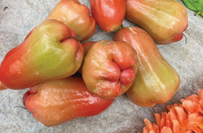
ZAAM: There are several varieties of this fruit, including pink, white, red, and green types. These fruits are highly nutritious, with high water content, natural sugars, and dietary fiber, making them ideal for consumption during summer, especially in the afternoons. They are filling without being calorie-heavy and provide essential minerals that help refresh and hydrate the body.