Elsa Angel Rose
Cisgender people are not asked to prove who they are wherever they go, so what makes trans people an exception? Why should they have to produce a medical certificate or let a doctor or magistrate decide what they are, when they themselves know very well who they are? Transgender communities, human rights advocates, and activists across the country are protesting something significant this time. On March 19, Union minister Virendra Kumar introduced the Transgender Persons (Protection of Rights) Amendment Bill, 2026, in the Lok Sabha. If passed in both houses and receiving presidential assent, t will become a law, which is what the community is protesting against right now. The bill takes away the right to self identification and requires a trans person to produce a medical certificate and have it approved by the district magistrate to be recognised as transgender. Cisgender individuals are never asked to produce a medical certificate to assert their gender; it is self-determined and assigned at birth. “We are transgender from birth; we do not need a doctor to tell us whether we are or are not a transgender person. Nor does any minister or collector have the right to certify or decide who we are. We know for ourselves who we are,” shared Madhugupta, the first transwoman to vote in Goa and a transgender activist.

A VIOLATION OF BASIC RIGHTS?
Producing a medical certificate to prove one’s gender also invades a person’s right to privacy and bodily autonomy. “Asking someone to present medical reports is intrusive and undermines their bodily autonomy. Even the process of obtaining an identity card is deeply invasive, involving psychological assessments and medical examinations. It becomes a back-and-forth process, especially if the district magistrate does not approve the application, forcing individuals to repeat the steps. Overall, it is a tedious and exhausting system that is likely to make people’s lives even more difficult,” said Francis Fernandes, a social activist from Borim who identifies as gay. If the bill becomes a law, there will be many repercussions for the transgender community. The main aspect of the bill that transfers the right of self-determination of gender from the individual to a medical authority implies approval rather than acceptance of a person’s gender, which will eventually lead more people in the community to live in fear and remain closeted. “I think this will push people back into the closet, as they may begin to fear oppression again. It could also limit their access to welfare schemes, though even now, the government has not been allocating or utilising funds adequately. The funds that have been allocated are already insufficient to truly support the community. With a move like this, it will only deepen the marginalisation and make things more difficult,” said Francis.
STRUGGLES OF THE TRANSGENDER COMMUNITY
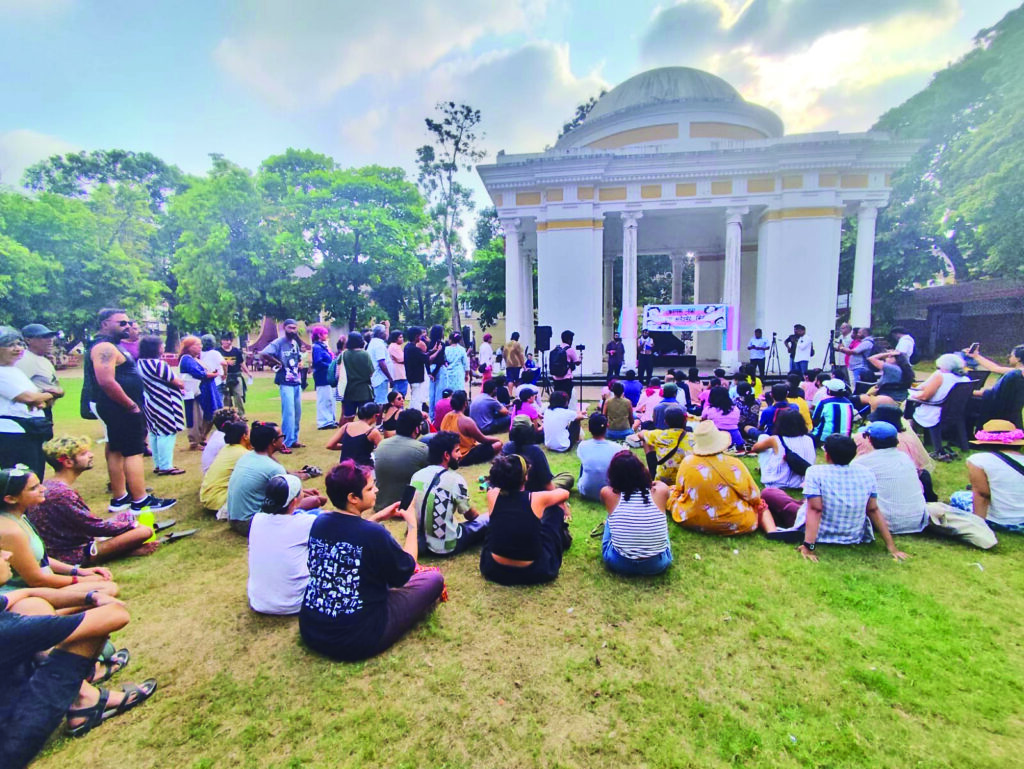
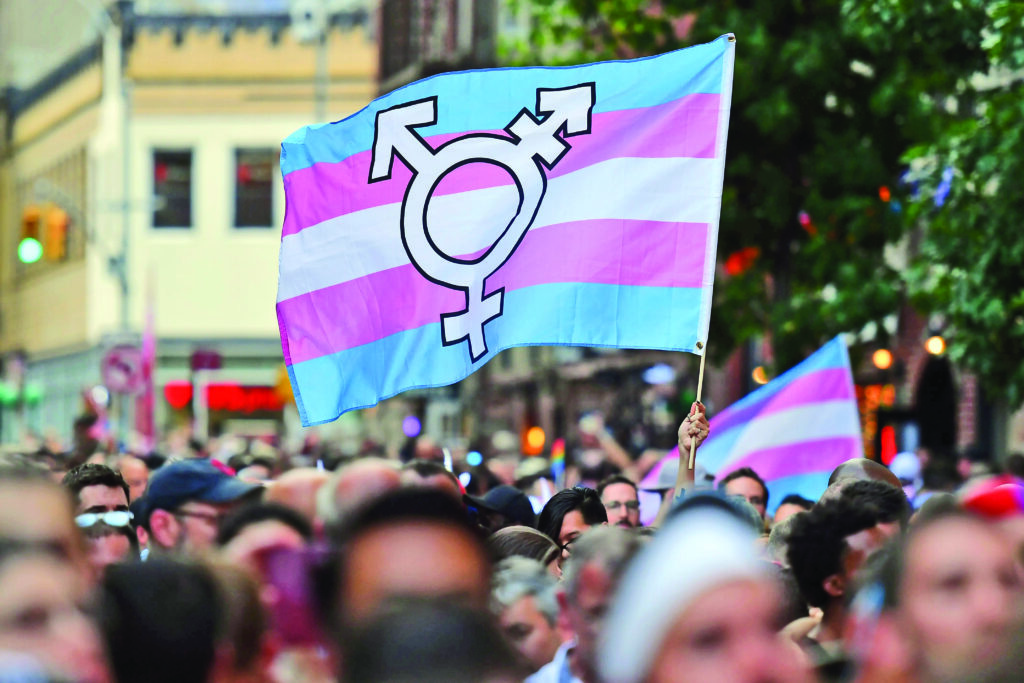
We face numerous struggles every day. Securing employment is difficult, and we encounter challenges within healthcare systems as well. There is a lack of basic facilities, such as washrooms for transgender people, in public spaces. Despite Goa being a large state with many government institutions, we see little to no representation in any of them,” Said Madhugupta. The activist emphasised why the community that would be affected by the bill was not consulted when it was introduced. She said, “When passing a bill that directly concerns the transgender community, we should have been consulted first to understand whether we are okay with it. There is a large transgender community in Goa; it’s not just tourists, but many Goans themselves, and a significant number of them are still closeted. Why are they still closeted? Because they are afraid, because our voices continue to be suppressed,” said Madhugupta. “I’m a queer person, it’s something that keeps evolving for me. Sometimes I feel like a woman, and at other times, I don’t feel like anything at all,” said a queer person who requested anonymity. Regarding the requirement of a medical certificate and approval from a magistrate, the queer person raised a question. The individual asked, “How do you expect people who don’t have money or resources, and who are being thrown out of their homes, to access surgeries or medical procedures? When governments PANJIM UNITES AGAINST CONTROVERSIAL BILL it will become a law, which is what the community is protesting against right now. The bill takes away the right to self identification and requires a trans person to produce a medical certificate and have it approved by the district magistrate to be recognised as transgender. Cisgender individuals are never asked to produce a medical certificate to assert their gender; it is self-determined and assigned at birth. “We are transgender from birth; we do not need a doctor to tell us whether we are or are not a transgender person. Nor does any minister or collector have the right to certify or decide who we are. We know for ourselves who we are,” shared Madhugupta, the first transwoman to vote in Goa and a transgender activist. Transgender persons, activists and allies gathered in Panjim to protest against the proposed Transgender Persons (Protection of Rights) Amendment Bill, 2026, calling it discriminatory and unconstitutional. The protest was led by Dr Andy Silveira. Participants criticised the bill introduced by Union Minister Dr Virendra Kumar for being drafted without meaningful consultation and for shifting gender recognition from self-identification to state-controlled medical certification. They argued it narrows the definition of transgender persons, excluding trans men, trans women, and non-binary individuals. Concerns were raised over “allurement” and “inducement” provisions, which could criminalise families, doctors, NGOs, and supporters, with penalties of five to 14 years. Protesters urged withdrawal, wider consultation, proper implementation of the 2019 Act, and protection of transgender rights. say that a medical certificate is required, do they actually ensure that people have the means to obtain one? The reality is, they don’t. They haven’t created a system that makes these resources accessible to us, and they don’t seem willing to provide that support.
HOPE, RESISTANCE, AND THE WAY FORWARD
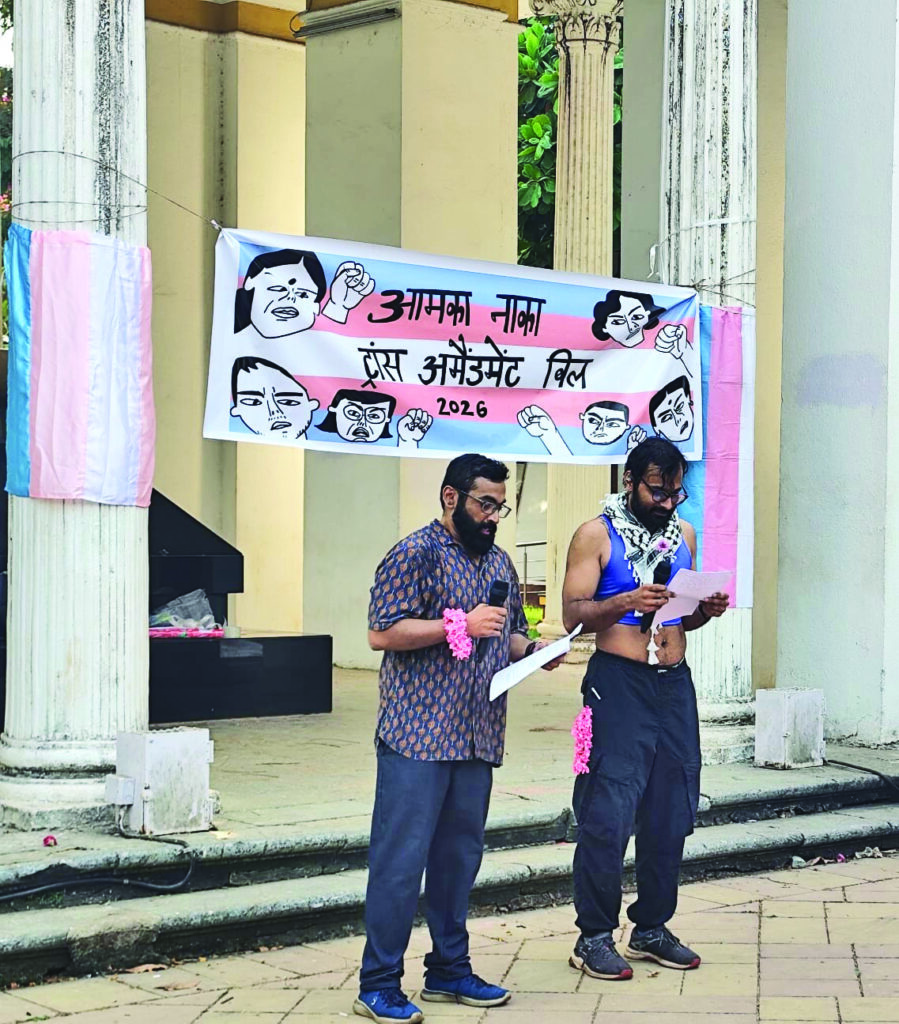
“For now, the community’s clear position is that the bill must be rejected and withdrawn. Moving forward, the government should not make any changes to the existing Act. without proper consultation with the transgender and intersex community, especially when a National Council for Transgender Persons already exists for this purpose,” Shared Aruvi, a research scholar in philosophy at Goa University and a transwoman. The transgender community in Goa are optimistic and considers this as an option to fight for their rights and make society inclusive and egalitarian. The anonymous queer person said, “This is just a stepping stone. Hopefully, our voices are being heard, and that something more inclusive will be implemented, something that truly provides greater benefits, especially considering how many people are affected.” Not sure of why such a bill was introduced, with many who will be affected by the bill claiming that it is regressive and detrimental to them. In such a scenario, hope and action can guide the troubled minds. And again hopefully, what is good for the community and the nation will be adopted.