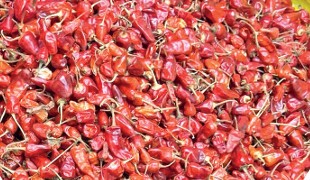
Chillies in Goa are deeply tied to the state’s agriculture, history, and cuisine. Traditionally, Goa has had several locally cultivated chilli varieties such as Khola chilli (Canacona), Harmal chilli (Arambol/Pernem belt), and Aldona chilli (North Goa). These are often small scale, locally conserved varieties where farmers save seeds each season, leading to subtle variations over time while still maintaining a strong link to their village identity. This is why many chillies are named after places, because the seed stock remains tied to that locality. Miguel Braganza is a well-known Goan agriculturalist and has been a part of the Botanical Society of Goa. “Chilies are an integral part of the cuisine in Goa and the rest of India. Yet the red chilies were the Europeans’ import substitute for the Black Pepper from India. In Konkani, the pods that replaced the Black Pepper or mini became mini-sang and, in the rest of India, the Kala Mirch was replaced by Lal Mirch in the masala. Chilies are a red hot spice that originated in Latin America. Khola chili is a distinct variety of chili grown on the hill slopes in the southern coastal taluka of Canacona or Kannkonn Mahal that was a part of the Kingdom of Sondekar Raja Wadiyar.
How exactly the ‘Khola Chili’ evolved in the village in Canacona that is still known officially as ‘Cola’ with the colonial spelling is as much an enigma as the naturalisation of chilis as an Indian spice of choice. What is known is that the Khola chili was a part of the slash-and-burn shifting cultivation on hill slopes that is known as Kumeri in the Konkan and as Juming in North-East India,” says Miguel. Goan botanist Anuradha Naik, a Former Research Associate at ICAR-CCARI, Ela Old Goa, explains, “Chillies in Goa are named after their village or county of origin. Local chillies are called gavti meaning local. There are several types of chillies in Goa and often used in combinations to get that great curry flavour. Goan Hindus use mostly gavti / local chillies and each house hold has their own preference.” “Khola, also known as Canacona Chilli, is a distinctive variety traditionally cultivated by the tribal communities of Khola (Cola) village in a traditional farming system, set in the hilly terrains and rocky plains of Canacona. Khola Chillies are characterized by their attractive red (brilliant red) colour. They are medium pungent in taste.

These chillies are cultivated during Kharif season on the mountain slopes. This chilli variety has been registered as a first agricultural commodity to get Geographical Indication (GI) tag as well as Farmers variety registration certificate. It’s also one of the locally preferred chilli in most Goan cuisine,” informs Dr Anuradha Naik, Nari Shakti Awardee. An award winning Goan chef, Chef Avinash Martins is a big fan of chillies. “If I’m doing a Homman, I love to use Khola chilli, the Canacona chilli because, it’s got that heat, but it is not red. The curry turns to be pale orange.
If I’m doing a Vindaloo, then I want the Harmal, Pernem chilli. Bird Eye chilli or Tarvoti chillies are great for chutneys and the roast or those marinations, because they’re very spicy and vinegar is added to balance it out. I use Harmal chillies for a milder preparations like for a Xacuti, to use tamarind to balance it out. I have a collection of Mexican chillies, which I use to make a nice smoked Chipotle. My wife is from Shillong, so she gets her spicy Raja Mirchi and Bhut Jolokia, and we even prepare Bhut Jolokia chilli oil at home for condiments,” informs Chef Avinash. Over time, chilli use in Goa has become highly culinary-specific, some varieties are chosen for colour, others for heat, and others for flavour balance with tamarind or vinegar. Even today, many households mix multiple chillies depending on the dish, preserving a very traditional way of cooking that reflects both local biodiversity and cultural history.