AMITA KANEKAR
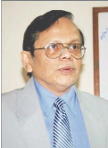
The untimely death of Goa’s well-known con servation architect Ke tak Nachnolkar on 5th April, has left the architecture and heritage worlds of Goa both shocked and bereft. If the shock has yet to subside, the sense of bereavement will take much more time because this loss is a huge one, bare ly comprehensible right now. This tribute is thus just what first comes to mind. It doesn’t sound very nice, but it’s a fact that architects do not enjoy a good reputation in today’s Goa. I don’t know about elsewhere, but in Goa we are associated with un wanted projects and land grab (like Unity Malls and IITs), il legal constructions (like bun galows/hotels inside forests, on farmland, or on beaches), destruction of nature (through building on hillsides, cutting trees, filling fields), second homes for metropolitan In dians (from run-of-the-mill villas to bespoke ‘sustaina ble’ mud constructions) and straightforward disasters (like the killer Birch by Romeo Lane nightclub). It’s also a fact that the profession has historically prioritised service to patrons (the richer the better) above all else, including the law, not to mention common sense. This historic weakness is visi ble everywhere in Goa, where simple decency is flouted by almost every new project. The result is that Goa is van ishing under the onslaught of a tsunami of luxury con structions, each with attached swimming pool, all peddled as ‘eco-friendly havens’, or ‘tran quil retreats’, or ‘your own personal spa,’ or ‘waking up to sea waves’, or a thousand oth er pricey labels in real estate advertisements and the glossy pages of what passes for archi tectural journalism.

Against this background of shallow, consumerist and destructive contemporary ar chitecture, Ketak’s work was completely different, that of conservation. This meant that instead of replacing Goa’s of ten-neglected and crumbling heritage, he tried to restore and preserve it. Instead of creating new buildings which might or might not be used, buildings as investments, or buildings as ‘statements’, he extended the life and use of existing buildings — remind ing one that the only sustain able building is the one that already exists (Kimberly Dow dell, 2024). In short, instead of ‘disappearing Goa’ like so many in the field, he tried to keep our Goa alive, includ ing not just old and beloved buildings, but even the ways of building, the materials, tech niques, and little details that would otherwise be long lost. Just to name some projects in which he was involved: the Old GMC in Panjim, Reis Ma gos Fort, St. Anna Church of Talaulim, Chapora Fort, Santa Monica Convent at Old Goa, Cruz Milagres Church at Old Goa; Pilar Church; the Malli nath, Devki-Krishna, and Rav alnath temples of Marcel; and, most recently, Panjim Church. This list seems long and im pressive, but it is not com plete; there were many more churches, chapels, temples, and public buildings, and also old houses, in his two-decade long career. Just to clarify—I am not saying that Ketak’s conserva tion work was perfect. I am not qualified to judge, and I do know that there were crit ics.
This, however, is hardly a surprise. Heritage conserva tion is a difficult field at best, and conflict-filled as well; one can get embroiled in histor ical questions, technology choices, family and land dis putes, community rights, gov ernment agendas and more. Satisfying everyone is diffi cult, or even impossible. Ketak also did a few new buildings. There is a temple at Bambolim, near the Fu lancho Kuris Chapel and the Institute of Psychiatry, which I used to always admire while passing by: small, orange in colour, clearly a recent build ing, but distinctly Goan in its sensibility (the formal com position, entrance balcão, multiple sloping roofs, and typical proportions). It was at once both elegant and subtle in its impact, instead of being grand or overpowering like many temples being built in these Hindutva times. It was much later, after years of ad miration that I learnt that Ketak was the architect; and that the owners were one of the local fishing communities (if I remember right). I still find it easily the best Hin du shrine built in post-1961 Goa, modern but harking to the nineteenth-century Goan temple type, and surely an inspiration in the midst of a depressing landscape of giant scale, over-decoration, imita tions of archaic Indian forms, and faux-Goan-cum-Indian extravaganzas that is contem porary temple architecture here. Ketak also taught at the Goa College of Architecture where, despite his hectic practice, he would take time out to conduct classes in the field (especially at Old Goa or his own project sites, but also other places) and to guide research dissertations on his torical architecture and build ing practices.
What he offered was not just vast knowledge based on first-hand experi ence, but a refreshingly dif ferent perspective on history, architecture, and Goa too. This perspective can be seen in his essay “Experienc es in Conservation: Conserv ing Local Heritage in Goa” published in Heritage at the Crossroads: Preservation of Goa’s Architectural Treasures, edited by Joaquim R. does San tos (2023). People working in conservation forever com plain about the lack of funding, but here Ketak speaks of how too much funding can also be a serious problem, leading to excessive interventions when good conservation requires doing only what is absolutely necessary. Also, he consist ently recognised the “Goan ness” of architecture, empha sising through his words, his work, and his passion how Goan heritage is the herit age of all Goans, which unites Goans irrespective of religious and other differences. This attitude was part of his work and also part of his remarkable personality: un assuming, down to earth, no showing off at all and ever-will ing to share what he knew. You could say that he was unlike most architects, but you could also say that he was – in the best sense – very Goan. Rest in Peace, Ketak Nachnol kar. You fought the good fight for Goa’s heritage in your short but brilliant career. One can only hope that others will be in spired to take up this cause with the same dedication. (Amita Kanekar is an architectural historian and novelist)