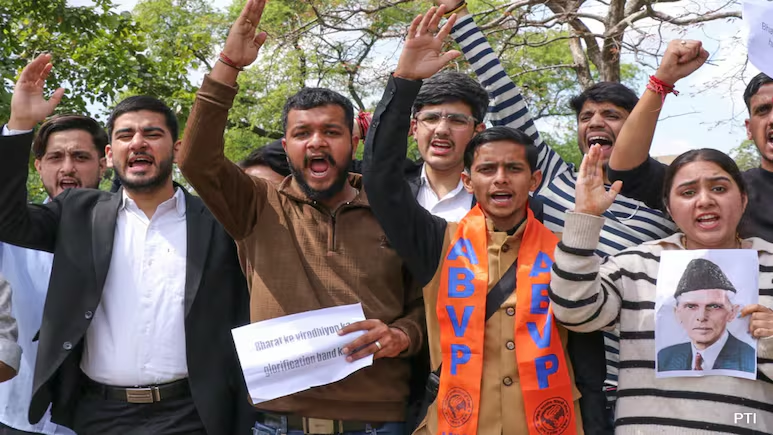
The Akhil Bharatiya Vidyarthi Parishad (ABVP) on Friday staged protests at the University of Jammu, demanding the removal of a chapter on former Pakistan president Muhammad Ali Jinnah from the revised postgraduate political science syllabus under the National Education Policy (NEP) 2020.
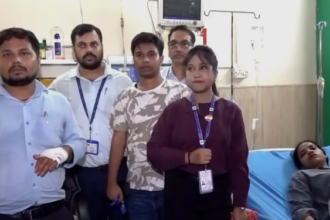
Led by ABVP Jammu and Kashmir secretary Sannak Shrivats, activists gathered on campus, raised slogans against the administration, and tore posters of Jinnah. They demanded the immediate withdrawal of the chapter from the “Modern Indian Political Thought” module under the paper “Minorities and the Nation.” Shrivats stated that teaching figures associated with the partition and the Two-Nation Theory is unacceptable to students and urged the government to consider national sentiments. He warned of intensified agitations if the syllabus is not revised, adding that individuals who genuinely worked for minorities should be included instead.

The university defended its syllabus, stating that the inclusion of Jinnah and other thinkers is academic and aligns with University Grants Commission (UGC) guidelines. Head of the Political Science Department, Baljit Singh Mann, emphasised that the module covers diverse thinkers, including Jinnah, Sir Syed Ahmed Khan, Muhammad Iqbal, as well as Indian leaders like Vinayak Damodar Savarkar, M S Golwalkar, Mahatma Gandhi, B R Ambedkar, Jawaharlal Nehru, and Sardar Patel.
Mann clarified that the syllabus aims to present multiple perspectives to encourage critical evaluation rather than promote any ideology. He added that several of these figures held nationalist views in their early years, making their study important for historical clarity. The syllabus had been approved by a committee and follows UGC-recommended curricula taught in universities across India, including Rajasthan, Maharashtra, and Kolkata. Mann noted that excluding such topics could disadvantage students appearing for the National Eligibility Test (NET) and other competitive examinations.
The incident highlights the continuing debate over academic freedom and national sentiments in university curricula.