Long before the bustling Margao municipal square became the heart of South Goa’s civic life, its only sign of activity in the 19th century was the Batalhão do Primeiro Regimento de Infantaria, the battalion of the 1st Infantry Regiment. Its barracks once stood where the Repartição dos Serviços de Fazenda (taluka revenue office) was later built, a stone-and-mortar structure demolished in 1987 to make way for the present South Goa District Collectorate.
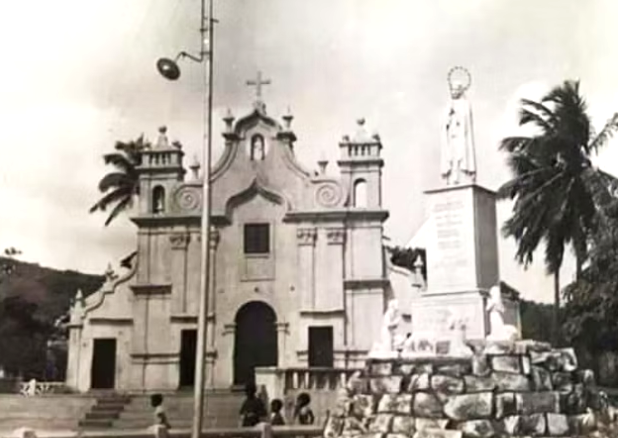
In 1811, the regiment commander, Brig. Agostinho José de Mota, petitioned church authorities to build a chapel for his men. Construction began on January 6, 1812, at a nearby site known as Moll, and within four months, the Capela de Nossa Senhora da Graça (Chapel of Our Lady of Grace) was completed. Similar to other Portuguese military chapels in Bicholim and Chorão, it was dedicated to Our Lady of Grace but soon earned the local name Capela de Batalhão or Capela Regimental the chapel of the battalion.

The first Mass was celebrated on May 3, 1812, led by Fr. Venâncio Felício da Piedade Almeida from Velim, the first chaplain to minister to soldiers far from home. When the battalion was withdrawn later in the 19th century, the premises were taken over by a police force stationed at the Quartel, located across an open ground that would later host travelling circuses and Margao’s first mobile cinema.
The arrival of the railway in 1887 transformed the area into a new town centre. Fr. José Caetano Santana Lourenço (of the Padrimoll family nearby), who served as chaplain from 1928, renovated the chapel and built a residence in the 1930s. The first resident chaplain was Fr. Álvaro Pinto.
A defining chapter began under Fr. José António Eustáquio do Rosário e Divina Providência Gomes of Aldona affectionately known as Fr. Tony, who served from 1951 to 1959. When the municipal square, Praça de Dr. Jorge Barreto, was developed in the 1940s, the chapel’s front yard was left high above the new road level, requiring 28 stone steps for access. Turning this challenge into opportunity, Fr. Tony built three-fourths of the Grace Shopping Arcade beneath the chapel’s yard, creating a permanent revenue source without losing surface space.
On September 15, 1942 the feast day of Our Lady of Sorrows the Obra de Protecção à Mulher (Institution for the Protection of Destitute Women) was founded in the chapel area. The following year, the Casa de São José was established and managed by nuns in the residence of D. Maria Parras e Cruz, located behind the Municipal building. The home offered overnight shelter to women who came to the city to sell their produce but were unable to return home due to the lack of late transport. It continued to function for several years.
In commemoration of the Ano Mariano (Marian Year) and the centenary of the proclamation of the Dogma of the Immaculate Conception, a marble monument depicting Our Lady of Fatima and the three seers was erected in the chapel yard. The statue, imported from Italy, was donated by F. X. Albuquerque and his wife, Cristalina Fernandes, and was inaugurated by Patriarch D. José Alvernaz on January 22, 1955.
The chapel was partly shared between Holy Spirit Church, Margao, and Our Lady of the Rosary Church, Navelim, leading to occasional differences .
Finally, on May 31, 1959, the chapel was elevated to the status of an independent parish church, with Fr. Tony appointed as its first parish priest. The new parish was formed by detaching areas from the mother parish of Margao, Igreja de Deus Espírito Santo (Holy Spirit Church), located just 800 metres away, and from the Navelim Church, Igreja de Nossa Senhora do Rosário (Our Lady of the Rosary Church). This reorganization was formalized through Provisão No. 54-59, dated May 1, 1959, and came into effect on May 31, 1959.
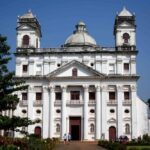
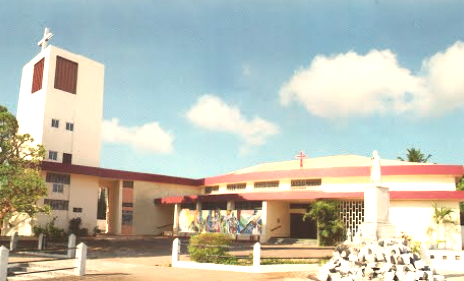
Work on the new, modern-style church building began on January 28, 1973, during the tenure of Fr. João Xavier José António Lopes de Sá of Divar and was completed on January 1, 1977. He also completed the remaining section of the Grace Estate.
Later, Fr. João Pedro Amancio Fernandes of Verna added five biblical mosaics at the entrance and launched the parish’s monthly magazine, Grace News, with the support of his curate, Fr. Savio Vaz. Today, the Our Lady of Grace Church stands as a proud landmark not just a place of worship, but a living testament to Margao’s evolution from a military outpost to a thriving urban hub.