Mausoleums are substantial above-ground monuments or buildings designed to enclose the remains of an individual or group. The term traces its origin to the tomb built for Mausolus in ancient Caria, one of the Seven Wonders of the Ancient World. Mausoleums can be private family structures or large public edifices, and they are frequently used to keep remains above ground to shield them from the elements.
In Goa, church mausoleums often serve as family chapels or crypts attached to or associated with major churches, and many are privately owned by noble families who maintain them as part of their ancestral heritage. These private mausoleums can be intricate blends of local Indo-Islamic, Baroque, and Neo-Gothic elements, reflecting the historical periods during which the families funded their construction. They function as memorials for multiple generations and as visible symbols of lineage and social status, frequently coexisting with public church spaces and the surrounding cemetery.

The two large, whitewashed, grand structures visible on the left side of the Igreja de Nossa Senhora de Belém belong to the Bragança family, with the Pereira Bragança mausoleum being the smaller domed one and the Menezes Bragança mausoleum the taller, more pointed structure. ‘Historically, the Bragança family appears to have been a single lineage that, in the 19th century, split into two branches when the male heir was lacking and two daughters inherited. One daughter married a Pereira and the other a Menezes, which led to the division of the Bragança mansion into Pereira and Menezes branches’, said André Pereira Bragança, a grandson of the family.
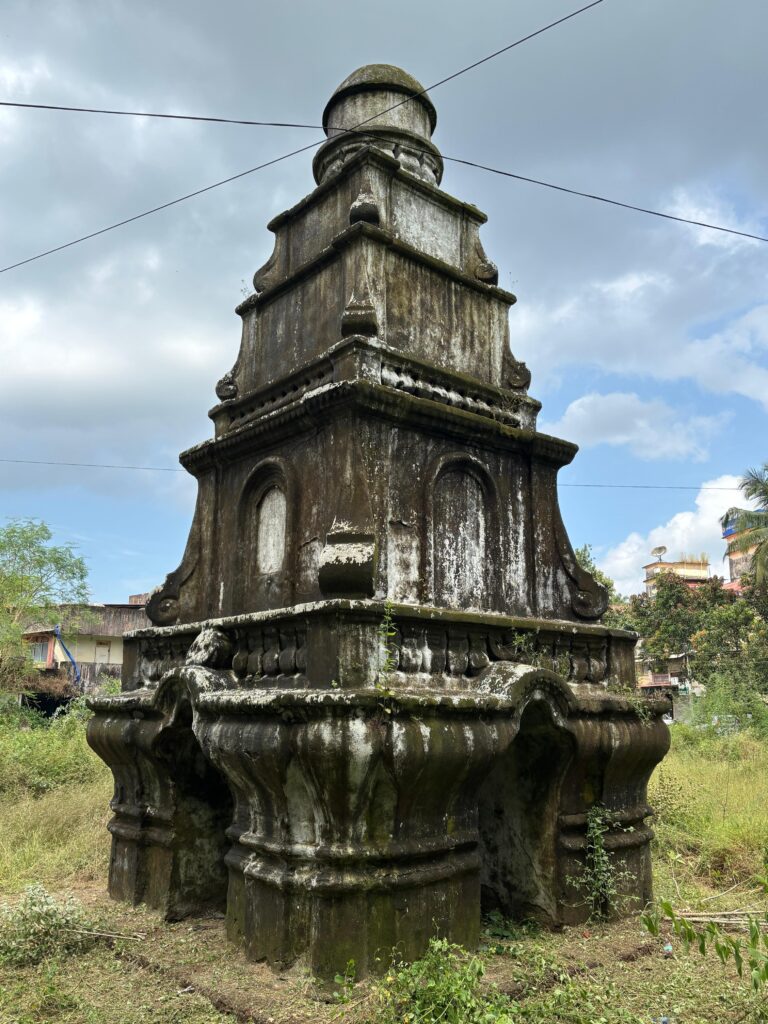
The Pereira Bragança mausoleum
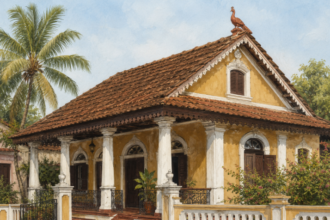
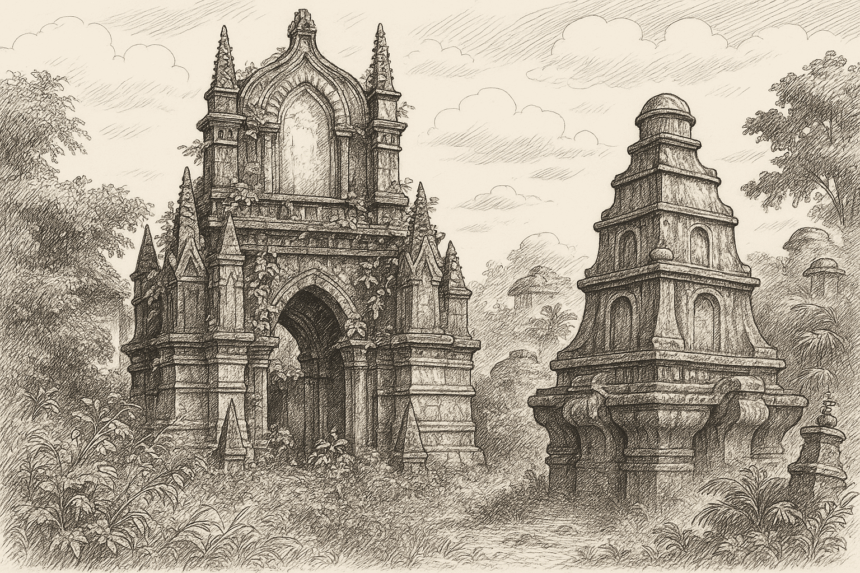
Examining the Pereira Bragança mausoleum shows strong Indo-Islamic and Baroque influences, suggesting it predates the Menezes Bragança mausoleum, which exhibits neo-Gothic elements that were widely used in church architecture in Goa during the 19th century. This makes it likely that the Pereira Bragança mausoleum is the original Bragança family mausoleum, while the Menezes Bragança mausoleum was constructed later, probably in the 19th century, after the Braganças were split into Pereira and Menezes branches.
The Pereira Bragança mausoleum likely never served as a burial site but rather housed the mortal remains of family members who had previously been interred inside the church (when intramural church burials existed) or in the outdoor cemetery, when burying the dead within the church was discontinued. This conclusion is supported by the observation that the stone plaques covering the crypts inside the mausoleum are considerably smaller than the length of an average adult coffin.
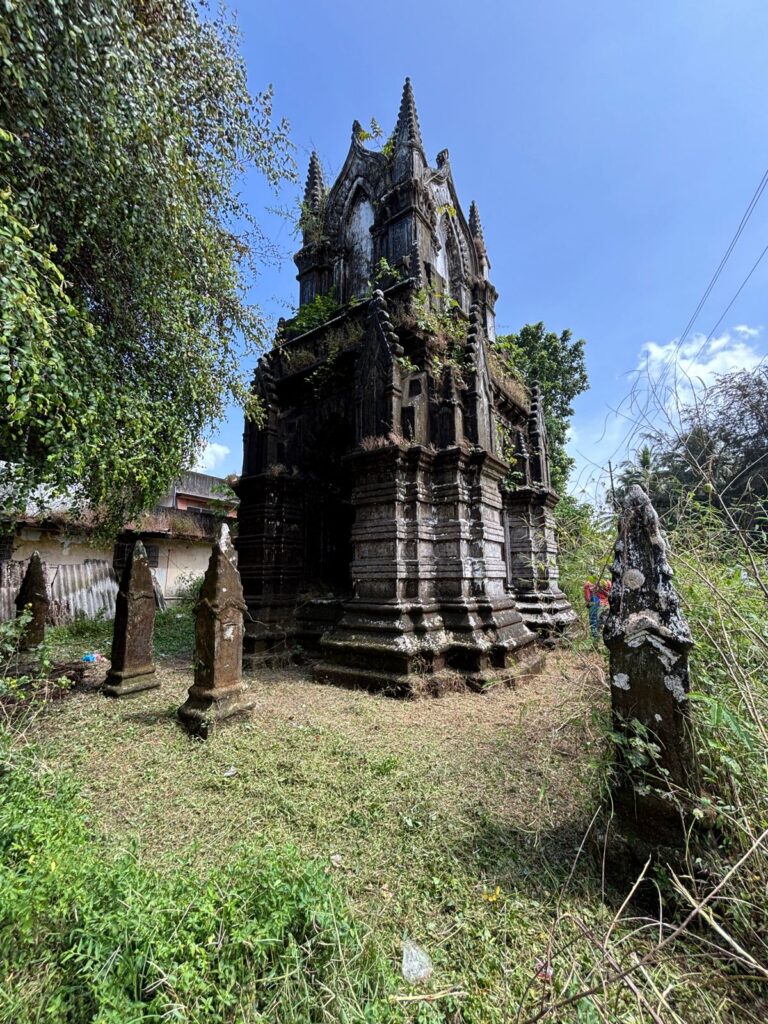
The Menezes Bragança mausoleum
In contrast, the Menezes Bragança mausoleum may have been erected in memory of a particular deceased family member or to commemorate all the ancestors of the Menezes Bragança line, since there are no visible individual tombstones or plaques for multiple family members within that structure.
Notably, the Pereira Bragança mausoleum sits at ground level, whereas the Menezes Bragança mausoleum rests on an elevated plinth and features elegant neo-Gothic styling.Both mausoleums, unfortunately, have vegetation growing on them, which should be cleared at the earliest, as neglect could lead to permanent damage to these historic structures.