SHASHWAT GUPTA RAY
The Goa Agri culture College has col laborated with Spotta Ltd, United Kingdom to devise an AI-based pest detection system which can identi fy the ‘Red Palm Weevil’ (RPW), one of the most de structive pests affecting co conut palms, oil palm and date palms, on real time basis, which can help the palm growers take protec tive measures early, thus preventing damage to the plantation.

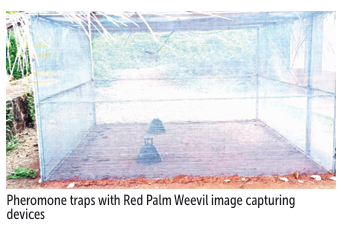
RPW is a key pest of co conut in Andhra Pradesh, Assam, Bihar, Damman, Diu, Goa, Gujarat, Karna taka, Kerala, Maharashtra, Meghalaya, Orissa, Ta mil Nadu, Tripura, Uttar Pradesh, West Bengal) and on date palm in the states of Gujarat and Rajasthan. “The Red Palm Weevil, also known as Rhynchopho rus ferrugineus, is often re ferred to as a ‘silent killer’ because it destroys the tree from the inside. The red dish-brown beetle, which has a long snout and dark spots, lays eggs in wounds or cracks in the coconut stem or crown. The coconut and palm oil growers suffer heavy losses because of this pest,” Principal and Dean, Goa College of Agriculture (GCA), Dr Suresh Kunkalikar told O Heraldo. To counter this problem, the GCA came up with an innovative solution. It de vised a unique trap, embed ded with AI-powered image analysis system for detect ing red palm weevil. This system uses machine learn ing to analyse pest images. “We procured insect pheromones from Costa Rica, Germany and UK.
It attracts both male and fe male weevils in the traps. We install cameras inside the trap to capture the im ages of pests entering the trap. The visuals are pro cessed by AI-powered im age analysers, which specif ically detects the presence of RPWs inside the trap and relays the information to the coconut or palm grove owner on real-time basis,” Dr Kunkalikar said. He added that this method saves a lot of manual labour and prevents massive losses to the tune of almost 40 per cent due to these beetles. Assistant Professor in Entomology, Rajan Shelke, said “Traditionally, the co conut growers have to first lay the trap, then weekly service to change water and attractants, which was labourios and time con suming but in this recent technology like attract and kill material in which farm er can directly apply dollop on the tree trunk which at tract and kill the weevil. He also added that due to cryptic nature of pests, it is difficult to detect the pest attack before palm shows withering symptom. Now with real time detection with help of AI based traps, the concerned grower can immediately take prophy lactic measures like spray insecticides and lay insect traps in coconut planta tions. This helps in killing the pest instantly. Prevention is better than cure. the traditional prac tices like making notches on the trunk should be avoided.
The oozing phe nolic substance attracts the female weevil to lay eggs. Eco-friendly solutions like Beauvaria or Metarhizium fungus could be used to control the pest. Dr Kunkalikar said that this technology was first tested in the field for about 6 to 7 months in South Goa and North Goa to verify the efficacy of the process and system. “We found that this tech nology was highly effec tive in saving coconut and palm oil plantations. This way we are able to protect our crops. The images of weevil pest can be relayed to the desktop, laptops or even mobile phones of the plantation owners. This gives them the flexibility to detect the presence of pests anytime and anywhere,” the Dean of Goa College of Agri culture said. He added that Goa Agri culture College can help in setting up this facility for whoever wants it.