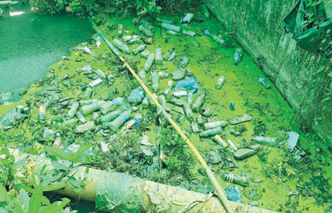
A comprehen sive joint inspection of multiple discharge points along the River Sal uncov ered serious environmental concerns, with authorities and local residents express ing shock over the extent of sewage leakage into the riv er system. The inspection, carried out on Wednesday, includ ed officials from the Goa State Pollution Control Board (GSPCB), the Public Works Department (PWD), Margao Municipal Coun cil (MMC), and the Sew erage and Infrastructural Development Corporation of Goa Limited (SIDCGL), along with social activists, panchayat representatives and citizens. The inspection covered at least five major loca tions, including areas near the district hospital, Colva Road, Khareband, and two points along the Comba eastern bypass. During the exercise, observers noted that sewage was directly leaking into nullahs lead ing to the river at several sites.
Officials noted that in many instances, the leakage appeared to originate from the sewerage network in stalled by SIDCGL, raising serious questions about the quality, maintenance, and functioning of the existing sewage infrastructure. Cavelossim sarpanch Dixon Vas informed that panchayats from the coast al belt of Salcete had pre viously raised concerns over increasing pollution in the river, prompting au thorities to undertake this inspection. He stated that at the district hospital site, officials acknowledged that treated water is being dis charged into a nearby nul lah. However, they assured that corrective measures would be implemented within 15 days. “With regard to the dis charge of sewage near the SGPDA area, we have decid ed to hold further discus sions with the concerned officials,” Vas said. He also pointed out that sewage lines were overflowing at Comba, and authorities promised to take immedi ate steps to stop the release. Vas expressed grave con cern over the situation at Khareband, describing it as the most severely affected area among all the inspect ed sites.

He noted that multiple sources of sewage dis charge were identified there, making the problem more complex. He emphasised that the Margao Municipal Council (MMC) must urgently initi ate a comprehensive action plan to address the issue. According to him, unreg ulated waste disposal and inadequate sanitation facil ities in densely populated pockets have contributed significantly to the problem. Social activist Savio Coutinho stated that al though several discharge points have now been identified, tracing the exact sources remains a major challenge due to the sheer number of leakages. He alleged that a signifi cant portion of the sewage entering the nullahs—and eventually the river—origi nates from faults within the SIDCGL’s own network. “Wherever leakages were earlier noticed, they have now worsened, damaging manholes and allowing sewage to flow freely into the nullahs,” Coutinho said. He questioned the purpose of installing sewage con nections when the network itself is faulty and contrib uting to pollution.
Coutinho further re marked that the issue is not new and has persisted for years, despite repeated complaints and even obser vations by the High Court regarding deficiencies in the system. He added that the current situation re flects systemic failures in maintenance and account ability. The inspection also wit nessed strong participa tion from local residents, representatives of village panchayats, social activ ists, and members of the Benaulim Congress block, all of whom voiced their concern over the deteri orating condition of the River Sal. Many empha sised that the river is a vital ecological and eco nomic resource for the region, supporting fishing activities, tourism, and lo cal livelihoods. With mounting public pressure and clear evi dence of widespread sew age leakage, residents are now demanding immediate corrective measures, strict accountability, and long term solutions to prevent further degradation of the river and safeguard public health.