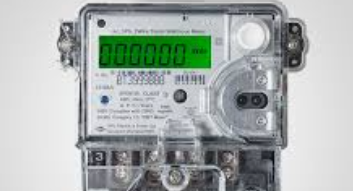
A meeting at the Elec tricity Department on Wednesday turned into a detailed exchange between members of Citizens for Democracy Goa and Chief Electrical Engineer Stephen Fer nandes over the State’s rollout of smart electricity meters under the Revamped Distribution Sector Scheme (RDSS). The delegation, which included former MLA Elvis Gomes, sub mitted a memorandum raising concerns about consent, data pri vacy, tariff implications and the possibility of remote disconnec tion. Fernandes, in turn, said the reform is a technological upgrade aimed at improving efficiency and empowering consumers. The citizens’ group sought clarity on whether installation of smart meters would be vol untary or mandatory. They ob jected to what they described as instances of installation without consent. “We have no objection if the department proceeds where people voluntarily give consent. However, there should be no for cible installation for those who do not consent,” the memorandum states.
Fernandes however was non-committal on the rollout as voluntary. He indicated that the initiative is part of a broad er reform process already underway across the State, with meters being installed in phases beginning with feeders, government connections and distribution transformer cen tres. He said the department has placed orders for 7.5 lakh meters — nearly matching Goa’s total consumer base — and that installation has already begun in select segments. The citizens group also described privacy as a central concern, arguing that smart meters, which transmit con sumption data at regular intervals to a central command and control centre, could potentially reveal occupancy patterns and lifestyle details. Citing Articles 14 and 21 of the Constitution and the Supreme Court’s judgment affirming privacy as a fundamental right, they demanded safeguards on data storage, usage and breach accounta bility. Fernandes dismissed the apprehension outright. “There is no privacy issue. This is electricity supplied by the De partment. We need to know the hourly consumption and load so we can plan infrastructure and ensure uninterrupt ed supply to the people of Goa,” Fernandes said. He explained that the meters record and transmit data every 15 minutes, enabling better load management and infrastructure planning rather than surveillance of individ ual households. The delegation also flagged concerns over differential or time-of-day tariffs, claiming that electricity consumed during peak hours could attract higher rates under a smart metering regime. They insisted that any such pricing struc ture must be transparently explained before full-scale im plementation. Fernandes did not indicate any immediate change in tar iff policy but emphasised the system’s ability to provide consumers with granular consumption data. “Unless you measure consumption, you cannot control it. Once people start measuring, they can reduce usage by 10 to 12 per cent because they become conscious of how much electricity they are using,” he said. He contrasted the current billing cycle of 30 to 40 days — which makes trend tracking difficult — with the more frequent data access enabled by smart meters. Another apprehension raised was that smart meters could function like prepaid mobile connections, enabling remote disconnection if recharge amounts are exhausted. The group argued that electricity is integral to the right to life and should not be denied arbitrarily. Fernandes again did not specifically address prepaid functionality, he framed the initiative as a systems upgrade comparable to digitisation in banking, telecom and trans port sectors. Members of the delegation then cited reported protests and public interest litigations in Karnataka, Maharashtra and West Bengal, referring to allegations of inflated billing after smart meter installations. Fernandes attributed such instances to the replacement of old electromechanical meters that had been under-re cording consumption. “In Goa, electromechanical meters were replaced five to ten years ago. At that time too, some consumers saw higher bills because the old meters were under-recording usage. Now that transition is already com plete here,” he argued. He maintained that smart meters would not artificially inflate bills but instead ensure more accurate measure ment. Amid broader anxieties about reforms in the power sec tor, Fernandes clarified that there is no current proposal to privatise electricity distribution in Goa. “Whether privati sation will happen in the future is a government decision. At present, there is no such proposal with us,” Fernandes said. The citizens’ group also questioned why awareness pro grammes were being conducted in schools when, in their view, the wider public had not been adequately informed. They called for public consultations across divisions and said an RTI application had been filed seeking detailed in formation on the scheme. According to members of Citizens for Democracy Goa, Fernandes assured them that their memorandum would be forwarded to the government along with his observations.