Even as concerns mount over the deteriorat ing health of Goa’s water bodies, the State govern ment on Tuesday told the High Court of Bombay at Goa that the Goa State Pol lution Control Board (GSP CB) has collected water samples from the Mand ovi River and will place the test results before the court once they are received. The High Court, howev er, was unwilling to wait until the end of the year. Although the GSPCB sought time till December, citing the monsoon and the need to prepare a comprehensive report, the court adjourned the matter by just two weeks and directed that an interim report be placed on record.
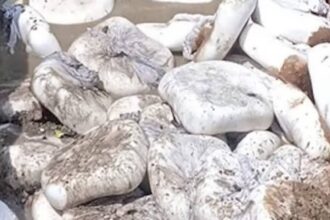
The court was hearing its suo motu public interest litigation (SMPIL) arising from the discovery of a large number of dead fish floating in Mala Lake, an inci dent that triggered wider concerns about water pollution in the State. In May, the High Court expanded the scope of the PIL to include the Mandovi riverfront, observing that the key issue requiring examination was the level of faecal coliform bacteria in the river — an indicator of sewage contamination and public health risk. The GSPCB also submitted a fresh qualitative and quantitative analysis of Mala Lake, which showed elevated levels of pollution at two to three loca tions, suggesting that contamination of the water body remains a persistent problem despite official interventions.

Meanwhile, the Corporation of the City of Panaji (CCP) informed the court that 32 of the 38 households identified as discharging sewage into Mala Lake have now completed their sewerage connections. After the illegal discharges came to light, the Corporation had issued show-cause notices to the households, sealed their waste outlets and direct ed them to obtain authorised sewerage connections through the Sewerage and Infrastructural Development Corporation of Goa (SIDCGL). According to the affidavit, four households have since applied for sewer age connections, while two continue to evade compliance.
The Corporation told the court that fresh show-cause notices would be issued to the two de faulters. The proceedings have once again highlighted the chronic failure to prevent sewage contamination of Goa’s water bodies, with the High Court continuing to monitor a crisis that has exposed glaring lapses in environmental enforce ment and urban infrastructure.