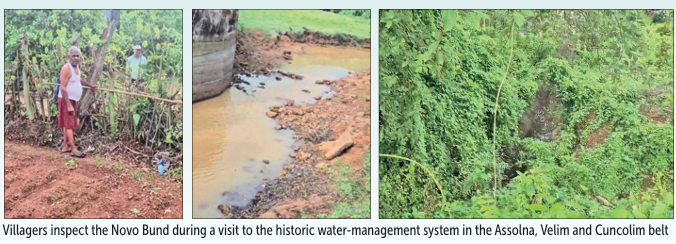
A major initiative to doc ument and revive the historic Novo Bund irrigation network has been launched across the AVC belt — As solna, Velim and Cuncolim — with representatives of the Assolna, Am belim and Velim Biodiversity Man agement Committees (BMCs) begin ning the process of documenting and geotagging traditional water bodies linked to the historic system. The effort comes amid growing concern among environmentalists and local stakeholders over the de cline of a Portuguese-era network of lakes, channels, wetlands and irriga tion structures that historically con nected villages across the region and played a crucial role in supporting agriculture, fisheries and groundwa ter recharge. Representatives of the Assolna, Ambelim and Velim BMCs, along with officials from the Water Resources Department and environmental ac tivists, recently inspected the Novo Bund spillway and surrounding wa ter channels as part of the documen tation exercise.
Historical maps presented during the inspection reportedly revealed an extensive interconnected wa ter-management system that sup ported paddy cultivation and local livelihoods across the AVC region. Participants noted that many of these traditional water bodies and bunds have fallen into neglect over the years and now require urgent attention. Frederick Borges, chairman of the Assolna BMC, told O Heraldo that the exercise aims to document and geotag traditional water bod ies linked to the historic Novo Bund system and lay the foundation for future conservation and restoration efforts.

Among those participating in the initiative were Cyrdon Torcato, chairman of the Ambelim BMC, and environmental historian Porfiro Fernandes of Velim, popularly known as “Profit Uncle”. Fernandes pointed to historical records and maps documenting how water once flowed through an interconnected network linking villages across the region, helping sustain agriculture and recharge groundwater reserves. Stakeholders involved in the exercise believe that documenting the tradi tional water bodies will help identify areas requiring conservation and pro vide a basis for future restoration initiatives.
The initiative has gained significance amid increasing concerns over wa ter security and climate resilience, with environmentalists maintaining that restoring parts of the traditional network could strengthen groundwater re charge, support agriculture and preserve an important aspect of the region’s environmental heritage. Participants also highlighted the absence of a Biodiversity Management Committee in Cuncolim, despite the historic irrigation system being closely associated with the area. The documentation exercise is expected to continue in the coming weeks as stakeholders seek to build momentum for the long-term conservation and revival of the historic Novo Bund network.