CLEOFATO ALMEIDA COUTINHO
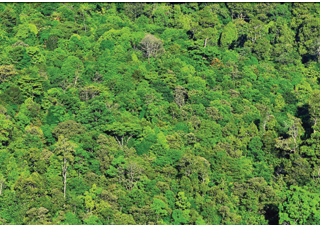
The slogan ‘enough is enough’ is rever berating all over Goa as the tiny state is reeling under the weight of cement and concrete. The march of destruc tion goes unabated. Sec. 16B (now deleted), Sec. 17(2) (almost read down) and 39A (under challenge) of the TCP Act are the key drivers of that destruction with absolute discretion be lieved to be exercised on ‘suitcase to suitcase basis’. But what is it, that is at the root of it. Why such a requirement to destroy green cover and hills? About two decades back, with the boom in the tourism sector, sec ond homes for the rich and elite of north India drove the real estate sector in Goa. Trends show that, round the globe, vacation homes are near water and hilly/ mountainous belts are also preferred. Goa has both water and hills in abundance and both the belts are facing threat from that trend which is fuelling concretisation of the shore-line and the slopes. It all started in 2007, when Brian Chesky and Joe Gebbia rented out air mattresses in their living room to offset high rents in San Francisco. Short rentals concept B&B (bed and breakfast) got developed to help people rent out unused rooms for tourism purposes. Such proposals help lo cals to earn something extra. Homestay policy is where tourists stay in the home of a local alongside the host family and get local insights affording a cultural exchange. The host earns and for the visitor it is more afforda ble. For a hilly terrain, it was a great idea where existing houses could be used as a part of sus tainable tourism without any extra load on the en vironment. It was never thought that in less than two decades, short-rentals would lead to huge in vestment portfolios and real estate speculation driving the economies of tourism countries. Houses, apartments, vil las and condos are now income generating as sets. The second home which was actually a vacation home is now a high yielding proper ty. That covid pandemic and work-from-home flexibility accelerated the buying of houses for renting out. Earlier it may have been a status statement to say ‘I have a property in Goa’ now it is ‘I have business in Goa’. The short supply of rental spaces has pushed rents to unbelievable levels leading to collapse of cities. If Barcelona and New York have taken ef fective steps to restrict short rental companies, it is only because the impact on locals, society and environment is not overlooked by them. If unavailability of long term rental spaces for residential use is a con cern in other countries, Goa which has only lim ited land area has an ad ditional concern as the hills, countryside and shore line are irreversi bly damaged to sustain an economic model built on leisure for the rich. A report prepared for GTDC by research and analysis unit of KPMG (post covid) reveals that flats used as vaca tion homes were about 100% unregistered and villas at 98%. At a time when the world is staring at housing con cerns, affordability of housing and communi ty displacement due to B&B, instead of placing restrictions on use of apartments and villas for tourism purposes, the Goa government has further facilitated use of residential areas by the Homestay and B&B policy. As per the policy, an establishment with a minimum of 2 lettable rooms and a maximum of 6 rooms can be ‘let’ out. A homestay which necessarily involves the family as a host, the use of the word ‘promoter’ (one who holds power of attorney or an agent) has completely distorted the homestay policy. A homestay in India works on principle use of exist ing houses, the Goa pol icy makes no distinction between existing houses and new constructions. In fact, the policy accel erates construction of apartments and villas for tourism purposes. In Goa, where very few housing cooperative housing societies are formed, it is actually a free for all for investors to take appropriate reg istration policy. There is also no limit in the number of registrations a party can hold creat ing managements hold ing keys of apartments and vacation homes. An entire building could be a home stay/B&B or some apartments in a building could become a homestay/B&B leading to the misery of actual first home buyers. A resi dential building with say, 20 apartments for short term rentals would be al most a hotel with all do mestic charges. Imagine 3 home-stays each with six rooms, built near each other with a swim ming pool could be an 18 room boutique hotel! Hundreds of apart ments and villas with swimming pools despite water scarcity, have been affected by the govern ment policy. The rich and elite from north India are driving that sector. Apartments are planned, built, advertised and sold to be used as per the policy. The KPMG report could have been used to streamline the tourism sector, but that opportunity is frittered away for the benefit of few, mostly the rich of the north. For a regis tration fee Rs 1000 in case of homestay and Rs 5000 in case of B&B, the policy is only a scandal. As the government gets pittance and who makes a kill is anybody’s guess! With land in short sup ply, the green cover and slopes are under attack with the TCP dept ready to play the ball. In Goa, industrial es tates came up in almost every taluka with no provisions for housing the workers, leading to illegal shanties and slums all over the state particularly in suburbs. Neither the government nor the investors and real estate companies looked at the needs of the lower income class es as second homes was a lucrative business and now it is short term rent als through a government policy. The western world is moving in to contain the trend. Goa is moving in another direction. (The writer is a Sr. Advocate and a politi cal thinker)