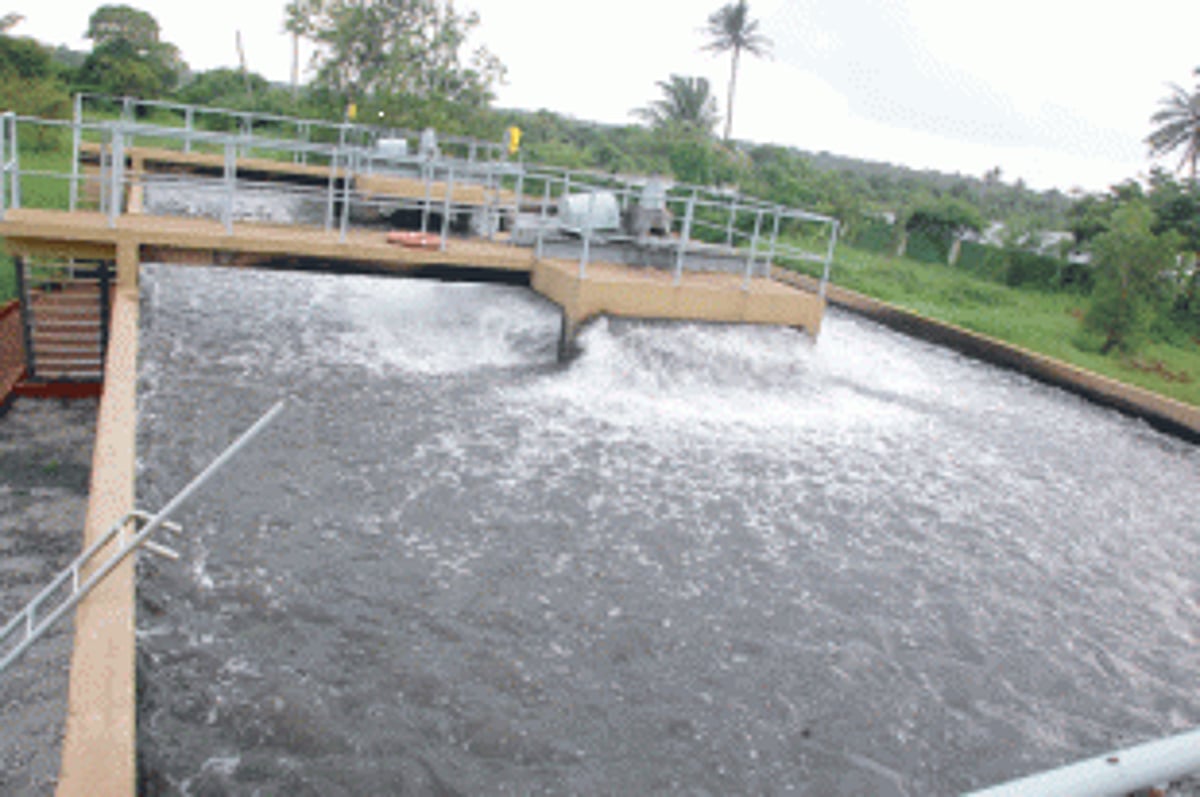
Deadlines for the completion of the Sewage Treatment Plants in Margao are almost here. As per Chief Engineer, Paranjape the JICA STP of 7.5 MLD has almost been completed and the same is the case with the Sewerage Corporation Plant of 20 MLD. However, there seems to be no end to the releasing of sewage into rivers and nallahs and concerned citizens are now calling the dredging a mere eyewash if one observes the amount of filth which is being dumped into the River Sal.
The ambitious and emotionally propagated project of dredging and cleaning of River Sal is looking like it will be a million dollar eyewash as authorities have failed to curb the sources of pollution to the river. The announcements of the 2 big sewerage treatment plants have been made and the lines have also been laid. The deadline for the JICA STP plant was set as March 2016 and for the Sewerage Corporation was set to June by PWD Minister Sudin Dhavalikar during his visit. He had also committed to taking action against authorities who are responsible for releasing sewage into the River Sal. Sadly, the open sewage line and smelly water into the river has not stopped.
In some of the places, continuity to the lines is absent in several ends and hence raw sewage is released into the drains and subsequently into the river. Already there have been several complaints by locals and NGOs of pollution of water bodies, degeneration of life in the River Sal, smell of sewage and skin problems due to contact with water etc. The deadlines set by Dhavalikar may be soothing but it is looking very difficult to curb the degrading sanctity of one of Goa’s biggest rivers.
The JICA STP work is being monitored by the Chief Engineer of the PWD. When Herald contacted him on the status of the plant he said, “The plant is almost nearing completion. It will be ready and functional in a month. We have held 2 or 3 inspections in the last week and it was seen that the miscellaneous work, iuncluding civil work is pending.”
“The work of pumping, testing and disconnection of most of the equipment is done,” he added.
The Sewerage Corporation Plant of 20 MLD which is the bigger plant is being claimed to be 95 percent complete and with June given as the date of completion. There are a few pending payments and some minor work left to be done after which the plant will be functional.
The Managing Director of the Sewerage Corporation, Arvind Patil told Herald, “We can take in sewage right now as the 7km sewage line is ready and over 2000 house connections have been established and kept ready so that we can provide them with connections to sewage tanks.”
“We are waiting for the plant to start and in the meantime, as an intermediate arrangement, we have put a temporary pump and pipeline and are pumping out using the old plant. In a month’s time, we will start the pumping of sewage into the plant,” he added.
The Goa State Pollution Control Board (GSPCB) officials have already inspected the river bank at Kharebandh after there were several complaints from senior citizens in the vicinity alleging that sewage is being released into the river.
The Junior Environmental Engineer of GSPCB, Digvijay Dessai, Field Assistant Milagrina Furtado, Complainant Agostinho Gama and others inspected the blackened waters due to the dumping of garbage and sewage for the last several years which has totally polluted the river. The inspectors had also accepted the fact that prima facie investigation had revealed major pollution.
The JICA India and GSPCB have also examined the river and concluded that there was no chemical contamination. However, the findings have exposed that there has been sewage contamination and the levels of oxygen in the river are very low.
Several complaints of pollution of wells, streams and other water bodies due to the sewage disposal have already reached as high as the High Court in Goa. Areas like Comba, Madel, Navelim and Kharebandh have been the worst hit.
Both the plants will be enough to treat the sewage of Margao, Navelim and Fatorda and some parts of Curtorim. The two plants are planned to take care of the sewage of half of Salcete Taluka.