AUGUSTO RODRIGUES
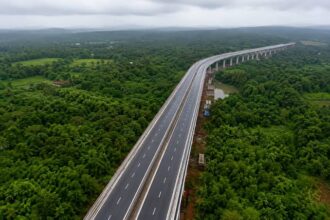
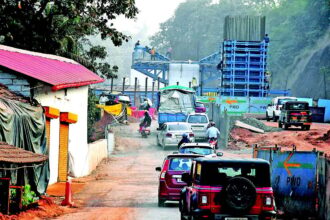
“The punch line is,” observed Justice Val miki Menezes, judge of the High Court of Bombay at Goa – as both parties concluded their arguments in PIL WP 1617/2026 – “translocate as many trees as possible.” “Trees need to be cut if there is a project. But nature needs to be preserved too. Permission for cutting and replanting trees needs to go simultaneously,” observed Justice Menezes as Advocate General Devidas Pangam tried to make a case for the Tree Authority, through the Forest Department. The mainstay of PIL WP 16/17/2026 is that trees were being felled for the ex pansion of Highway No 66 notwithstanding detailed directions by the High Court through its order dated Oc tober 16, 2025 in PILWP No 15 of 2025.

The October 16, 2025 or der streamlines procedures to be followed by the Tree Authority for proposals where more than 100 trees need to be felled. “The Tree Authority,” alleged advocate Melisa Zemira Simoes for the petitioners, “has permit ted cutting of trees bypass ing the High Court order.” The arguments that start ed at 11 am ended at 4.54 pm with Pangam finding himself at the receiving end to ward off the queries of Justice Menezes and Justice Hiten S Venegavkar. “You say there is a plan for planting of trees. Yet, you are unable to show what sort of indigenous tree is going to be planted where. There has to be a chart with the name of the tree and the Survey No where it will be planted,” stressed Menezes as Pangam tried to establish that the Tree Authority’s work was within the frame work of the court order.
The Tree Authority, ac cording to the petitioners Sohail Furtado and Colva Civic and Consumer Forum, granted permission with out first having plans about re-plantation, relocation, survey numbers of proper ties where trees would be relocated or transplanted, species proposed and time lines for plantation. “Ideally, they should be there. If not replicate, the idea is to at least maintain biodiversity. But the argu ments of the petitioners cannot stand because theirs is an attempt to make an issue picking up pieces of information found here and there,” agreed Pangam. While Pangam insisted that trees needed to be cut for a project that would ben efit all, Justice Menezes inter rupted and said: “Trees need to be cut for projects. But, nature needs to be preserved too. We believe, re-plantation plans and permission to cut should be simultaneous.” “There is no material placed on record on assess ment of re-plantation. We are concerned about the re-plantation plans.
We are not against projects. We are all for them. We need clar ity on how this permission was given keeping in mind the orders passed before,” observed Justice Menezes as AG Pangam insisted: “There is no option of changing the alignment of road widening.” As AG Pangam appeared to weave his way past the argument of the petition ers and the constant ques tioning of both the Justices, Justice Menezes retorted, “There is no report from the PWD that states that we can not avoid this alignment.” “What you are arguing is that, if the PWD says this is the route or alignment, the Tree Authority has no choice?” wondered Justice Menezes. To which, AG Pangam said: “The Tree authority cannot say that the alignment needs to be changed. Instead, it can demand relocation of trees which it has done in this case.” The minutes of the 10th meeting of the Goa Tree Au thority kept surfacing dur ing the arguments with the focus being, the non-com pliance by the PWD with compensatory plantation obligations of 33,723 trees over the last five years. Appearing for the petition ers, Adv Simoes brought to the attention of the court that the Tree Planting Authority, when giving the order to fell trees had overlooked Section 11 of the Court order which read: “After the proposal is received, the same shall be scrutinised by the Tree Au thority.
The critical study shall include scrutiny of the report submitted by the ap plicant, the need for cutting of trees proposed, whether it is possible to save any tree from felling, whether trans location can be permitted of any of the trees having local/ religious significance, and only if the felling is found necessary and recommend ed, the permission for felling can be granted.” Emphasis was also laid on Section 16 of the same order which read: “Further, if there is default… in carrying out the re-plantation and main tenance, the Forest depart ment should not grant any new permission unless there is compliance in respect of the earlier permissions. How ever, in exceptional cases, permission may be granted provided a proper plan of action and undertaking, with additional security deposit, is furnished to complete the re-plantation work required.” Justice Menezes later asked the petitioners and the AG to settle down on names for a committee to be set up. The judgment is expected to be delivered on Thursday in the chamber of Justice Menezes.