Norah Takkekar
“Sleep is essential for the repair and rejuvenation of both physical tissues and emotional well-being. When adequate restorative sleep does not occur, the repercussions can affect the body, mind, and social health,” quotes Dr Sharmila Rao P N, a dentist, hypnotherapist, and hypnotherapy trainer from St Inez, Panjim. “Young people today are navigating a world that is constantly demanding their attention, be it academics, family expectations, social media, screen use and the desire to do everything; also, packed schedules often leave little room for adequate rest. Sleep is frequently treated as optional, when in reality it is a basic psychological and physical need,” says Shobhika Jaju, a psychologist based in Margao.

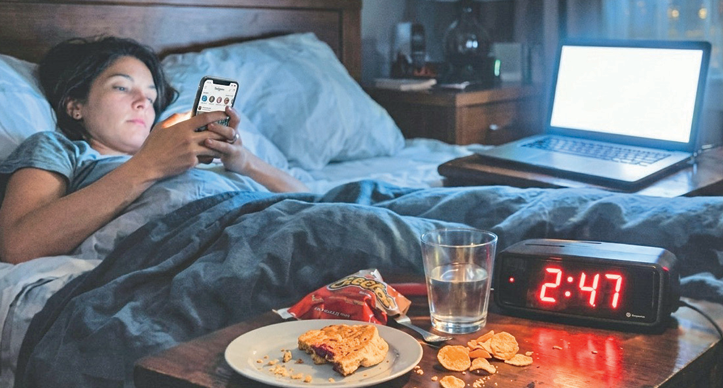
WHY SLEEP ELUDES YOUNG ADULTS Kanak Arolkar, a nineteen-year-old from Vasco, mentions, “I feel like I am more productive at night. I like to paint, study, and I watch a lot of series and movies at night.” Young adults prefer to sleep late largely because puberty triggers a natural shift in their circadian rhythm (the body’s internal clock), which can persist into their twenties. This biological change delaysthe release of the sleep hormone called melatonin by roughly one to two hours, indicating that adolescents often don’t feel sleepy until later in the evening. “Sleep has quietly become a casualty of modern youth. Smartphones, late-night streaming, and 24/7 social media keep the brain in a state of constant stimulation, pushing bedtimes later and later. Add irregular schedules, caffeinated energy drinks, and bedroomsdoubling as classrooms and offices, and the body’s natural sleep signals get drowned out. Biologically, adolescents already have a delayed circadian rhythm, so they fall asleep later by nature. When society demands early school or college starts, chronic sleep debt becomes almost inevitable,” mentions Dr Melvin Chagas Silva, a consultant psychiatrist based in Porvorim.
SLEEP TROUBLE: LIFESTYLE OR MENTAL HEALTH?
Ideally, young adults must get a minimum of 7-9 hours of sleep. Chronic sleep deprivation does not just affect mental health, but it actively causes its decline. It overstimulates the amygdala (adding to anxiety), disrupts mood-regulating neurotransmitters (triggering depression), and creates a vicious cycle. “For many, poor sleep starts as a behavioural habit, late screens, irregular timings, caffeine, but quickly becomes entangled with mental health. Depression, anxiety, ADHD, bipolar disorder, and trauma all disrupt sleep architecture, and disrupted sleep in turn worsens these conditions,” explains Dr Melvin.
WHAT ACTUALLY WORKS? “Maintain a consistent sleep schedule, get morning sunlight exposure, limit screen use before bedtime, keep the bedroom cool, dark and quiet, reduce caffeine and alcohol intake, exercise regularly, and incorporate stress management practices,” says Dr Sharmila. Healthy sleep is important for young adults because it is vital for better cognitive and emotional processing. Better cognitive and emotional processing promotes appropriate social interaction and learning throughout the development of the young adult. “Mindfulness practice helps many regain a healthier relationship with rest, but if simple sleep hygiene and mindfulness do not help within a week, it is worth seeing a psychiatrist. Sleep is often the earliest signal that something deeper needs attention,” explains Dr Malvin.
WHEN SLEEP DEBT COMES DUE
“I sleep less now by choice, but before it used to be out of necessity because I used to have assignments and projects. Because of my unbalanced sleep schedule, I sometimes end up not being able to pay attention in class or while driving,” shares Kanak. Lack of sleep could potentially disrupt the central nervous system, weakening mental abilities and emotional stability, and increasing the risk of accidents. “Almost everything, but most importantly, it can affect emotional regulation, memory, attention, and overall mental well-being. Over time, it may increase vulnerability to anxiety, depression, burnout, and physical health concerns, while also implicating academic and social functioning,” says Shobhika.