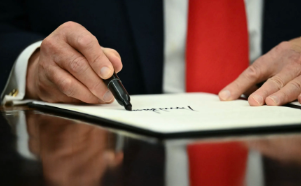
In a significant diplomatic breakthrough, US President Donald Trump and Iranian President Masoud Pezeshkian have signed an initial peace agreement aimed at ending hostilities between the two nations and laying the foundation for a broader long-term settlement.
The preliminary Memorandum of Understanding (MoU) includes the reopening of the strategically important Strait of Hormuz, restoring one of the world’s busiest energy shipping routes and easing concerns over global oil supplies.

The agreement also outlines a proposed $300 billion reconstruction and economic development package for Iran as part of efforts to support the country’s post-conflict recovery. In addition, the framework provides for the phased lifting of US sanctions, subject to the implementation of the agreed terms.
A key component of the accord is a 60-day negotiation period during which both sides will continue discussions on Iran’s nuclear programme. The talks are expected to address issues related to uranium enrichment, international monitoring, and the future framework governing Iran’s nuclear activities.
Officials have described the agreement as a major step toward de-escalation after months of conflict, while acknowledging that several complex issues remain to be resolved before a comprehensive and binding peace deal can be finalised.
The signing of the MoU is being viewed as a potentially transformative moment for regional stability and international energy markets, with the reopening of the Strait of Hormuz expected to have far-reaching economic implications.
(This story is published from a syndicated feed)